






Top-rated drywall insulation pros.

Get matched with top drywall insulation pros in Emmett, ID

Enter your zip and get matched with up to 5 pros

Need a pro for your drywall insulation project in Emmett, ID?

Select your specific project to find the pro for you.

TRUSTED BY EMMETT, ID HOMEOWNERS

  • Average homeowner rating star icon4.7
    Average homeowner rating
  • Verified reviews icon127
    Verified drywall insulation services reviews

Find Drywall insulation pros in Emmett

Avatar for Insulation Commandos of Boise
Insulation Commandos of Boise
5.0(
7
)
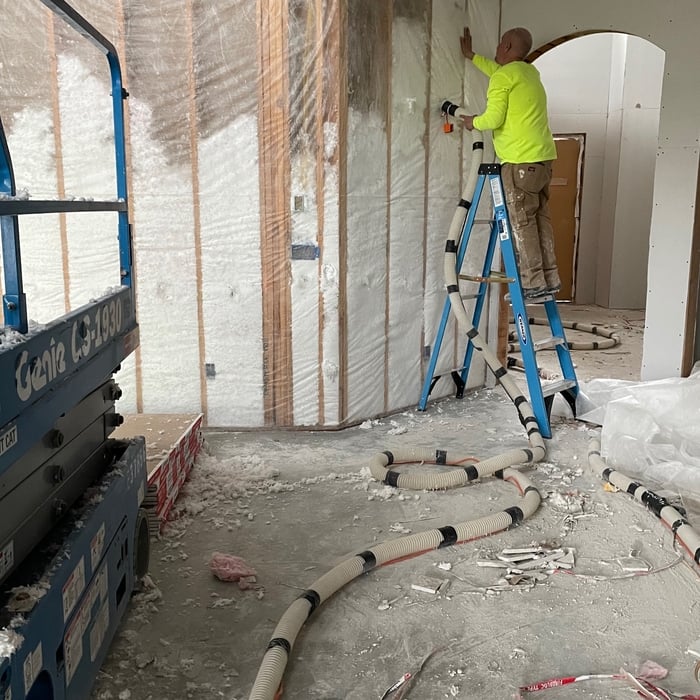
Blown-In Insulation - Install or UpgradeInjection Insulation - Install

Serving Emmett, ID and surrounding areas

Approved

Free estimates

Small jobs welcome

Credit card accepted

"We recently had insulation work done by commandos Insulation and the entire experience was excellent from start to finish. The team was professional, punctual, and very knowledgeable. They explained the process clearly, completed the job efficiently, and left everything clean afterward. Their attention to detail and customer service really stood out. I would highly recommend them to anyone looking for quality insulation work at a fair price!"
35 neighbors recently requested a quote
Showing 1-10 of 23
Drywall Insulation questions, answered by experts

You should leave a gap between drywall sheets because they naturally expand and contract along with the building framing as temperature and humidity change. Most pro drywall installers leave a gap of about ⅛ inch between drywall sheets, allowing the sheets to expand, contract, and shift without cracking or becoming damaged. If you don’t leave enough gaps between slabs, the edges will press against each other when they expand, and the pressure can cause visible cracks.
Most repairs take 1-3 days, depending on drying times for joint compound and paint touch-ups.
Plastering and skimming are two different techniques for finishing walls. Plastering involves applying a thick layer of a plaster mixture—typically containing gypsum, lime, cement, sand, and water—to create a new surface. This process often requires multiple coats and is used for repairing significant damage or creating decorative textures. Skimming, on the other hand, is a technique that involves applying a thin layer of drywall compound or joint compound over an existing surface to smooth it out, covering minor imperfections, small cracks, or uneven textures for a polished look. Plastering is generally more costly and labor-intensive than skimming. Although some people use the terms interchangeably, they refer to different processes and materials.

The easiest way to tell if a wall is load bearing is to check if it’s an exterior wall or if it runs perpendicular to the joists above and below it (or parallel to beams). Exterior walls are almost always load-bearing, and walls that run under beams or parallel to them are also usually load-bearing. There are exceptions to these rules, and walls that don’t fit into these categories can still be load-bearing. If you’re unsure, hire a structural engineer to look at your home to assess whether or not the wall is structural.

It’s not a good idea to plaster over broken plaster (unless by broken you’re referring to cracked, in which case that’s perfectly fine). However, broken plaster can be a sign of a larger underlying issue like foundation damage or severe damage to the lath holding up the plaster, so it’s worth investigating before you simply plaster on top of the damage.

The Emmett, ID homeowners’ guide to drywall insulation services

From average costs to expert advice, get all the answers you need to get your job done.