




Top-rated drywall pros.

Get matched with top drywall pros in Northford, CT

Enter your zip and get matched with up to 5 pros

Need a pro for your drywall service project in Northford, CT?

Select your specific project to find the pro for you.

TRUSTED BY NORTHFORD, CT HOMEOWNERS

  • Average homeowner rating star icon4.5
    Average homeowner rating
  • Verified reviews icon96
    Verified drywall services reviews

Find Drywall pros in Northford

Avatar for The Builders & Cleaners
The Builders & Cleaners
4.9(
120
)
Drywall - InstallDrywall - Install - For BusinessDrywall - Repair+1 more

Serving Northford, CT and surrounding areas

Approved

In business since 2018

Free estimates

Emergency services offered

"I was very impressed with David's responsiveness and every member of his crew was a pleasure. They completely removed the kitchen floor (and several layers of subfloor) in my 100+ year-old home, made repairs to floor joists and installed new flooring that looks beautiful. It was an evolving project and I appreciated the team's flexibility and speed with which they completed the project."
Dust out from the ductwork
Clean vent
Clean vent
Dust in the return

+1816

Response time1 day
Response rate92%
Recommended by87%of homeowners
Avatar for LDA Drywall
LDA Drywall
4.3(
20
)
Drywall - InstallDrywall - RepairDrywall - Install - For Business+1 more

Serving Northford, CT and surrounding areas

Approved

In business since 2017

Free estimates

Emergency services offered

"LDA Drywall did a great job. The work was done well, in a timely manner and the work area was left as it was found. The quote was a fair price for the job. LDA fixed the hole in the ceiling within 24 hours of getting the quote."
Additional Photos
Additional Photos
Additional Photos
Additional Photos
Additional Photos

+29

Response time3 days
Response rate100%
3 neighbors recently requested a quote
...
Showing 1-10 of 334
Drywall questions, answered by experts

Plaster is denser, harder, and more porous than drywall, so it absorbs moisture differently. This means you’ll often need more prep work, such as thorough sanding, patching, and priming with a high-quality bonding primer. Additionally, you may need more coats of paint to achieve even coverage. While the process takes more time, it helps ensure a durable and professional-looking result.

Whether to repair or replace water-damaged plaster depends on the scale of the damage. For small, limited areas, you can often perform a repair yourself. If you choose to paint over small patches, ensure the surface is completely dry and apply a coat of antifungal primer first to prevent mold growth. However, simply painting or plastering over the damage is only a temporary solution that doesn't address the core problem. For more extensive or long-term damage, the plaster may be compromised, and there is a risk of mold. In these cases, it is recommended to remove the damaged section of plasterboard and replace it. You may consider hiring a professional for the repair, and it's worth noting that water damage is often covered by home insurance.

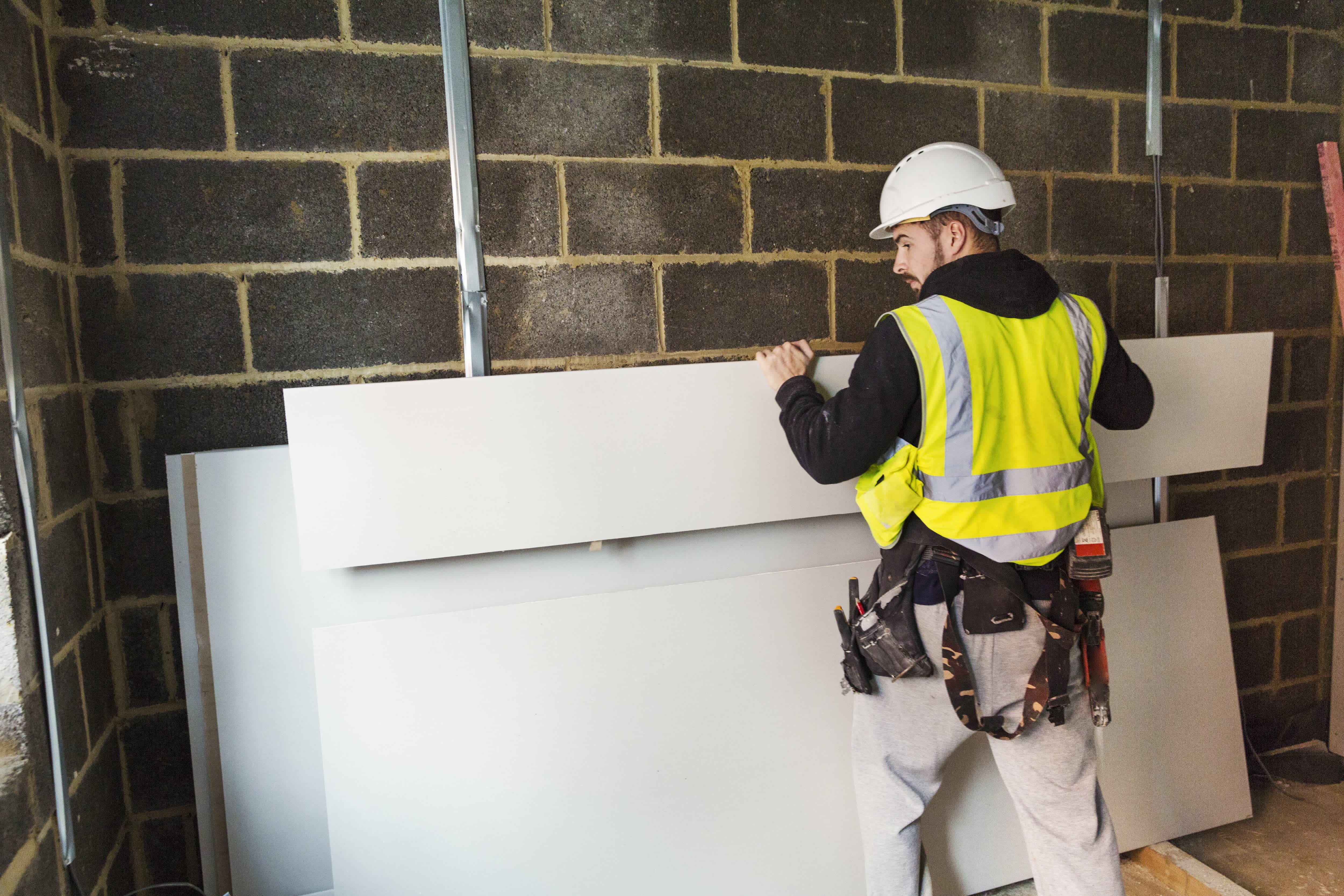
You should always hang drywall from the top down. Starting at the top makes it easier to create a straight, tight line between the ceiling and the wall. Any gaps that occur will be at the bottom, where they are easier to manage. You can either cut the bottom piece of drywall to fit the remaining space or cover the gap with baseboard trim. Additionally, starting at the top is physically easier, as you won't have to fit the top sheet into a tight space between the lower sheet and the ceiling, or try to balance the upper sheets on the lower ones while securing them.

It is possible to apply plaster on the interior or exterior of your home, but we don’t recommend it. Plaster is easy to apply in theory, but in reality, it can be a challenging material to work with, and it’s difficult to get the finished product to look clean, even, and smooth. Many DIYers end up calling in a professional afterward to touch up the area or even redo it entirely because of mistakes they made in the process. Hiring a plaster pro will cost more, but it’s usually the best option to achieve high-quality results.
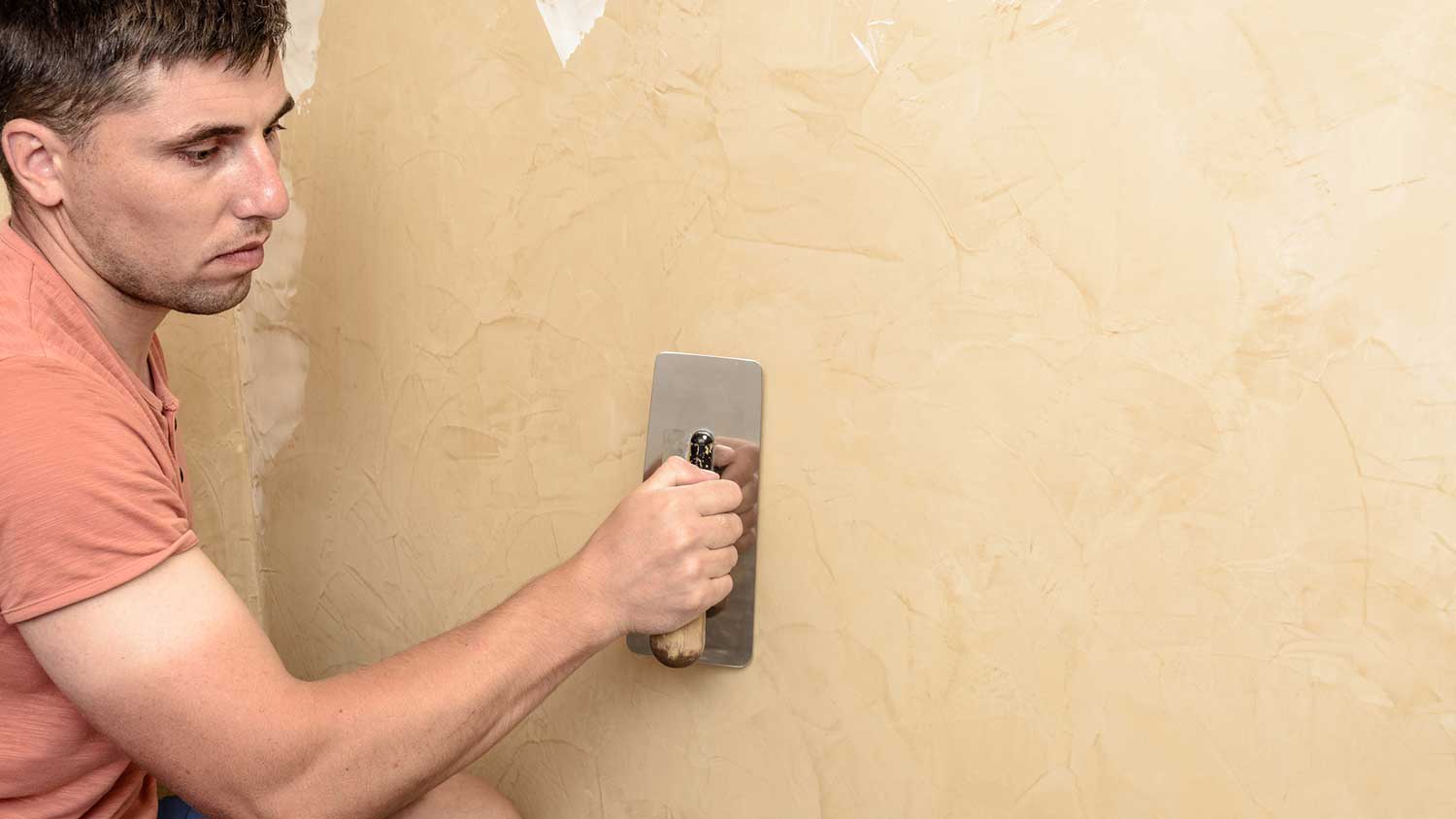
Although they have similar applications, spackle and joint compound are not the same. Their primary differences lie in their composition, consistency, and ideal use cases.

Spackle is composed of gypsum and binding agents, making it thicker than joint compound. It dries quickly and is easy to sand, which makes it ideal for small wall repair projects like filling nail holes or patching minor damage.

Joint compound, also known as drywall mud, consists of limestone and gypsum. It is primarily used for large-scale projects, such as taping and finishing the seams on newly installed drywall. It tends to shrink more than spackle and can be more difficult to spread.

While both products can be used to fill small depressions and cracks, spackle cannot replace joint compound for taping and mudding new drywall. Conversely, you can often use joint compound for small patching jobs typically done with spackle.

The Northford, CT homeowners’ guide to drywall services

From average costs to expert advice, get all the answers you need to get your job done.