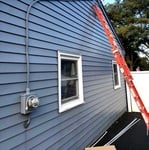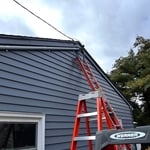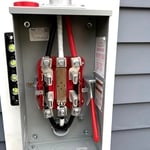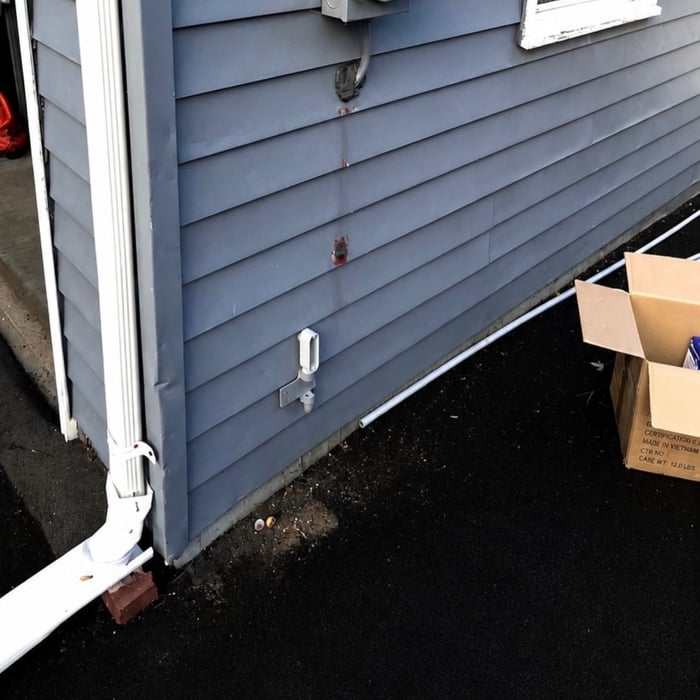





Top-rated electricians.

Get matched with top electricians in Northford, CT

Enter your zip and get matched with up to 5 pros

Need a pro for your electrical service project in Northford, CT?

Select your specific project to find the pro for you.

TRUSTED BY NORTHFORD, CT HOMEOWNERS

  • Average homeowner rating star icon4.7
    Average homeowner rating
  • Verified reviews icon784
    Verified electrical services reviews

Find Electricians in Northford

JMP Electric, LLC
4.9(
91
)

Serving Northford, CT and surrounding areas

Approved

In business since 2014

Free estimates

Emergency services offered

"My husband and I highly recommend Jeremy. We had power issues and Jeremy walked us through everything that was going on. He went over the pricing and stuck to it. He is quick to respond to communication. We are very happy with the work he and Austin did to correct and upgrade our electric service. We will definitely be using him for future electricity needs and recommend him highly!"
Response time5 hrs
Response rate85%
2 neighbors recently requested a quote
Avatar for Power Forward LLC
Power Forward LLC
4.8(
24
)

Serving Northford, CT and surrounding areas

Approved

Free estimates

Warranties offered

Credit card accepted

"Due to a recent storm, a tree landed on our homes electrical wiring, ripping the cables off our home. Within 24 hours, Power Forward LLC manged to purchase, and reinstall all replacement parts needed, which helped speed up the process to power up our home. I will definitely use this company for any, and all electrical projects in the future. A+ Customer service A+ Quality of work A+ Timelines A+ Cost"
3 neighbors recently requested a quote
Recommended by95%of homeowners

Candido Electric, LLC
3.7(
49
)

Serving Northford, CT and surrounding areas

Approved

In business since 2003

Free estimates

Emergency services offered

"Terry Anderson came out to fix some faulty wires in my basement that were causing my lights to flicker. I'm happy to say I can see in my basement again. He was professional, courteous and even taught me some electrical self help while doing the job. 10 out of 10 would hire again. This guy was awesome ð ð »"
Response time9 hrs
Response rate90%
Recommended by97%of homeowners

Avatar for West Electric, LLC
West Electric, LLC
4.8(
53
)

Serving Northford, CT and surrounding areas

Approved

In business since 2010

Free estimates

Emergency services offered

"West Electric did very good work. They were able to get the job done quick and efficient. They were responsive when I had questions. They were very reasonable priced. Would definitely hire again in the future"
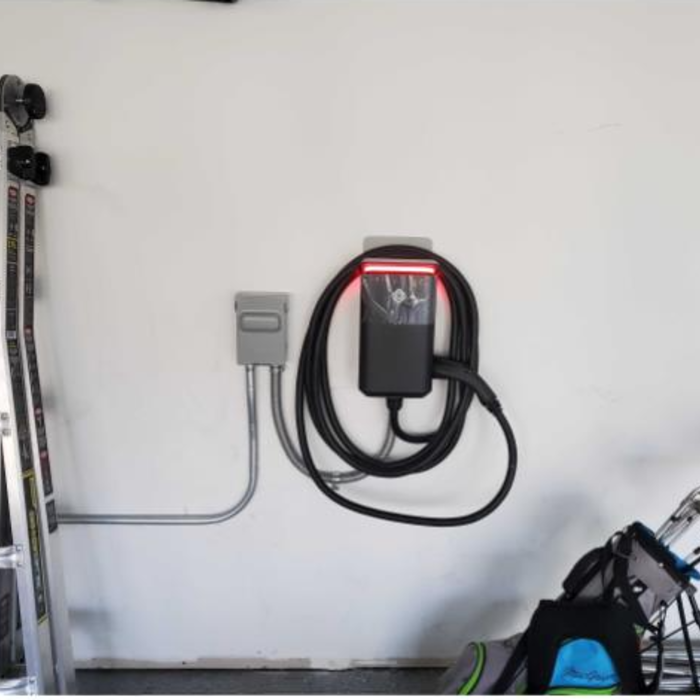
FINAL PROJECT / NICE AND CLEAN
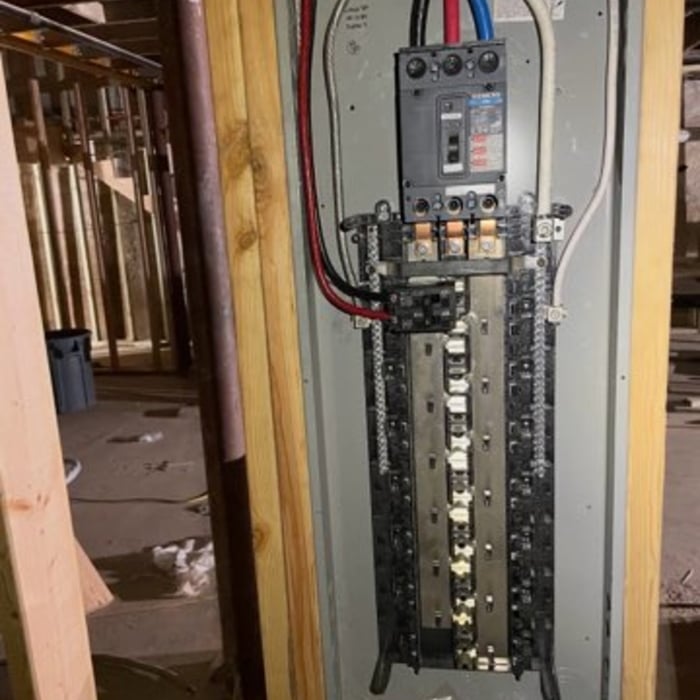
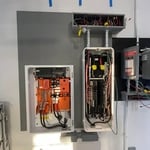
IN WITH THE NEW SMART PANEL
OUT WITH THE OLD
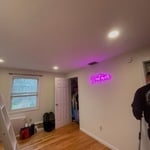
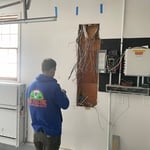
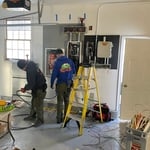
CREW HARD AT WORK
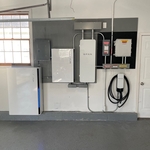
EV Charger Install

+12

Response time2 days
66 neighbors recently requested a quote
Recommended by95%of homeowners

...
Showing 1-10 of 203
Electrical questions, answered by experts

A small sump pump running infrequently uses an average of 10 kilowatt-hours (kWh) of electricity per month. The average cost for electricity is $0.171 per kWh. The size and use frequency affect how much electricity it uses. Sump pumps average one-third to one horsepower (hp) motors. One hp is equal to 745.7 watts. Watts multiplied by the time your pump is running divided by 1,000 equals your average kWh. Multiply kWh by your average cost of electricity. In areas with high rain or a marsh basin, the average cost can be as high as $15-$25 a month.

Just as fluorescent lights are more efficient than incandescent lights, LED lights are more efficient to run than fluorescent lights. The specifics will vary from product to product, but LED lights are typically twice as efficient as equivalent fluorescent lights. A 13-watt CFL bulb can replace a 60-watt incandescent bulb, but a 6- to 8-watt LED bulb can offer the same amount of brightness. Fluorescent lights offer about 50 lumens per watt, while LEDs offer about 100 lumens per watt. LED light bulbs typically last two to three times as long as CFL bulbs, too. 

In the case of electrical overflow, an ungrounded outlet should trip the circuit breaker, staving off dangerous scenarios. However, this is not always the case, especially if the wires and circuit breaker are worn down or damaged in some way. Ungrounded wires melt over time as they are introduced to more and more electricity. In other words, a circuit breaker offers protection in most instances but not always, and that’s where the danger lies with ungrounded outlets.

In most cases, line wires are located at the bottom of a panel or device, while load wires are located at the top. Line wires are generally black, while load wires are typically red or black. To tell for sure, you can use a multimeter or volt pen to test the wire. A live or line wire will always carry a charge, while a load wire will only carry a charge when it’s in use.

You should never wire neutral and ground wires together at a light switch. Not only is it unsafe, but it’s also incorrect. The neutral and ground wires perform separate functions in an electrical circuit and should never be swapped or wired together at a light switch, light, or outlet. 

The Northford, CT homeowners’ guide to electrical services

From average costs to expert advice, get all the answers you need to get your job done.

What do you need done? We’ll find top pros.
  • 🌱 "Mow a small front yard"
  • 🛠 "Fix a leaking pipe under the sink"
  • 🏠 "Repair shingles on an asphalt roof"