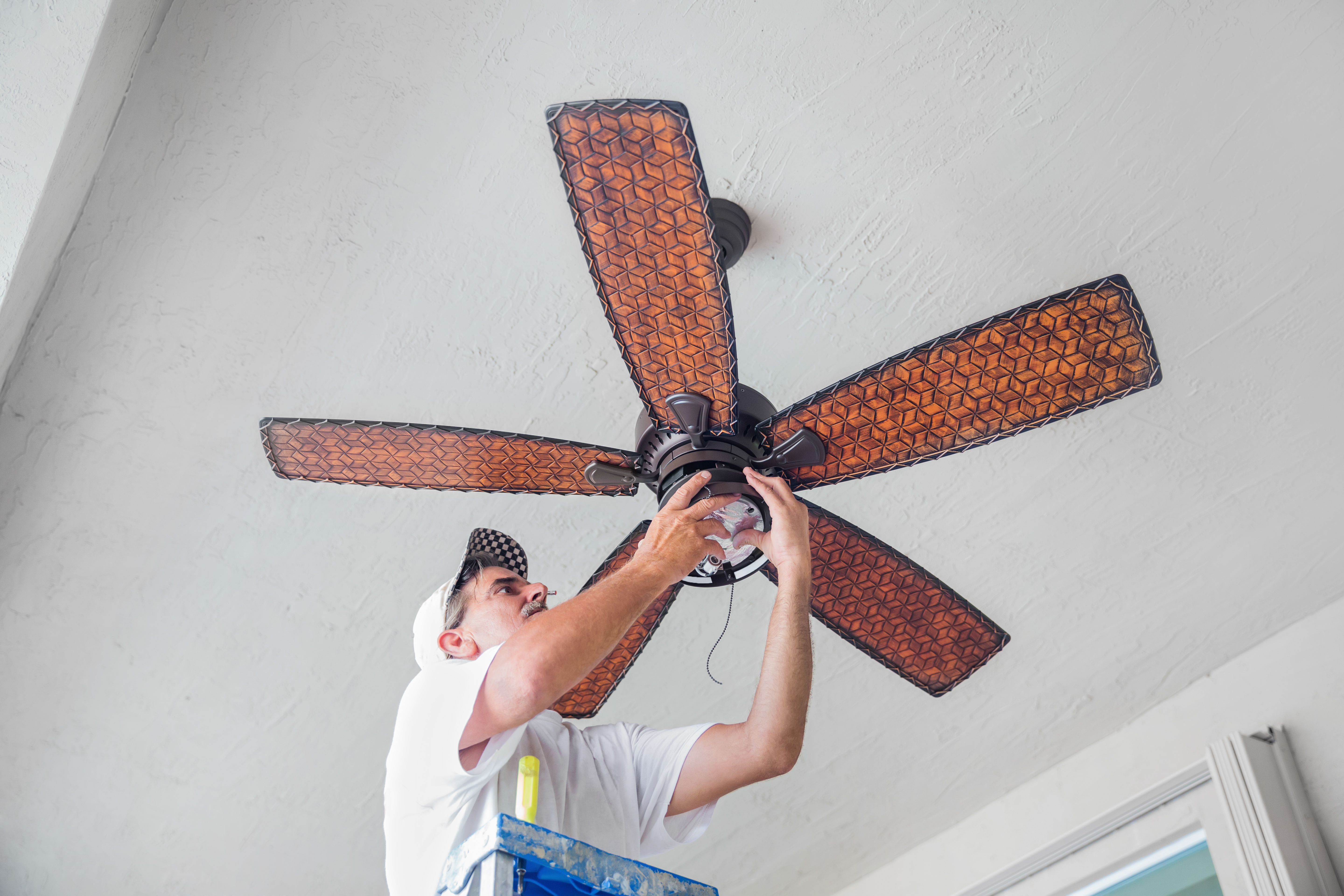






Top-rated ceiling fan pros.

Get matched with top ceiling fan pros in Glendale, AZ

Enter your zip and get matched with up to 5 pros

Need a pro for your ceiling fan service project in Glendale, AZ?

Select your specific project to find the pro for you.

TRUSTED BY GLENDALE, AZ HOMEOWNERS

  • Average homeowner rating star icon4.7
    Average homeowner rating
  • Verified reviews icon194
    Verified ceiling fan services reviews

Find Ceiling fan pros in Glendale

Avatar for Sand and Sun Electric, LLC
Sand and Sun Electric, LLC
5.0(
24
)
Ceiling Fan - Install

Serving Glendale, AZ and surrounding areas

Approved

In business since 2015

Free estimates

Credit card accepted

"Kelvin was a delight to work with very courteous knowledgeable and on time! Communicated very well and helped me pick out the right fan. I will definitely use Kelvin again for any electrical job! Thanks Kelvin!"
Response time3 hrs
1 neighbors recently requested a quote
Recommended by95%of homeowners
Avatar for Mister Sparky Phoenix
Mister Sparky Phoenix
4.4(
654
)
Ceiling Fan - Install

Serving Glendale, AZ and surrounding areas

Approved

Super Service Award Winner

In business since 1978

Free estimates

Emergency services offered

"Jonathan and his assistant did a great job! Rewired an antique chandelier and hung it on my vaulted ceiling. He even painted all the wiring and ceiling cap to match the light. They were professional and helpful explaining the work. Also installed two CO2 sensors that were overpriced. Estimates for future work were unfortunately high but I was happy with the job they did."
Hard at work
Smoke detector
Smoke detector/CO Detector Combo
More great electrical work
Details matter

+3

Response time2 days
314 neighbors recently requested a quote
Recommended by83%of homeowners
...
Showing 1-10 of 139
Ceiling Fans questions, answered by experts

Whether you can install a ceiling fan yourself depends on if you're replacing an existing fixture or installing one where no wiring exists. If you are replacing an existing fan, an experienced DIYer may be able to do the job, which can save on labor costs. This work typically doesn’t require a permit, but there’s always a safety risk when dealing with electrical components, so hiring a pro is still a good idea, especially if you aren't handy. Keep in mind you may need a special ladder for high or vaulted ceilings. However, if you are installing a new ceiling fan where there is no current fixture, you must hire a licensed electrician. In most areas, it is required by law that a professional runs new wiring and pulls the necessary permits. Attempting to install wiring yourself can be dangerous and a code violation.

Stainless steel or aluminum fans are long-lasting and have less air resistance. They are best for outdoor use as their durability helps them withstand unpleasant weather conditions. Their heavy weight requires a stronger motor, which leads to more noise than other blade materials.

Wooden fan blades are a classic, durable option. They are much quieter than metal fans and feature a wide range of styles and finishes to choose from. However, they can be damaged by moisture if not covered with plastic.

Plastic fan blades are lightweight, easy to clean, and versatile. There are various shapes and styles to choose from as plastic is easily molded and dyed. They will also deteriorate slower than other materials as they aren’t as susceptible to humidity and moisture.

Identifying the source of noises is your first step to soundproofing a room without overspending. Generally, sound comes from inside or outside of the house. Inside noises include creaking floors, living noises like TVs in the living room, cooking sounds, or kids being kids. External noises generally include incremental weather, disturbing neighbors, and street traffic. Inside noises require you to soundproof floors, ceilings, and doors, whereas outside noises may require you to soundproof your attic, windows, and walls facing the streets.

The direction your ceiling fan spins helps create comfortable airflow in your home and can also help cut down on energy costs. 

During summer, your ceiling fan should spin counterclockwise. This will push cooler air downward in a column and help lower your room’s air temperature. In the winter, set your ceiling fan to spin clockwise and at the lowest speed setting. This will pull cool air upwards, displacing the warm air that pools towards the top of your ceiling and bringing it down towards the floor.

Many ceiling fan mounts feature a design that can accommodate slight slopes by using a ball joint mechanism at the end of the downrod. If your ceiling has a steeper slope than your fan allows for, you can install a downrod that will allow your fan to safely hang below the slope.

The Glendale, AZ homeowners’ guide to ceiling fan services

From average costs to expert advice, get all the answers you need to get your job done.