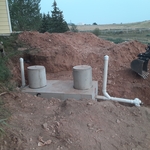
At ______KB Excavation LLC______, our company is based on the belief that our customers' needs are of the utmost importance. Our team is committed to meeting those needs. We welcome the opportunity to earn your trust and deliver you the best service. No job is too big or too small for our experienced team. Call today for a quote!
My name is Marcus Nolan, owner of Nolan Property Restoration, father of two beautiful daughters and married to my wonderful wife. We will take junk away from your property and clean up and clean out any buildings or property you might need, and maintain any of the landscaping you might want! If you need any flooring installed or bathrooms redone we partner closely with flooring specialists to make sure all of your requirements are met!
Reliable, detail-driven contractor with a strong work ethic and a reputation for getting the job done right the first time. I specialize in excavation, site prep, landscaping, hardscaping, and concrete work, bringing both skill and precision to every project? Big or small.
"I was moving out of town and needed my house show ready for the realtor. Kristie is a very hard worker, fast and efficient. She was very professional. I would hire her again without hesitation."
"Mr. Fox is an honest and extremely hard working man. He definitely takes pride in his work. I would highly recommend him to do any job that needs to be done."
Preparation involves site assessment, clearing debris, grading surfaces, and compacting soil to support stable construction.
Yes, an excavation company is the best option for land grading and yard leveling. General landscapers might be able to tackle these projects, but an excavation company will do a better job because they’re used to operating the necessary heavy machinery. Landscapers might opt to do the work manually, which takes much longer and could cost you more in labor fees. Finally, excavation companies will understand local regulations and know when you need permits to legalize the work, while a landscaper might not.
Depending on the severity of the freeze and the method used, thawing frozen underground pipes can take anywhere from 30 minutes to several hours. Applying heat directly to the pipe using heat tape, infrared lamps, or hot water jetting can speed up the process. However, patience and careful monitoring are key to avoiding pipe damage.
Errors in site preparation can lead to structural failures or appear costly midway. Professionals ensure detailed, reliable home base development layouts.
The cost to drill a well varies, with a national average of around $5,500 for a 150-foot well. However, prices can fluctuate significantly based on several factors, including your location, the required well depth, geological conditions, local regulations, and the specific drilling methods used. For the most accurate cost assessment, it is best to research and get quotes from local well-drilling professionals in your area.
The Kaycee, WY homeowners’ guide to excavation services
From average costs to expert advice, get all the answers you need to get your job done.
Excavation costs $1,500 to $6,300 for most residential projects—but it depends on factors like the size of the area. This guide will help you plan a budget.
You can't have an in-ground pool without digging into the ground. How much does pool excavation cost, and can you take it on yourself? Our guide explains.
Picking the right pro can make or break your project. Learn how to hire an excavation pro with the qualifications and skillset to do the job efficiently.