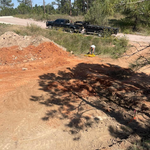
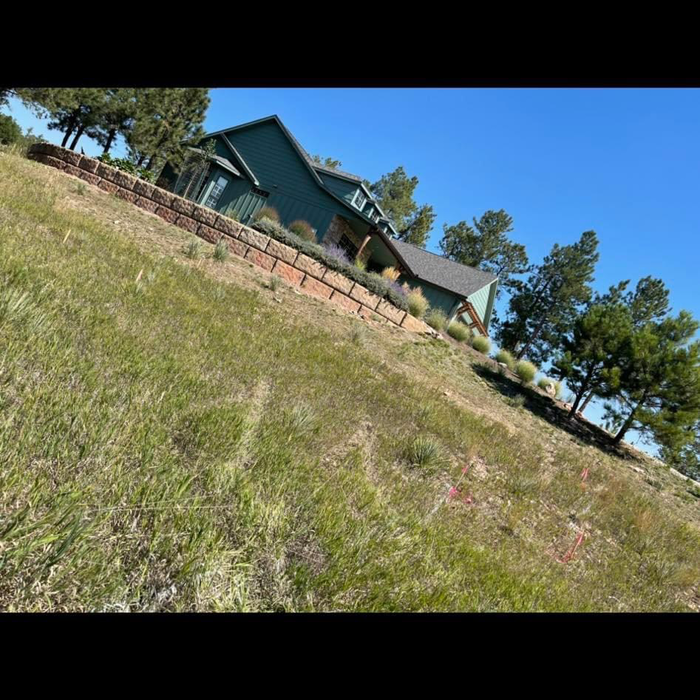
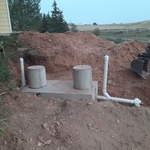
"I honestly cannot say enough good things about ERE! We were having some drainage issues in our backyard, and were worried about the integrity of our foundation. Jon contacted me within a day of my search and set up a consultation a few days later. He was super knowledgeable and understood what I wanted done, even when I couldnâ t exactly describe it. Jon was very thorough and kept me updated on everything he was going to be doing, and gave me several options when it came to budgeting and services. He and his team even went above and beyond by repairing the sprinkler lines that the previous owner had damage, at no extra cost. Our backyard now looks 100x better than before and we no longer have to worry about water draining towards our house & foundation. I will absolutely recommend ERE to everyone I know & will likely use them in the future for any of our landscaping needs!"
Here at Daniel's Excavating LLC, we have 5+ years of experience on our staff. We pride ourselves on our diligence and our attention to detail. There is no job too big or too small we can't handle in a timely manner. Please don't hesitate to call today, we look forward to earning your business.
"These guys were awesome. From the first call to have them come out and give us a quote on the job and what was to be done to fix the problem to the day they started the project up to the day of completion. They were prompt, reasonable, knowledgeable and the work was exceptional!! We would highly recommend Omega Infrastructure Solutions for a job well done."
RD Excavation, is committed to excellence in every aspect of our business. We uphold a standard of integrity bound by fairness, honesty, and personal responsibility. Our distinction is the quality of service we bring to our customers. Accurate knowledge of our trade combined with ability is what makes us true professionals. Above all, we are watchful of our customers' interests and make their concerns the basis of our business.
Ryan is committed to excellence in every aspect of our business. We uphold a standard of integrity bound by fairness, honesty, and personal responsibility. Our distinction is the quality of service we bring to our customers. Accurate knowledge of our trade combined with ability is what makes us true professionals. Above all, we are watchful of our customers' interests, and make their concerns the basis of our business
There are several methods to hollow out a tree stump, and the best one depends on your tools, experience, and priorities. Common methods include using a chisel and hammer, a chainsaw, or burning.
Chisel and Hammer: This is often considered the easiest approach for those with limited tools or experience, though it is the most time-consuming.
Chainsaw: Using a chainsaw is the fastest method, but it comes with significant safety risks, especially for inexperienced users.
Burning: This can be an effective method, but it is not recommended unless you can first drill holes into the stump. Without holes, the stump will be difficult to light and may not burn completely through.
A power drill with at least a ⅜-inch diameter bit can make the job quicker and easier, regardless of the primary method. While you can use a chisel or chainsaw without a drill, it will require more time and effort. Always wear protective goggles and thick gloves, as splinters are an inevitable risk.
Tree experts don’t advise against digging through tree roots, but instead encourage caution and consultation with a local arborist to make sure you don’t damage the tree’s structure or interrupt its water or nutrient intake. An arborist can recommend specific practices when digging and help prune the roots or dig a trench for utilities with a tool that can remove soil without touching the tree’s roots.
A joint utility trench, or joint trench, is a long, buried ditch on a property that contains two or more utility lines rather than running the lines in multiple trenches. Some utilities, like gas and electric or electric and communication lines, are better suited to joint trenching, while others, like water and sewer, are not allowed to be in the same trench.
Call 811 to locate and mark the gas lines at least three days before digging. In many areas, you can dig within 18 inches of the lines, though in some locations, the distance may be further. Check local regulations, as you may need a utility company representative onsite when digging. Document your calls to 811 and precautions taken to avoid gas lines. A homeowner can be held liable for hitting a gas line in some cases, but contacting the proper authorities and following all guidelines can offer protection.
Most states do not require excavation companies to hold specific licenses, but many require at least a contractor’s license. Additionally, heavy equipment operators require a special commercial equipment license to operate machinery required for excavation. You can use Angi’s contractor licensing tool to confirm that an excavation company you’re considering hiring is fully licensed. You should also make sure that the excavation team is fully insured before allowing them to work on your property.
The Weston, WY homeowners’ guide to excavation services
From average costs to expert advice, get all the answers you need to get your job done.
Excavation costs $1,500 to $6,300 for most residential projects—but it depends on factors like the size of the area. This guide will help you plan a budget.
You can't have an in-ground pool without digging into the ground. How much does pool excavation cost, and can you take it on yourself? Our guide explains.