





Top-rated drywall pros.

Get matched with top drywall pros in Bayside, WI

Enter your zip and get matched with up to 5 pros

Need a pro for your drywall service project in Bayside, WI?

Select your specific project to find the pro for you.

TRUSTED BY BAYSIDE, WI HOMEOWNERS

  • Average homeowner rating star icon4.7
    Average homeowner rating
  • Verified reviews icon495
    Verified drywall services reviews

Find Drywall pros in Bayside

Avatar for Shoreline Drywall LLC
Shoreline Drywall LLC
4.7(
27
)
Drywall - InstallDrywall - Install - For Business

Serving Bayside, WI and surrounding areas

Approved

Super Service Award Winner

In business since 2019

Free estimates

Emergency services offered

"Very happy I went with shoreline drywall for my basement rec room project. Adan runs a smooth operation and was very easy to work with. They hung the drywall quickly and did a great job with the finishing and texture. They do clean work. I will use them in the future and definitely recommend them!"
HouseRemodel Open Concept

+48

Response time8 hrs
Response rate85%
8 neighbors recently requested a quote
Avatar for Juan The Handyman LLC
Juan The Handyman LLC
5.0(
14
)
Drywall - Repair

Serving Bayside, WI and surrounding areas

Approved

Super Service Award Winner

In business since 2018

Free estimates

Small jobs welcome

"Very prompt, professional, and repaired two barn door runners. One needed a lot straightening and patching. He did an awesome job. Very reasonable price, too. Highly recommend him and I will be using him in the future for some other repairs."
Porch
Left
Front
Right
Before

+18

Response time2 days
Response rate86%
2 neighbors recently requested a quote
...
Showing 1-10 of 297
Drywall questions, answered by experts

You should always hang drywall from the top down. Starting at the top makes it easier to create a straight, tight line between the ceiling and the wall. Any gaps that occur will be at the bottom, where they are easier to manage. You can either cut the bottom piece of drywall to fit the remaining space or cover the gap with baseboard trim. Additionally, starting at the top is physically easier, as you won't have to fit the top sheet into a tight space between the lower sheet and the ceiling, or try to balance the upper sheets on the lower ones while securing them.
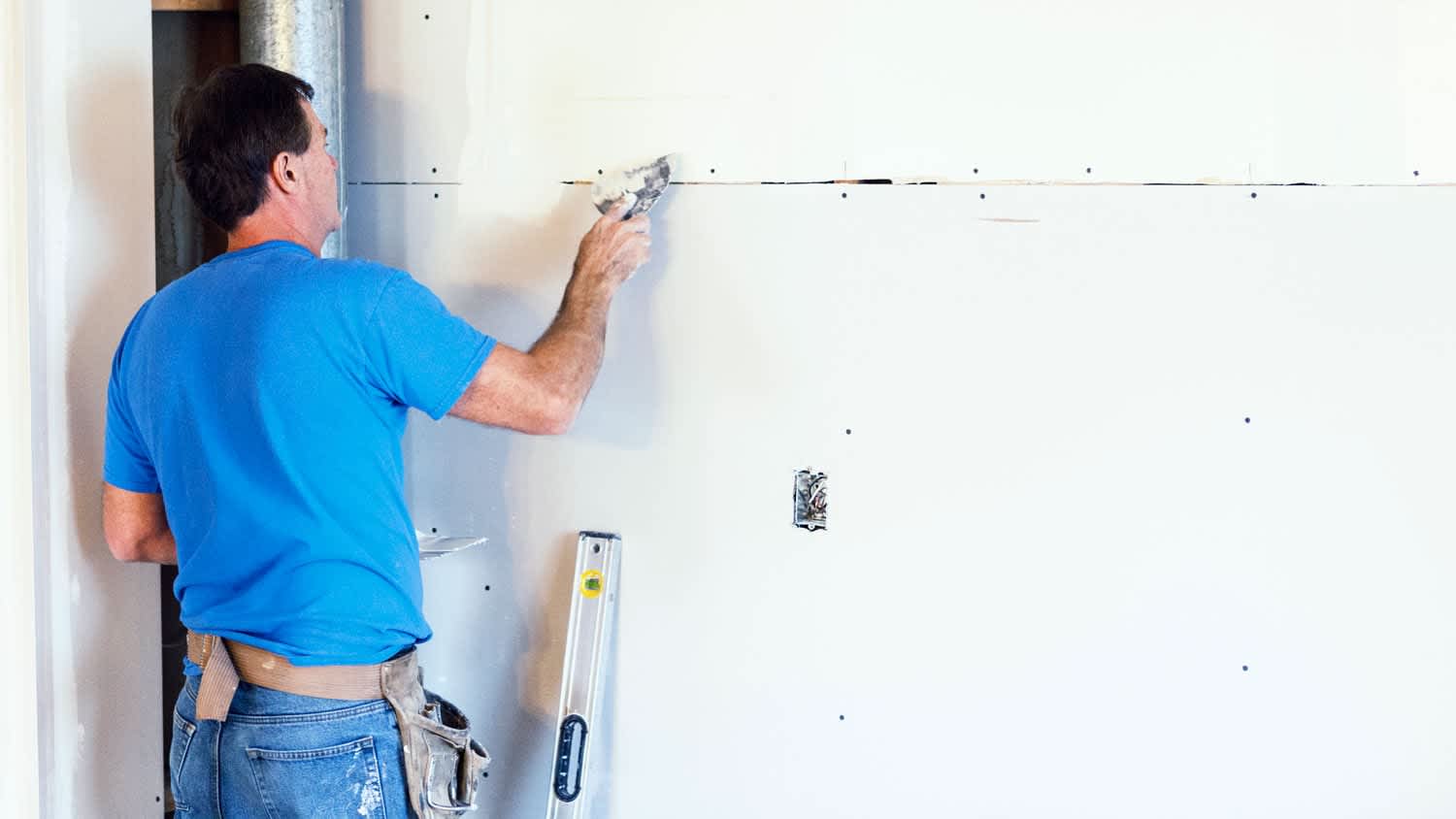
Drywall can be installed directly on ceiling joists. In fact, this method is common in many construction projects. Drywall sheets are attached to the joists using screws, ensuring a secure and stable installation. Before attaching the drywall, it's important to mark the joist locations on the ceiling, allowing for accurate screw placement. Proper spacing between screws and careful taping and mudding of joints are crucial to creating a smooth and flawless ceiling surface. If the joists are in good condition and level, installing drywall directly on them is a practical and efficient approach.

Plaster walls typically last between 30 and 70 years, but depending on the quality of the materials and the moisture levels in the building, they can last for over 100 years. With expert application and consistent maintenance, plaster can even last for centuries. To extend its lifespan, it is important to have the plaster professionally installed, address any water damage promptly, and repair small cracks as they appear. Regular inspections by a professional can help identify and address concerning cracks before they become significant issues.

If your home’s foundation shifts slightly over time, any seams in the drywall represent the weakest point in the wall, leading to cracks. If your home has significant changes in temperature and humidity, this can cause the drywall to swell and contract slightly, causing a crack at the weak point of the seam. If your drywall installer did a poor job securing the panels to the wall studs, this could cause a weak layout and cracks in the seams.

While every home has its own unique needs, ceiling drywall installation typically follows a staggered or stepped pattern to enhance structural integrity and reduce the visibility of seams. Starting from one corner, sheets are placed perpendicular to the ceiling joists, with the ends of adjacent sheets meeting along the center of the joist. The next row begins with a half sheet, ensuring joints don't align vertically. This alternating pattern, combined with proper taping and mudding, creates a seamless appearance and strengthens the ceiling structure, minimizing the risk of cracks over time.

The Bayside, WI homeowners’ guide to drywall services

From average costs to expert advice, get all the answers you need to get your job done.