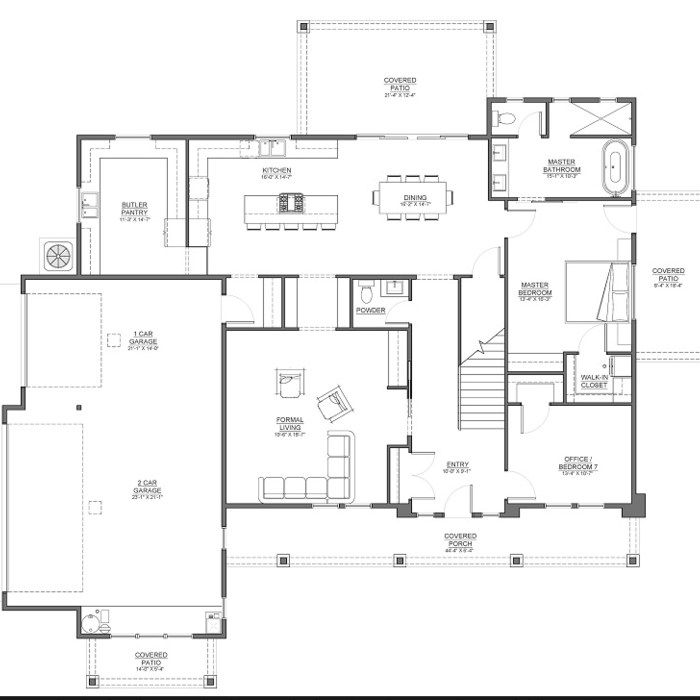



Systematic Engineering provides Professional Engineering Services to issue project specific documents, with PE License approval, including specialized engineering solutions. Services offered include: Structural Inspections, Foundations Inspections, New Home Designs, Load Bearing Wall Replacement with Beam, Structural Analysis, Structural Certification Letters, and Structural Design/Permit Drawings.
Along with being a full service Structural, Civil and Architectural engineering firm, we are also Virginia Class A General Contractors that specialize in structural repairs, renovations and modifications of all types. With the engineering and construction expertise under one roof we can "Analyze, Design and Build" any type of project and provide a central point of contact for all phases of any project. We specialize in Structural Engineering Assessments, Structural Analysis and Design using Wood, Steel, Concrete and Masonry, Architectural Building Plans, Foundation Repairs, Retaining Walls, Interior Wall Removal, Truss and Rafter Repairs, New Home Design-Build projects and much more.
Rock-River Engineering is a design company Professional Engineering for your building or remodeling project. We provide solid structural solutions and creative designs modeled with 3D CAD software. We treat our clients and your building site with respect, always striving for an outstanding project.
Soil & Structure Consulting, Inc., is a certified Professional Engineering Firm, operating under the direction of professional structural and geotechnical engineers. We provide a full range of engineering services, for residential and commercial customers. Soil & Structure Consulting, Inc., specializes in Soil and Structural Engineering. We always work with you from beginning until end on project idea, and creation. We are certified and licensed, in the Virginia and DC areas, our customers date back to early 2000's. Give us a call today, and we can discuss what you have in mind, thank you.
CM&A ENGINEERING, PLC is a locally owned and operated company that values honesty and integrity in all aspects of our business. Our dedicated team of professionals have over 20 years of hands on experience, to provide innovative ideas and suggestions tailored to your projects. Our services are customized to your individual needs, paying close attention to the details of each project that we are involved with. Please feel free to contact us today!
Been with my partner for 17 yrs we have done everything from dirt to roof tops on houses hotels motel apartments when I say everything i mean everything you name we can do it ni job to small no job too big free estimates if contract is made no hassle guaranteed professional services, a 100%. We're class A contractors with a great team to get the job done in a timely manner. No need to worry we're here to save the day just one call away.
Structural Engineering questions, answered by experts
Water can seep into porous materials like wood beams, floor joists, and roof rafters within minutes, but they’ll need to see prolonged exposure before you have structural damage. Mold can start growing within 24 hours, and mold can eat away at the structural components over time. Wood rot is more of a concern, though. Wet and dry rot are fungal infections that set in in moist conditions and rapidly deteriorate wood, causing major structural damage within just a few months in some cases.
Generally, you can tell if a home is bolted to the foundation by checking the foundation for plates. If you see that your foundational plates connect to wood or bolts protruding from them, this means that you have a bolted foundation. However, it's always wise to bring a home inspector in to confirm if your foundation is secure.
The depth of any foundation style depends on your climate and how deep the frost line is, as building code requires that the footers of a foundation—which are built into a monolithic slab—sit at least a foot below the frost line. At the southern tip of Florida, for example, a monolithic slab foundation would only need to sit 12 inches under the soil at the widest parts. On some parts of the Canadian border, the frost line is 100 inches, which would mean a minimum of 112 inches, which is prohibitively deep for a monolithic slab.
You should avoid drilling or cutting into load-bearing beams because removing material will weaken it and increase the risk of structural damage or even collapse. If you do need to drill into a load-bearing beam, speak with a structural engineer first to discuss where it’s safest to drill and the width and depth of the bit that’s safe to use.
A 4-inch-thick concrete slab can support around 4,000 pounds per square foot if a contractor reinforces the slab with rebar, while that same slab without reinforcements will support closer to 1,000 pounds. For the purposes of a patio, 4 inches in thickness without reinforcement should suffice unless you’re installing heavy kitchen equipment or a hot tub on it. In those cases, reinforcing your slab and sticking with 4 inches of thickness should provide plenty of strength.
The King George, VA homeowners’ guide to structural engineering services
From average costs to expert advice, get all the answers you need to get your job done.
A new steel I-beam is more durable than a wooden one. Learn what factors can affect steel I-beam installation costs and how to budget for this project.
Beam installation costs are an important consideration if you’re building a home or doing renovations. Learn about average costs and factors in this guide.