Top-Rated Animal fencing pros in Eureka - Updated Nov 2026
No results for Animal fencing pro in
Try adjusting your search criteria.
Animal Fencing FAQs, answered by experts
You might be tempted to call your local municipality to remove animals from your property, such as a groundhog burrowing in your yard or raccoons getting into your trash cans. However, they typically only remove domestic animals like dogs and cats from properties, or sick and injured wildlife that pose a public safety risk or health threat, such as a rabid animal. They typically do not capture or remove healthy wildlife.
Animal removal professionals have the tools, knowledge, and skills to trap and remove wild animals adequately and humanely. They also can relocate them correctly.
No, according to the CDC, animals do not usually pose health risks to swimmers, even if one dies. If a pool is maintained well, chlorine should kill any germs left by an animal within minutes. That said, homeowners should remove the animal as soon as possible and clean and disinfect the pool afterward.
Raccoons in a chimney sound like thumping, rustling, scratching, or scurrying. Because they can weigh as much as 20 pounds, they make noises that are noticeable and hard to miss. Plus, they have an average litter size of 3 to 7 kits, so you may hear what sounds like multiple animals thumping, rustling, scratching, or scurrying.
The laws in Florida allow residents to kill iguanas on certain public lands and on private lands with landowner permission, even without a permit. Residents are encouraged to kill iguanas, a nonnative reptile seen as a pest throughout the state. Landowners are responsible for removal. Residents are not legally allowed to possess, transport, or relocate iguanas without a permit.
Moles live underground and feed on insects. They dig and move through tunnels, usually in meadows or forests but sometimes in lawns and gardens. They are about 6 inches long with large claws, tiny eyes, and hidden ears.
Shrews do not dig their own tunnels but will use other animals’ tunnels, and are about 3 to 4 inches long. They look similar to mice and feed on insects.
Voles are similar in size to moles but have large eyes and small but visible ears. Rather than eating insects, voles are herbivores that prefer seeds, grasses, and plant roots.
The Eureka, SD homeowners’ guide to animal fencing services
From average costs to expert advice, get all the answers you need to get your job done.
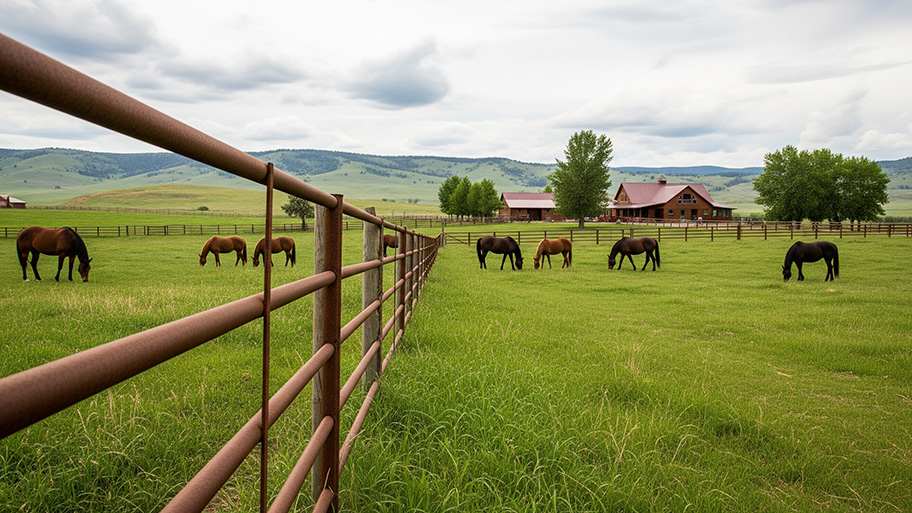
Pipe fencing is an extremely strong, durable option for containing horses and other livestock. This guide breaks down the factors that affect pipe fence cost.