




Top-rated masons.

Get matched with top masons in Talent, OR

Enter your zip and get matched with up to 5 pros

Need a pro for your masonry work project in Talent, OR?

Select your specific project to find the pro for you.

TRUSTED BY TALENT, OR HOMEOWNERS

  • Average homeowner rating star icon5
    Average homeowner rating
  • Verified reviews icon23
    Verified masonry services reviews

Find Masons in Talent

Avatar for Block by Nick, LLC
Block by Nick, LLC
5.0(
7
)
Brick and Stone Flatwork - RepairBrick and Stone Patios, Walks, and Steps - InstallBrick or Stone - Tuck-pointing+3 more

Serving Talent, OR and surrounding areas

Approved

Super Service Award Winner

In business since 2018

Free estimates

Emergency services offered

"**One Year Review: Block by Nick Retaining Wall and Staircase** Listen you get what you pay for! Block by Nick, built a beautiful retaining wall and staircase for my home a year ago. **Professionalism:** From our first meeting, Nick impressed me with his expertise and knowledge on a challenging winding staircase. He listened to my vision and provided valuable insights throughout the project. **Quality of Work:** The craftsmanship is outstanding. The retaining wall is both functional and visually appealing, while the staircase adds practicality and style. **Customer Service:** After a minor issue arose six months later due to heavy rain, Nick responded quickly and fixed it within a week. His commitment to customer satisfaction is commendable. I highly recommend Block by Nick for any hardscaping needs. His work has greatly enhanced my property, and I look forward to future projects with him!"
Response time4 hrs
Response rate100%
Recommended by42%of homeowners
...
Showing 1-10 of 81
Masonry questions, answered by experts

You should generally drill into the mortar joints when installing shutters on brick. Mortar is softer, which makes drilling easier and puts less strain on your tools. It also lowers the risk of cracking a brick—something that’s a lot harder to fix. Mortar holds fasteners well enough for standard shutters, and if you ever need to patch the holes later, it’s a much simpler job than dealing with damaged brick. Just keep in mind that if your mortar joints are too thin or the hardware calls for brick anchoring, you'll need to check the manufacturer’s recommendations and adjust accordingly.

Handbuilt masonry fireplaces are likely what comes to mind when we think about curling up by the fire at the end of the day. But bricks in the firebox and chimney tend to be heavy, which is not ideal for homes with weak or damaged foundations.

Prefabricated fireboxes come with a full flue and chimney system, significantly reducing the price and installation time. However, if you need to replace the panels down the line, you are locked into the same model or something very similar.

The white stains you see on your bricks are likely efflorescence, which is salt and lime buildup. To remove efflorescence stains, simply brush them away with a stiff brush. For larger, more stubborn stains, scrub the stains with a water-detergent solution.

Solid brick structures can last a century or more, potentially 100 to 150 years with proper maintenance like tuckpointing. Without major repairs, classic red bricks may last 20 to 40 years. Brick veneer siding is also a long-lasting material, with a lifespan ranging from 50 to 100 years, provided it is properly installed and maintained. To maintain brick veneer, you should scrub it annually with a special detergent and a soft-bristled broom. It's also important to inspect the bricks and mortar regularly and hire a masonry contractor for any necessary repairs, such as fixing worn mortar or bowing bricks.

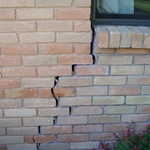
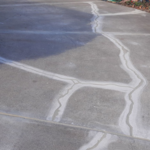
Yes, it is normal to see some minor hairline cracks in brick or mortar over time, often due to natural foundation settling. However, not all cracks are harmless. You should be concerned and contact a masonry professional for an inspection if you notice cracks that are getting wider or longer, or if new ones keep appearing. Other serious warning signs that can indicate significant structural or foundation damage include large vertical cracks (especially those that widen as they go up), stair-step cracks, L-shaped cracks, and deep horizontal cracks. Factors like temperature changes, moisture, and structural loading can also cause cracks to form or worsen.

The Talent, OR homeowners’ guide to masonry services

From average costs to expert advice, get all the answers you need to get your job done.