



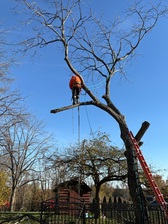

Get matched with top arborists in Ashtabula, OH

Ashtabula homeowners rate arborists in our network
4.5

(112 reviews)

Top-rated arborists.

Need a pro for your arboricultural service project in Ashtabula, OH?

Select your specific project to find the pro for you.
Arborists questions, answered by experts

The best time to trim trees is in late fall through winter when the tree has slowed its growing for the year. Cold weather stops insects and fungal growth from attacking a new tree wound. Summer and fall are considered the worst times to trim trees, but it’s permissible in certain scenarios, such as tree disease, damaged branches, or small, aesthetic cuts.

Since each tree is different, it’s impossible to say how long a dead tree can remain on your property. While it could be days, months, or even years, it’s highly likely that, at some point, the tree will fall. In the meantime, dying or dead trees can become a haven for pests, so it’s best to have them removed sooner rather than later.

Make sure the tree roots soak around a day before you dig the tree up for the transplant. Keep the roots wet while the tree is above ground. After the transplant is finished, provide consistent water every day for the first month or so. You don’t want to overwater the tree, but you do want to keep the roots wet so they can thrive in their new environment.

For safety reasons, leaning trees are best removed by a professional, as they may often tear away from the hinge, causing you to lose control over where the tree falls. If you choose to cut down a tree leaning slightly, avoid cutting off root protrusions before you start. Make your hinge a little longer than usual by cutting it deeper (up to 30% of the diameter) and applying a wedge into the felling cut on the side the tree is leaning. Stand away from the direction the tree leans while making your felling cut.

The felling notch you make before you make the final cut will determine which way the tree will fall. The cut will be in a wedge or triangle, and the tree will fall from the highest point of the triangle. You can use this, as well as the process described above, to estimate where a tree will fall.