"The tech was very knowledgeable and went above and beyond to satisfy us. Our faucet was broken would not attach to the sink as the copper seal broke to the water lines."
"One oven doesn't work at all ( my choice, see above), the "working" oven was never calibrated properly so using it is hit or miss. It's time to call American Home Shield to see about replacing the entire unit. I'm waiting to finish other home projects before calling them. I don't know if I'll request Greenway again."
Install Above Ground Pools FAQs, answered by experts
Whether or not a pool needs a dedicated circuit depends on the electrical needs of the motor, lights, and pump. Keep in mind that pool motors can use a lot of electricity. A dedicated circuit can prevent the breaker from tripping whenever you use the pool. A small motor for an equally small pool may only need a GFCI outlet. It’s best to plug it directly into the outlet rather than using an extension cord. You should also consult an electrician to ensure your pool’s electrical system is in accordance with local regulations.
In most states, it is a legal requirement to have a fence around your pool to protect both swimmers and pool owners. These laws can vary by state, city, and county, so you must research the specific regulations in your area before installation. The rules may also differ for inground versus above-ground pools, with inground pools typically requiring a full fence. Additionally, most homeowners' insurance providers will require a fence around a residential pool before providing coverage. As a general rule, it's always best to have a fence for everyone's safety.
If you don’t bond a pool, you risk electric shock for those walking around or swimming. Bonding creates safe pathways between the electricity needed to run the pool and metallic parts also necessary for the proper function of the pool. Once the pool is bonded, it’s ready for grounding, the second step in creating an electrically safe pool.
In combination with adequate filtering and water chemical balance, vacuuming will keep your pool from being overrun with algae. If your pool is experiencing algae growth, the same combination will get rid of it with a bit of patience. Heavy algae growth may require the use of an algaecide, and in some cases, you’ll want to vacuum the pool 24 to 48 hours after using algaecide to remove dead algae debris.
Because they are smaller than an average-sized swimming pool, building a plunge pool is less costly than a traditional pool. In-ground swimming pools cost about $67,000, while plunge pools cost around $20,000. You won’t have as much room to swim in, but the smaller size means you spend less on land excavation, materials, and hourly labor rates.
The Stuart, NE homeowners’ guide to above ground pool installation services
From average costs to expert advice, get all the answers you need to get your job done.
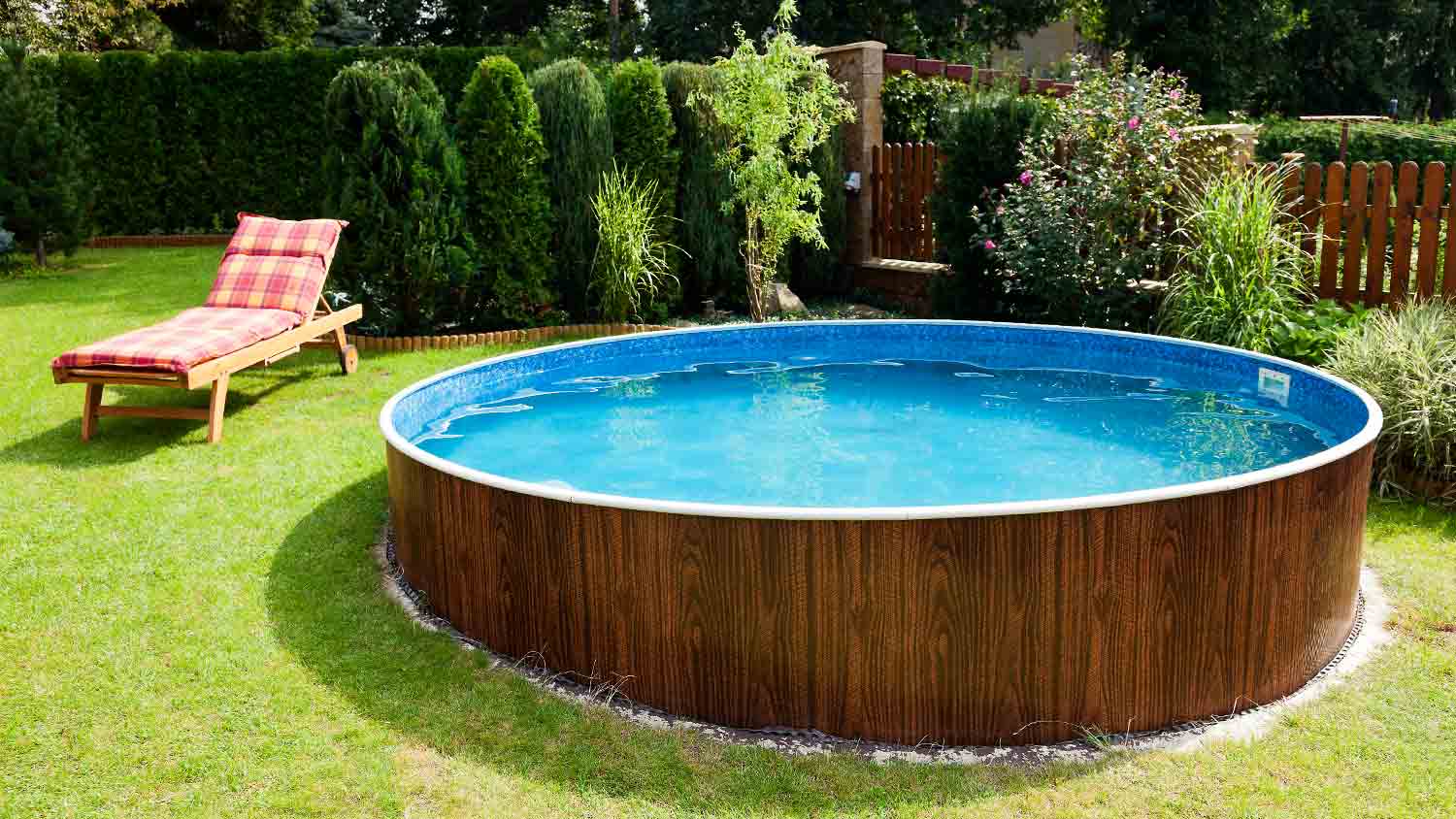
Above ground pools are more affordable than inground pools, so can you put an above ground pool in the ground to save money? Learn when it’s safe to do so.