




•
Looking to take a dip? Container pools are a rising, eco-friendly trend. This guide will help you understand shipping container pool costs.
Get your pool project off the ground


True above ground pools aren’t made to withstand the inward pressure from soil and shouldn’t go in the ground.
Burying an above ground pool is often safe up to a certain shallow depth, but always refer to the manufacturer’s specifications.
Semi-above ground pools are slightly more expensive but are safe to bury to greater depths.
Whether you’re looking to save money or have landscaping constraints, it might be tempting to buy an above ground pool and simply install it below ground. But, can you put an above ground pool in the ground safely? The short answer is that you sometimes can—generally not more than a foot or two, though—but you should typically avoid it. In this guide, we’ll explain everything you need to know about putting an above ground pool in the ground and provide a simple alternative that’s much safer and still more affordable than an inground pool.
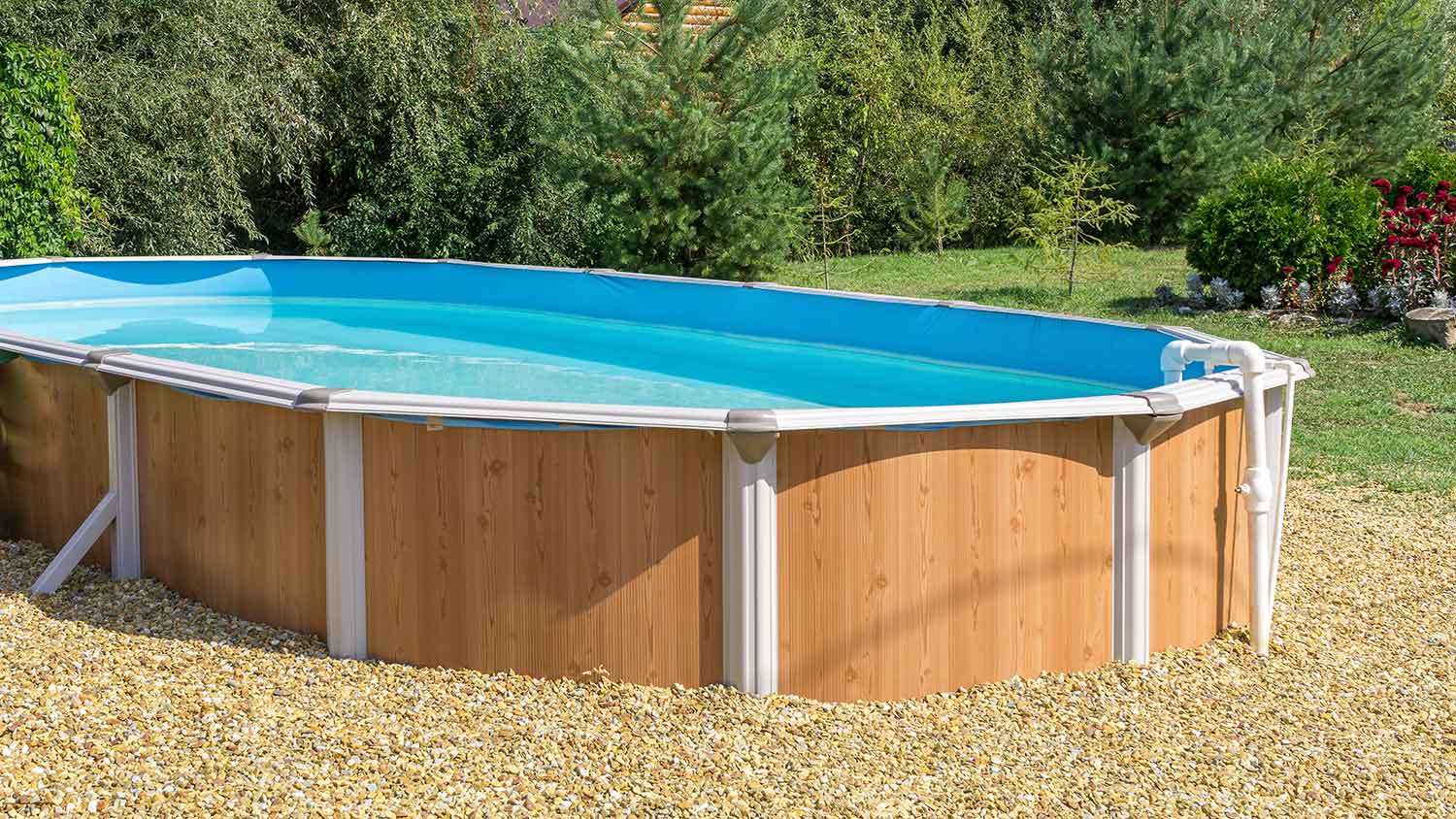
Most above ground pools include specifications for partially burying them without voiding the warranty or putting swimmers at risk of injury. You should always check with your pool’s manufacturer for the specific depth, but it’s usually only up to around two feet, meaning a good portion of your pool will still stick out above the ground.
It’s not safe to put an above ground pool fully in the ground. We’ll get into specifics regarding why that’s the case below, but know that you’ll not only void your pool’s warranty but also increase the risk of your pool collapsing. If this occurs when family members or friends are swimming, they could get severely injured.
There are a few reasons homeowners might want to bury an above ground pool:
To save money. One of the reasons burying an above ground pool is appealing is because it opens the door for a DIY excavation and pool installation. On average, the cost of an inground pool is around $50,000, while the average cost of an above ground pool is just $4,000.
To match the pool height to an existing deck. If you have an elevated deck or patio in your yard, you might want it to line up perfectly with the top of your pool. That might not work out with an inground pool, but burying an above ground pool would give you more flexibility.
To accommodate sloped land. Installing an inground pool on sloped land isn’t possible, so some homeowners consider partially burying an above ground pool to accommodate the slope. You could also hire a pro to level your land for a pool, but this can get extremely expensive.
We’ll reiterate that installing an above ground pool in the ground—even partially in the ground—usually isn’t a good idea. However, there is another option, which we’ll discuss at the end of this article.
There are a few reasons you should avoid putting an above ground pool in the ground, the most important of which have to do with safety.
First and foremost, burying an above ground pool puts undue strain on the pool walls that could cause them to collapse inward, putting anyone inside the pool at risk. The walls of an above ground pool are designed to withstand outward pressure from the water, but they won’t stand up as well to inward pressure from the soil.
If that inward pressure becomes too much for the pool to handle, the walls will collapse, leaving you with a mess of a yard and, potentially, severe injury to anyone in the pool.
Above ground pools often have through-wall skimmers and filters that are meant to sit above the ground. When you put an above ground pool in the ground, that equipment will sit at least partially below the surface. If the equipment isn’t made to stand up to the weight of the soil or function underground, you risk damaging it beyond repair.
Finally, inground pools are made to stand up to constant exposure to moisture and soil, while above ground pools typically aren’t. The walls are more likely to corrode from the outside inward over time, especially if you have acidic soil or clayey soil that holds moisture.
This limits the lifespan of your pool, potentially eliminating any savings you’d see upfront, especially if you’re then faced with the cost to remove your pool and install a new one properly.
While it’s not advisable to bury an above ground pool, you can buy and bury a semi-above ground pool. Semi-above ground pools differ in a few important ways that make them safe to bury or partially bury to suit your needs while still saving money over a standard inground pool. These include the following:
Reinforced walls. Most importantly, semi-above ground pools have stronger walls that will resist both the outward pressure from the water and the inward pressure from the surrounding soil. This alleviates the risk of the pool collapsing after installation.
Protective coating on the outside walls. Pools designed to sit fully or partially underground have protective coatings on the outside of the walls to prevent corrosion from acidic soil and constant exposure to moisture in the ground.
Different setup for pool equipment. Semi-above ground pools often come with higher-end pool equipment and a different setup for skimmers that are designed to sit underground. This eliminates the risk of damage to your equipment from the weight of the soil.
Semi-above ground pools cost more than above ground pools but far less than inground pools. And the extra cost is worth it to ensure the safety of your family and the longevity of your pool.
No matter which direction you go, we recommend contacting an above ground swimming pool company near you to make sure your pool is installed safely and comes out looking great.
Alvaro waas able to schedule my countertop installation on very short notice. They did a good job installing the Corian countertop and had to carry the 12 foot long pieces of coring from my barn to the kitchen. they kept me up on the work they were doing and were very pleasant and helpful.
 Skyline PROS CONSTRUCTION LLC
I had a great experience with Lifetime Windows and Doors. I worked with Matt to purchase and install a new front door. I love my door and the accent glass, price was as expected, installation was smooth, good communication, and everyone is so nice. I would work with Lifetime again for...
 Lifetime Windows & Doors
Chris, Steve and their crew are thorough and professional. They are meticulous and follow instructions diligently. They treat the client and their staff with courtesy and respect. The crew is safety conscious and the Ecomaids products are both effective and ecologically safe. I highly...
 ecomaids of Sparta-Morristown-Hackettstown
I had a wonderful experience with MACO Construction. Maor cleaned our stainless steel liner and fireplace. Looking at his work, anyone can tell that he has many years of experience and knowledge about chimneys and fireplaces. These guys are certified and trained to perform the correct work on...
 Maco Construction, Inc.
Iskra Construction was a great choice for our Grading Project. Shawn was easy to talk to and very respectful. The work performed was outstanding. We highly recommend Iskra Construction.
 Iskra Excavation, Inc.
installer worked alone and did a an excellent job
 Dreamstyle Remodeling of New Mexico
From average costs to expert advice, get all the answers you need to get your job done.
Looking to take a dip? Container pools are a rising, eco-friendly trend. This guide will help you understand shipping container pool costs.

Lap pools are a great option if you're more interested in exercising than hanging out on a floatie. Learn all about lap pool costs in this guide.

Pool heater problems could point to many issues, some of which you can troubleshoot. Find out repair costs for heat pumps, natural gas, and solar pool heaters.
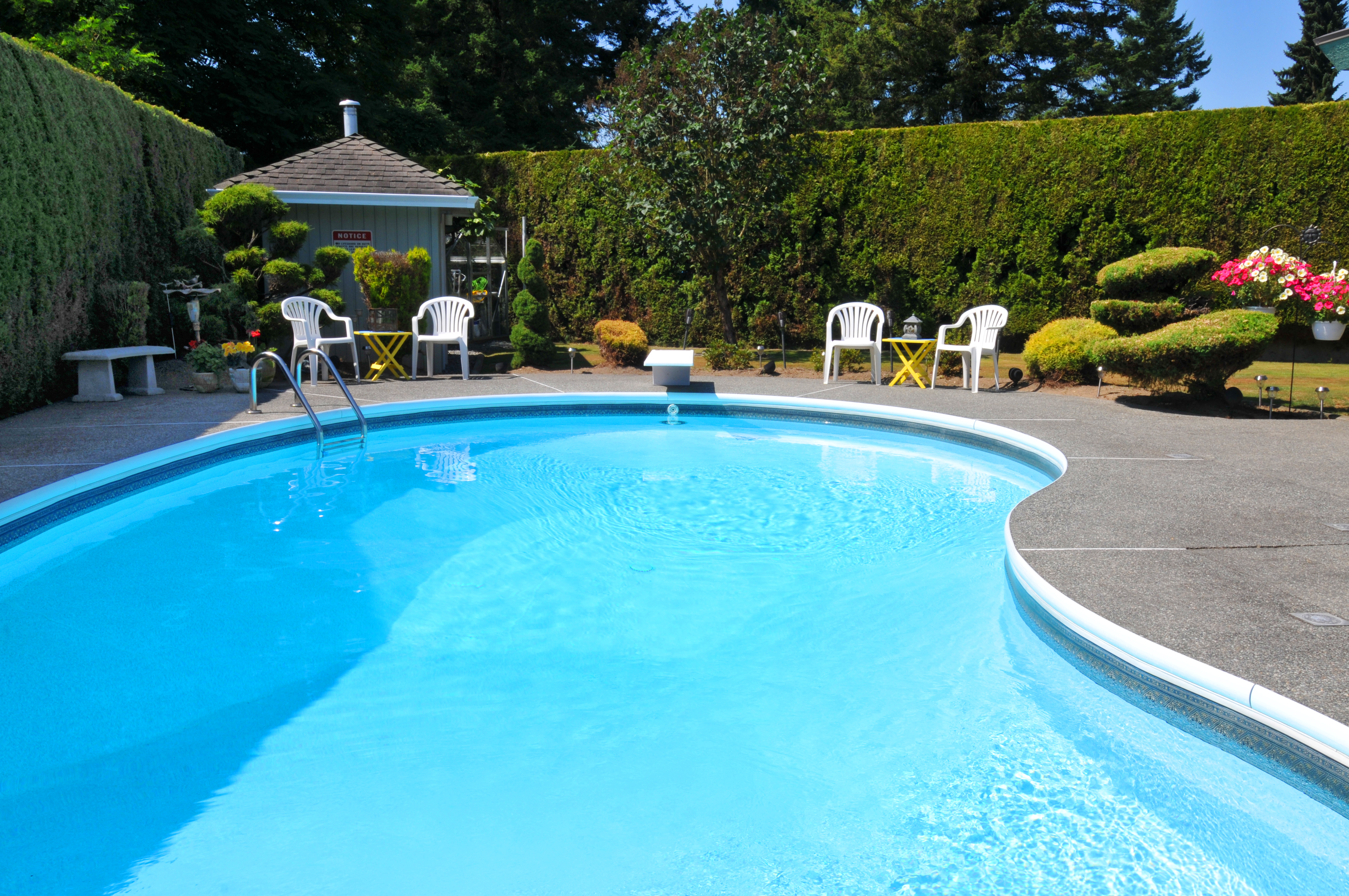
Discover the cost to install a solar pool heater, including average prices, key cost factors, and tips to save on your project.

A pool liner can protect your pool from leaks and improve its appearance. Learn more about the different types of pool liners and which is right for your pool.

Knowing how much salt to add to a pool will prepare it for use on a hot day. Use these calculations to keep your pool salt levels in the right spot.