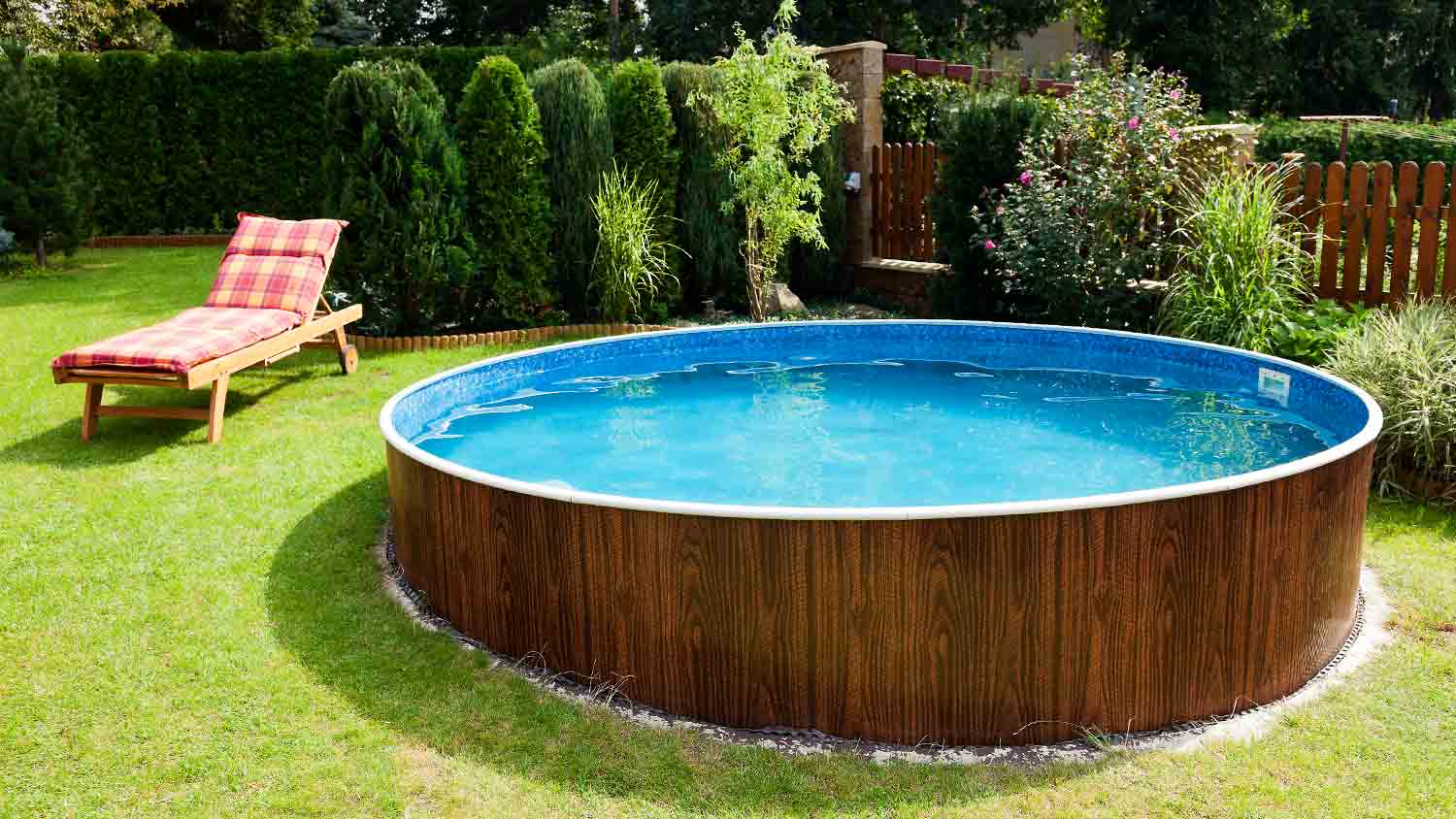
Install Above Ground Pools questions, answered by experts
Yes, you can absolutely use a sand filter with a saltwater pool, but you’ll have to make sure you have the right grade of sand to catch smaller particles, just like in a standard pool. To choose the right pool filter, consider the degree of filtration you’ll need. Cartridge or diatomaceous earth filters can remove smaller particles, so they’re better suited for a less chlorinated saltwater pool.
Completely refreshing the water in an aboveground pool every five to seven years helps keep it free of bacteria and algae. Emptying the pool also allows you to clean, repair, or replace the pool liner. Schedule your water change when the weather is mild, as intense heat or cold can damage the pool liner when the pool is empty.
Filter balls don’t work as well as sand filters because they’re unable to handle large debris, are prone to clogging, and require frequent cleaning. While they can seem more convenient and less expensive than sand filters, most need to be removed and washed regularly, or they won’t filter well and struggle with algae and dirt. Speak with your pool maintenance pro about the best filtration option for your pool.
Installing a pool chiller can give you more control over the temperature of your pool, especially if you live in a climate with hot summers. Just a few degrees of cooling can make your swim feel more refreshing and allow you to use fewer pool chemicals by slowing down the growth of algae. You might not need a pool chiller if you live in a climate in which temperatures tend to dip at night.
Spools can come as small as 10 x 6 feet, so they don’t take up a lot of room in your yard. You’ll want to plan for pool decking, fencing, and other features that may take additional space, but for the most part, a spool’s small footprint makes it a great choice when you don’t have much yard space to spare.
The Elgin, NE homeowners’ guide to above ground pool installation services
From average costs to expert advice, get all the answers you need to get your job done.
Above ground pools are more affordable than inground pools, so can you put an above ground pool in the ground to save money? Learn when it’s safe to do so.