



Top-rated excavation pros.

Get matched with top excavation pros in Summit, MS

Enter your zip and get matched with up to 5 pros

Need a pro for your excavation project in Summit, MS?

Select your specific project to find the pro for you.

Find Excavation pros in Summit

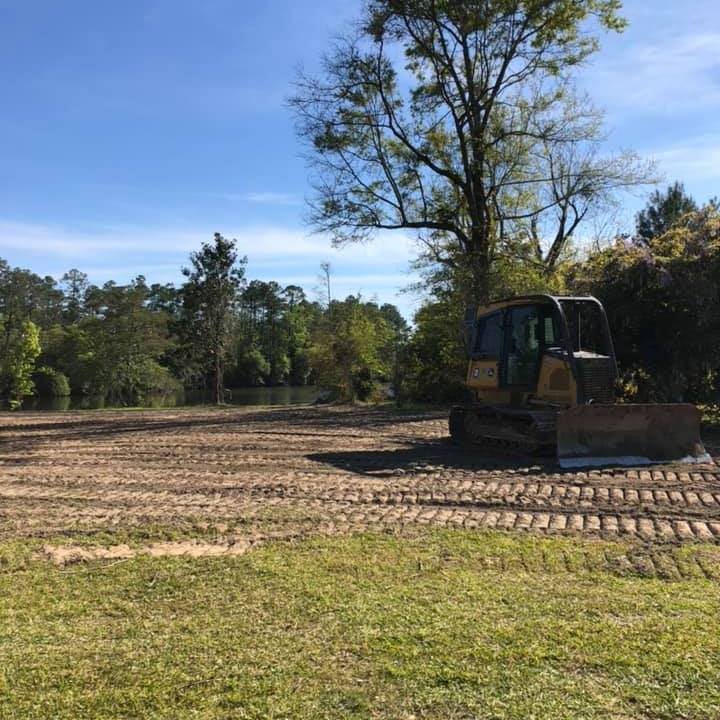
Magee Fencing and Land Clearing LLC
New to Angi
Building Site - Preparation and Clearing

Serving Summit, MS and surrounding areas

Approved

In business since 2023

Free estimates

Credit card accepted

Here at Magee Fencing and Land Clearing LLC we are family owned, and operated with over 20 years of experience.. We take great pride in our expertise, quality, and customer service, that we provide to meet the consumer's needs. It is our mission to provide excellent workmanship and complete customer satisfaction, from the start to completion of a project. In order to understand the needs and expectations of our customers, we take great care to work and communicate with every client in a professional manner. Our reputation is based on service, safety, and quality, regardless of how large or small the job we will treat your home, or your business as we would treat our own. Give Magee Fencing and Land Clearing LLC, a call today, We look forward to working with you!

Rimes Excavating and Dozer Work
5.0(
1
)
Building Site - Preparation and ClearingBuilding Site - Preparation and Clearing - For BusinessExcavation - Major Grading or Resloping+1 more

Serving Summit, MS and surrounding areas

In business since 2019

Free estimates

Rimes Excavating and Dozer Work proudly serves our customers with pride, integrity, and attention to details that matter most to you. This is one of the many things that sets us apart from the rest. We are family business and have been around the Pike county area for 30 years. Please give us a call today. We do have minimum on our equipment dozer is $125 hour with a five hour minimum and the track hoe $100 an hour with a five hour minimum.

Response time20 mins
Recommended by100%of homeowners
...
Showing 1-10 of 52
Excavating questions, answered by experts

There is no standard depth for burying a septic tank; they are typically buried anywhere from 4 inches to 4 feet underground. The final depth depends on several factors, including the depth of your main sewer line, the height of the bedrock, soil type, local regulations, and the property's landscape. If you plan to grow grass or plants over the tank, a depth of at least 4 to 6 inches is recommended. Deeper tanks can be more difficult to locate, but a septic professional can help find it for you.

Excavation is priced in cubic yards, so you’ll need to find the volume of the area in order to calculate costs. Multiply the length, width, and proposed depth of your excavation site, then convert it into yards to get the volume. Multiply this figure by the price per cubic yard.

Most homeowners can measure by hand to get a rough estimate, even if it’s tedious. You may want to pull out a tape measure or use a string to help mark the area.

Drilled wells have a pipe sticking up that’s covered in a plastic or metal casing. On the other hand, a dug well will look like a big hole in the ground and is more similar to what you’d see in a fantasy or Western movie. If you want to be sure, contact the city for documentation on your property’s construction and excavation history. 

The average cost of excavation is approximately $3,200, with typical projects ranging from $500 to $15,000. Depending on the contractor, you may be charged between $50 and $200 per cubic yard or an hourly rate of $40 to $180 for an excavation specialist. The total cost is influenced by several factors, including the project size, the amount of soil to be removed, and the soil's condition. Hard soil, tree roots, or excessive rocks and clay can increase the price, potentially adding $200 to $1,200 to the final bill. Other factors that can drive up costs include the presence of nearby structures that complicate the work or tight spaces that require manual excavation instead of heavy machinery.

Trenching and boring are two distinct methods for installing underground utilities. Trenching involves digging a channel using equipment like an excavator, trencher, backhoe, or shovel. While it is a simpler process, it causes significant disruption to the surface, landscaping, and surrounding ecosystems.

Boring, also known as directional boring, is a less invasive alternative that uses a drill to create a tunnel for utility lines without disturbing the surface. This method is more precise and is ideal for installations that need to go underneath buildings, roads, or bodies of water. Although boring is less disruptive, it is generally more expensive than trenching.

The Summit, MS homeowners’ guide to excavation services

From average costs to expert advice, get all the answers you need to get your job done.