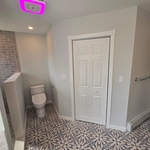
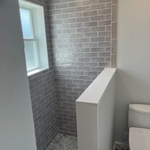
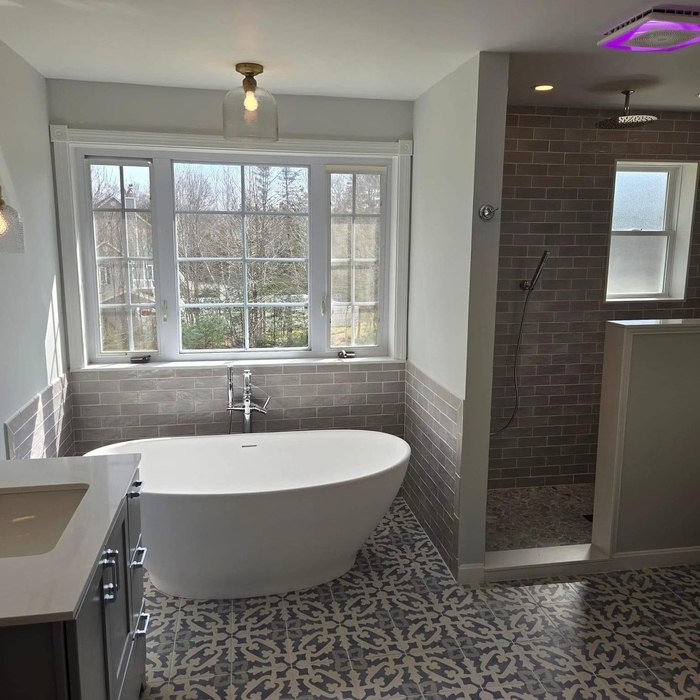
Top-rated drywall pros.
Get matched with top drywall pros in Exeter, ME

Enter your zip and get matched with up to 5 pros

Need a pro for your drywall service project in Exeter, ME?

Select your specific project to find the pro for you.

Find Drywall pros in Exeter

Avatar for DP Painting
DP Painting
5.0(
4
)
Drywall - RepairDrywall - Repair - For Business

Serving Exeter, ME and surrounding areas

Approved

Super Service Award Winner

In business since 2024

Free estimates

Small jobs welcome

"David figured out a challenging project on a cabinet so old that its hinges are no longer available. He was courteous, professional and punctual. I am grateful that his creative thinking and stick-to-itiveness resulted in a cabinet door that is working again! Thank you, David!!!"
Interior
Interior
Entryway
Entry
Jobs

+12

Response time6 hrs
Response rate87%
5 neighbors recently requested a quote
Avatar for Ready To Rock Drywall, Inc.
Ready To Rock Drywall, Inc.
4.0(
1
)
Drywall - InstallDrywall - Install - For Business

Serving Exeter, ME and surrounding areas

Approved

In business since 2000

Free estimates

Credit card accepted

With more than 35 yrs of experience, Ready to Rock Drywall INC. is dedicated to providing our customers with the best quality at a great price. We are here to build relationships with our customers and communities and to provide our employees with a great place to work. We look forward to working with you!

Hallway - Steel Stud Framing
Classroom for EAAA - Brewer, ME
Response time1 day
Recommended by100%of homeowners
...
Showing 1-10 of 84
Drywall questions, answered by experts

The amount of drywall you need for a 1,000-square-foot basement depends on the ceiling height, angles, number of doors and windows, and more. To find the wall square footage, multiply the width and height of each wall, minus any gaps from windows or doors, and add the totals together. You’ll also need enough drywood nails or screws to install the drywall correctly.

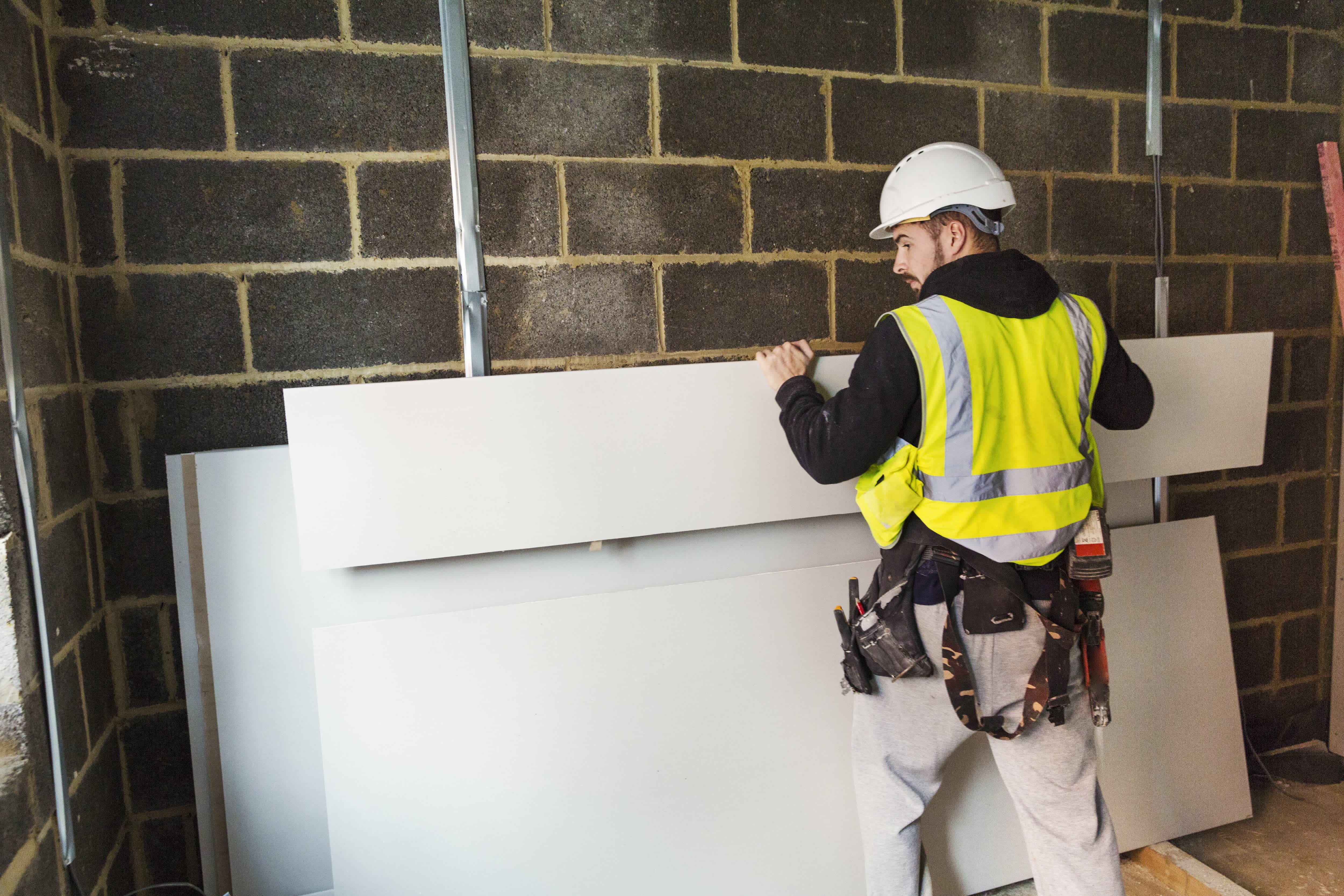
You should always hang drywall from the top down. Starting at the top makes it easier to create a straight, tight line between the ceiling and the wall. Any gaps that occur will be at the bottom, where they are easier to manage. You can either cut the bottom piece of drywall to fit the remaining space or cover the gap with baseboard trim. Additionally, starting at the top is physically easier, as you won't have to fit the top sheet into a tight space between the lower sheet and the ceiling, or try to balance the upper sheets on the lower ones while securing them.

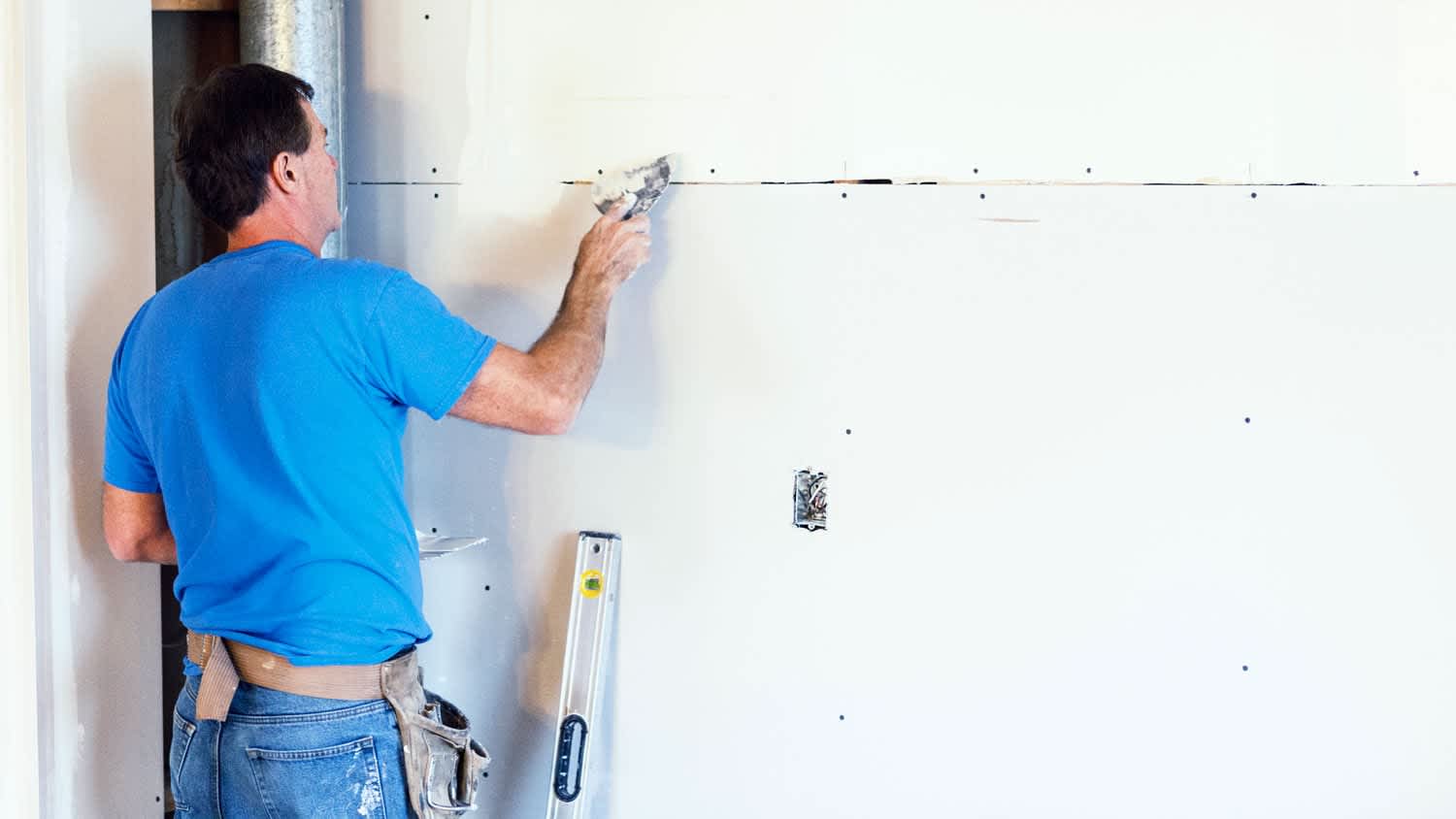
Yes, a fan can help drywall mud dry faster by improving air circulation and reducing humidity in the room. Drywall mud dries through evaporation, so increasing airflow speeds up this process. However, you should position the fan to blow across the room rather than directly on the wet mud. This helps prevent drying too quickly, which can cause cracking. You should also use a dehumidifier if high humidity is an issue.

Although they have similar applications, spackle and joint compound are not the same. Their primary differences lie in their composition, consistency, and ideal use cases.

Spackle is composed of gypsum and binding agents, making it thicker than joint compound. It dries quickly and is easy to sand, which makes it ideal for small wall repair projects like filling nail holes or patching minor damage.

Joint compound, also known as drywall mud, consists of limestone and gypsum. It is primarily used for large-scale projects, such as taping and finishing the seams on newly installed drywall. It tends to shrink more than spackle and can be more difficult to spread.

While both products can be used to fill small depressions and cracks, spackle cannot replace joint compound for taping and mudding new drywall. Conversely, you can often use joint compound for small patching jobs typically done with spackle.

When you are learning how to tape and mud drywall, waiting for things to dry requires a lot of patience. So how long does drywall mud take to dry? On average, it takes about 24 hours. However, it depends on things like the thickness of the mud, as well as the room’s temperature, humidity, and ventilation. Using thin layers of mud in a warm, low-humidity room with good airflow reduces average drying time. You also could speed up drying time by making use of hot drywall mud, which consists of a powder that you mix with water, instead of using pre-mixed mud. 

The Exeter, ME homeowners’ guide to drywall services

From average costs to expert advice, get all the answers you need to get your job done.