







Top-rated septic tank pros.

Get matched with top septic tank pros in Springhill, LA

Enter your zip and get matched with up to 5 pros

Need a pro for your septic tank service project in Springhill, LA?

Select your specific project to find the pro for you.

Find Septic tank pros in Springhill

Avatar for Bubba Pump Septic Company
Bubba Pump Septic Company
5.0(
10
)
Septic Tank - Clean or Pump OutSeptic Tank - Clean or Pump Out - For Business

Serving Springhill, LA and surrounding areas

In business since 2023

Free estimates

Emergency services offered

"Bubba Pump Septic Company is hands-down the best in the business. From the moment they arrived, it was clear I was dealing with true professionals who take pride in their work. They were prompt, knowledgeable, and incredibly thorough—explaining everything in a way that made the whole process easy to understand. What really stood out was their honesty and attention to detail. They didn’t try to upsell anything unnecessary, and they treated my property with respect, leaving everything cleaner than they found it. You can tell they genuinely care about their customers and the quality of their service. If you want a septic company you can trust, one that shows up on time, does the job right, and treats you like family, Bubba Pump is the one to call. Exceptional"
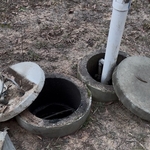
Septic images
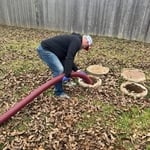
Septic images
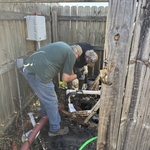
Septic images
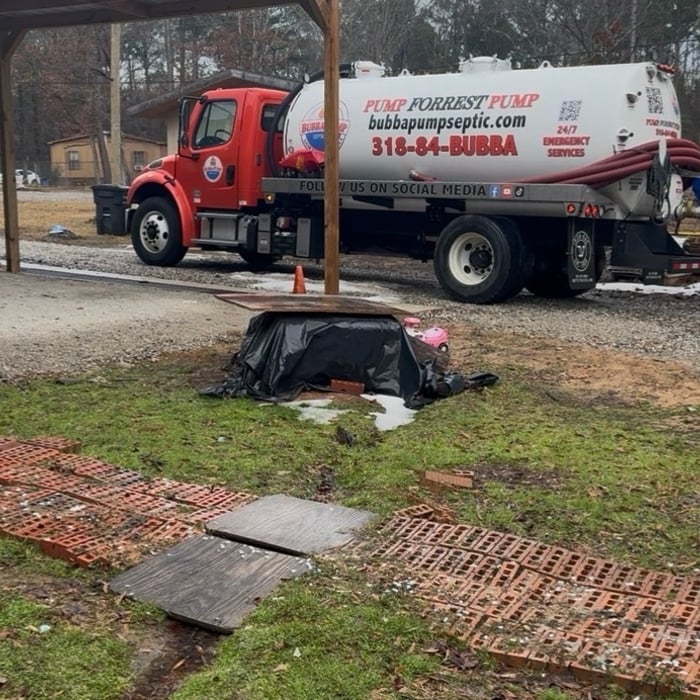
Septic images
Septic images

+1

8 neighbors recently requested a quote
Septic Tanks questions, answered by experts

For the most part, choosing between 30/50 psi and 40/60 psi is based on your water-pressure preference. However, it can also depend a little bit on your house—if you have older plumbing, a lower water pressure can be easier on the pipes (and a bit more gentle on your well pump). 

The lower 30/50 pressure is usually enough for a single-story home, but you may want 40/60 if you have multiple stories, as the extra pressure helps water flow smoothly up to the second floor.

Because well water is not artificially filtered or pre-treated, it may contain contaminants. As a result, it’s possible for well water to damage pipes based on what is in the water. Well water can be corrosive, slowly rusting and dissolving pipes, fixtures, and fittings. The corrosion can affect the taste and quality of the drinking water that comes out of the taps in your home. 

The pressure in a well pressure tank should be set 2 to 3 PSI below the pump's cut-on pressure. The cut-on pressure is the lower number in the pressure setting (e.g., the '30' in 30/50 PSI) and is the point at which the pump starts. The cut-out pressure is the higher number, where the pump stops.

For example:

  • If your pressure switch is set to 30/50 PSI, the tank pressure should be 27-28 PSI.

  • If your pressure switch is set to 40/60 PSI, the tank pressure should be 38 PSI.

Common pressure settings for household applications include 20/40, 30/50, and 40/60 PSI. The difference between the cut-on and cut-out pressure is typically 20 PSI.

A well does not run out of water because the groundwater continues to refill with rainwater that seeps through the ground. If the well is too shallow or there is a drought, a well can run dry or be short in supply. It’s important to have a well deep enough to source enough water for your home’s use. Deeper wells tap into more groundwater reserves. If your well is not producing enough water, you may need to redig your well.

Conventional anaerobic septic systems are the most cost-effective and least expensive type, with installation costs typically ranging from $3,000 to $8,000. For comparison, sand filter systems cost between $7,000 and $18,000, while mound systems are the most expensive at $10,000 to $20,000. Several factors influence the final price. The tank material is a key consideration; plastic tanks are the most budget-friendly option, starting around $2,900, but concrete and fiberglass tanks offer greater durability and longer life spans at a higher cost. The size of the tank also affects the price. For example, a 1,000-gallon tank costs between $900 and $1,500, whereas a larger 1,500-gallon tank costs $1,500 to $2,500.

The Springhill, LA homeowners’ guide to septic tank services

From average costs to expert advice, get all the answers you need to get your job done.