


Top-rated excavation pros.

Get matched with top excavation pros in Clayton, IL

Enter your zip and get matched with up to 5 pros

Need a pro for your excavation project in Clayton, IL?

Select your specific project to find the pro for you.

Find Excavation pros in Clayton

Avatar for Precision Lawn Care & Landscaping
Precision Lawn Care & Landscaping
4.8(
5
)

Serving Clayton, IL and surrounding areas

Approved

In business since 2015

Free estimates

Small jobs welcome

"Nicholas and his crew were great to work with. They were very knowledgeable, pleasant and polite to work with. The project was started on time and finished within a week. Nicholas listened to my ideas, worked with me and if my plants/shrubs suggestions would not grow well in that area, he would suggest others that would be better suited. When the project was finished, the area was cleaned up and looked great. I was well pleased with this company and highly recommend them ."
Response time3 days
Recommended by100%of homeowners
Showing 1-10 of 29
Excavating questions, answered by experts

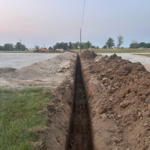
Depth is not a qualifying component of evacuation. Any human-made cut, cavity, or depression in the earth’s surface is considered excavation. The hole from excavation can be any size, shape, or depth. Excavation is used to create foundations, reservoirs, drainage ditches, and roads. Long, narrow excavations are called trenches and are often used for underground utilities.

Trenches are typically 12 to 24 inches deep and 8 inches wide. However, the required depth depends on the specific project and local ordinances. For example, a French drain may need to be 18 inches deep, while a water pipe might require a depth of 24 inches and a drainage pipe 36 inches. Your city or county may have specific regulations, so it's wise to consult with an excavation professional to determine the correct depth for your project.

Your contractor should handle dust control during the project. It's best to speak with your contractor beforehand to check if they plan to cover your furniture, protect your vents, or use fans to redirect dust. Eliminating drywall dust is a particularly large challenge during construction, so always take this into account during your planning phase.

No, you typically cannot use metal detectors to find your sewer line. Most sewer lines are made of non-metallic materials such as PVC, clay, or cast iron, which are not detectable by standard metal detectors. Metal detectors are designed to locate metallic objects, so they won't be effective for identifying the path of a non-metallic sewer line. To locate your sewer line accurately, it's best to use other methods.

Prior to excavation, you should prepare the dig site and call 311 before you sign anything.

To get your site ready for excavation, you should move anything in the area that isn’t affixed to the land. You can save money on the excavation by removing hardscaping, including walkways, decks, concrete patios, and paver patios.

Before you carry out any digging, you should call 311 to confirm that there are no utility lines running through your excavation site. Skipping this step could lead to severe injury and property damage if your excavator hits a water, sewage, or gas line.

The Clayton, IL homeowners’ guide to excavation services

From average costs to expert advice, get all the answers you need to get your job done.