Get matched with top fencing pros in Arbon Valley, ID
Top-rated fencing pros.

Need a pro for your fencing service project in Arbon Valley, ID?

Select your specific project to find the pro for you.

Find Fencing pros in Arbon Valley

Gunhand Welding
5.0(
1
)

Serving Arbon Valley, ID and surrounding areas

Approved

In business since 2017

Free estimates

Offers commercial services

"Over-the-top professionalism! They came to my rescue without hesitation. Got the welding job done in a timely manner and did a great job. I highly recommend this company for your welding needs repairs or builds. I was totally blown away that they were willing to travel so far to come and rebuild my trailer hitch so that I could continue my journey."
Response time10 mins
Recommended by100%of homeowners
Avatar for A&N Hauling and Demo LLC
A&N Hauling and Demo LLC
5.0(
2
)

Serving Arbon Valley, ID and surrounding areas

In business since 2022

Free estimates

Small jobs welcome

We are a locally owned and operated company that values honesty and integrity in all aspects of our business. Our major focus is on the quality our work and producing outstanding results. We are committed to creating a level of value unmatched by any of our competitors. We look forward to building lasting relationships with our clients and guarantee your satisfaction! Call us today to discuss your project.\n

Response time3 hrs
Response rate91%
Recommended by100%of homeowners
Showing 1-10 of 25
Fencing questions, answered by experts

A silt fence should be buried in a trench that is 6 to 12 inches deep. A depth of at least 6 to 8 inches is necessary to prevent water and sediment from running underneath the fence. A deeper trench, up to 12 inches, provides better anchoring during wet and windy weather. To ensure proper installation, look for a red line on the silt fence fabric, which often indicates the correct burial depth. Always adhere to local guidelines and regulations; a professional contractor will be familiar with these requirements.

In terms of materials, chicken wire mesh will be the most inexpensive option to use when building your fence. The downside is that it’s not the most attractive garden fence option. In a similar vein, you could choose a DIY fence made out of repurposed items, like car tires, or wooden pallets, either of which would be free to collect. 

A chain link fence typically lasts between 15 and 20 years, but with proper maintenance, it can last for 30 years or more. To preserve the fence, it's important to keep the mesh wire tight, which can be done with a come-along tool every 6 to 12 months. Investing in a fence with a galvanized, powder-coated, or vinyl-coated finish can increase its lifespan to 20 to 30 years and reduce maintenance needs, as these coatings provide extra protection against the elements.

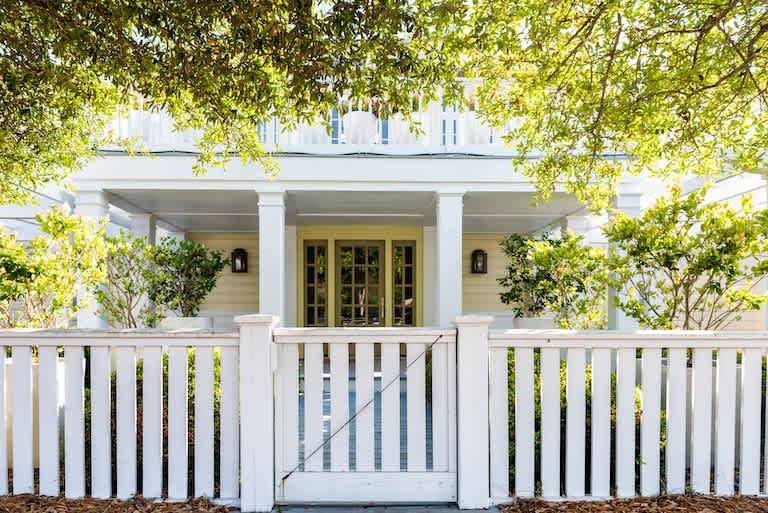
Installing a picket fence includes measuring and marking the area where you plan to build the fence, laying out all of the materials, digging post holes, setting the posts using concrete, measuring the rails, attaching the rails, attaching the pickets, and then painting or staining the fence if you chose a wooden fence material

The depth of the fence posts depends on the height of your fence. If you’re installing a 6-foot fence, then digging 2-foot-deep holes for the fence posts will help ensure a secure installation. However, if you’re installing an 8-foot fence, the posts will need to be deeper than 2 feet to support the structure properly. Also, consider how far apart the fence posts should be to provide adequate support.

The Arbon Valley, ID homeowners’ guide to fencing services

From average costs to expert advice, get all the answers you need to get your job done.