


Get matched with top electricians in Cos Cob, CT

Cos Cob homeowners rate electricians in our network

4.7

(546 reviews)

Top-rated electricians.

Find Electricians in Cos Cob

Avatar for R.Piro Electric, LLC
R.Piro Electric, LLC
4.9(
65
)

Serving Cos Cob, CT and surrounding areas

Approved

Super Service Award Winner

In business since 2015

Free estimates

Emergency services offered

"Excellent service and excellent communication. They made it clear what they needed and the time it would take and it was spot on. In addition, Robert and his team were friendly and took that extra step to make it a worthwhile relationship. We would recommend R. Piro Electric to everyone we know."
Response time1 day
3 neighbors recently requested a quote
Recommended by89%of homeowners

Avatar for Mikell Electric
Mikell Electric
4.5(
28
)

Serving Cos Cob, CT and surrounding areas

Approved

In business since 2022

Free estimates

Emergency services offered

"Spencer was phenomenal! GREAT to work with. Very quick email reply to original request. Reasonable rates and he did a great job. Great service too!!! Thanks Spencer for the fiber optic wiring. Will use again. Definitely recommend!"
Response time3 days
18 neighbors recently requested a quote
Recommended by84%of homeowners
Avatar for St. Lawrence Electric
St. Lawrence Electric
5.0(
6
)

Serving Cos Cob, CT and surrounding areas

Approved

In business since 2024

Free estimates

Emergency services offered

"Kevin was great. I called him with a few questions about the process and he was able to answer them quickly and accurately. He was also able to schedule me and get the job done quickly. I would highly recommend St. Lawrence Electric."
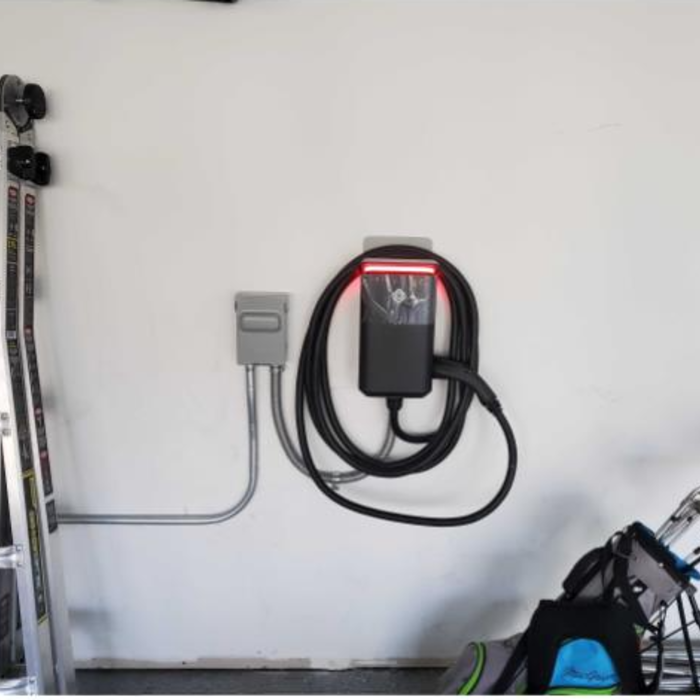
Chargepoint Charger
Emporia Charger
Tesla Charger
Response time2 hrs
Response rate100%
Avatar for Extel Communications, Inc.
Extel Communications, Inc.
5.0(
41
)

Serving Cos Cob, CT and surrounding areas

Approved

In business since 1987

Free estimates

Emergency services offered

"Extel does an excellent job. We have been customers for many years and recommend them highly. Sal and Peter are knowledgeable and helpful. Very quick response time. True partners."
Long Range WiFi Repeater
Hikvision Bullet Camera
Hikvision Dome Camera
Hikvision Bullet Camera
Hikvision Dome Camera

+1

Response time3 hrs
Response rate98%
3 neighbors recently requested a quote
...
Showing 1-10 of 420
Electrical questions, answered by experts

As a safety measure, you should always turn off the main breaker while operating your generator’s backup breaker. In addition, you should also switch off all appliance breakers so you don't have a power surge when the main breaker turns back on. And finally, turning off the main breaker prevents back-feeding, which endangers utility workers with the risk of electrocution. Back-feeding could also destroy the electrical circuits of your neighbors if they use the same power network.

That depends on your setup. If a circuit breaker already has GFCI protection, then everything connected to that specific circuit is being monitored. You don’t need additional GFCI outlets on that breaker.

However, if the breaker is not GFCI, then you should have GFCI receptacles for at-risk outlets nearby water sources, because they are not receiving protection. Breakers in a breaker box can vary between GFCI and non-GFCI. Look for GFCI labels on the breaker or try to find the breaker model number to look it up if you aren’t sure.

Outdoor outlets should be at least 15-amp, but preferably 20-amp. The exact rating will depend on the electrical load of the devices that will be plugged into the outlet and the capacity of the circuit. It's important not to overload the circuit, which can cause safety hazards such as tripped breakers or electrical fires. In general, a circuit rated for at least 20 amps is recommended for outdoor outlets, while each outlet should be rated for at least 15 amps.

Most standard residential water heaters, which are typically around 40 gallons and use 240 volts and between 3,500 and 5,500 watts, require a 30-amp, two-pole circuit breaker. For smaller, point-of-use water heaters using 120 volts and between 1,500 and 3,000 watts, a 30-amp breaker is also often adequate. However, some models may have different needs; units that use more watts than average may require a 40-amp breaker, while smaller units might only need a 20-amp breaker. Newer, tankless, or more energy-efficient models can also require a higher amperage. Having the correct breaker size is crucial for safe and efficient operation, so it's best to consult a licensed electrician to determine the specific needs of your water heater.

The average radon mitigation system uses about 876 kWh of electricity per year, although the exact amount of electricity used will vary depending on the size of the radon fan. Once the system is installed, the annual increase to your energy bill could range from $30 to $300 per year, again depending on the size of the fan.

The Cos Cob, CT homeowners’ guide to electrical services

From average costs to expert advice, get all the answers you need to get your job done.