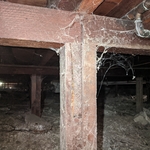
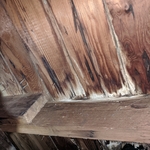
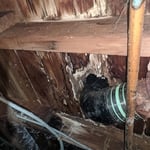
"Tom at TAS Engineering was professional, friendly, helpful, patient and highly competent and efficient. He did the assessment of my attic structural issue and identified the simplest and most cost-effective solution. He ensured that my contractor did the work to his specifications and provided the certified engineering letter that all had been addressed properly. This was exactly what I needed. I would highly recommend him and would hire him again."
"Darren was professional and courteous. He called to let us know he was running a bit late. He was great at explaining things and very thorough. He got an official report to us in a timely manner. But most importantly he assured us the house we were about to purchase was structurally sound. He even suggested ways to keep the small structural shifts in the older home from occuring."
"RES Engineering was awesome. I'm building a deck in my back yard and had done a ton of code research. I had the entire design planned out already and really just needed an engineer to tell me how deep I needed to make my footings. Through a simple phone call, RES consulted with me on how deep the footings should be as well as the live/snow load and soil assumptions that went into it. They didn't even charge me for their advice. I'd recommend them to anyone who needs some engineering support."
"Jeremy was extremely professional and efficient and was so amazing to work with!!! He literally called me the very night that I submitted a request for an engineer. Very impressive and would absolutely hire him again or refer him to anyone who needs a structural engineer."
"Mr. Medeiros was very easy to talk to and exchange ideas. He communicated well - in person and online - and his written work was well laid out. His references were easy to get in touch with and answered all of our questions. We, in the end, went with another architect, for various small reasons. None of which were because we felt that Mr. Medeiros wouldn't provide all that we needed. It was a tough decision. If you are looking for an architect that will design your dream project thoroughly and professionally, you should take the time to meet with Mr. Medeiros."
"Bryan came out and was very thorough with the inspection. He was very informative and explained things well, I will definitely be using him and his business if the need ever arises. I would highly recommend him!"
"We have been working with Todd Willoughby since early in 2018. We had purchased a piece of land along the Chesapeake Bay and wanted to build a small but thoughtfully designed contemporary garden cottage for our retirement. After speaking with a number of architects we chose Todd and we have been very happy with that decision. Over several months, we worked have closely with him through the several design phases, culminating in a very complete set of construction documents, that we are now using for bidding. Throughout the process, we have found Todd to be personable, smart, perceptive and creative. He has been able to translate our ideas into working drawings that one of the contractors noted was called the most detailed he has ever seen. Todd has captured our vision for an environmentally friendly house with solar and rainwater harvesting. We have met with him many times talk through the many details, choices, and constraints you inevitably face. He has done all the coordination needed with the other specialties the engineers, surveyor, and solar energy firm. Having enjoyed this first part of the collaboration, we are hiring Todd to help us through the bid evaluations and construction admin phases. The best recommendation would be our actual house, but until we get there we can say Todd has done an excellent and professional job getting us this far, and we look forward to working with him through to a completed project."
"From the start I knew Ryan was the right person, because he called me, the only one of the engineers that actually called me. He communicated regularly, let me know straight up the results and explained it all to me. Is also willing to answer questions from my contractor."
Structural Engineering questions, answered by experts
After completing structural engineering work in Boulder, schedule a final inspection and update your insurance coverage. Organize all warranty and maintenance documents, and create a plan for annual inspections and drainage checks, especially due to Boulder’s freeze-thaw cycles. Monitor for settlement, storm damage, and maintain wildfire defensible space. Staying in touch with local professionals and tracking code updates helps keep your home resilient in Boulder’s unique climate.
Helpful?
For Boulder projects, gather a soil composition report, seismic zone classification, and flood zone designation. Know your property’s wildfire risk, age of construction, previous modifications, and foundation condition. Zoning, historic status, and HOA rules also shape your options. Don’t forget to consider elevation, slope, wind exposure, and access for equipment—these Boulder-specific factors are key to making smart, lasting structural decisions.
Helpful?
Before starting structural engineering projects in Boulder, review zoning and historic district rules, and obtain a soil composition report since local clay soils affect foundations. Check flood zone status and HOA guidelines, and plan for possible winter weather delays. Consider seismic reinforcement and wildfire-resistant materials. Consulting local professionals familiar with Boulder’s codes and scheduling a pre-project foundation inspection can help prevent unexpected issues.
Helpful?
In Boulder, neglecting roof snow removal, overlooking ice dam prevention, and failing to address moisture can compromise structural integrity. Skipping post-hailstorm foundation inspections or overloading decks increases risk. Poor drainage maintenance is especially harmful due to local clay soils, and not maintaining wildfire defensible space or accounting for high winds can further reduce the durability of your structural improvements in Boulder.
Helpful?
After finishing structural engineering work in Boulder, keep the following: all city-issued permits, Certificates of Occupancy, and final inspection reports; the engineer’s sealed drawings and structural assessment documents; material specifications; warranty paperwork; before-and-after photos; payment receipts; and lien waivers. If your property is in a flood zone or historic district, also save related approvals and any seismic retrofit records, as Boulder’s climate and regulations make these especially important.
Helpful?
The Boulder, CO homeowners’ guide to structural engineering services
From average costs to expert advice, get all the answers you need to get your job done.
The cost of a structural engineer is easily justifiable given the value they bring to the table. Use this guide to see what hiring your professional will total in Denver, CO.
Find out the average beam installation cost in Denver, CO. Learn what you can expect to pay for materials, labor, and structural engineers for your project.
The cost of a structural engineer is easily justifiable given the value they bring to the table. Use this guide to see what hiring your professional will total.
Spotting deep foundation cracks or sagging floors? Learn about structural engineering costs, serious warning signs, and how to hire the right local pro.
It can be hard to choose the right pro for any job, but it matters. Learn how to hire a structural engineer who'll get the job done right from start to finish.