




Top-rated electricians.

Get matched with top electricians in Prescott, AR

Enter your zip and get matched with up to 5 pros

Need a pro for your electrical service project in Prescott, AR?

Select your specific project to find the pro for you.

Find Electricians in Prescott

Avatar for Tri-State Water, Power & Air
Tri-State Water, Power & Air
4.5(
6
)
Fixed Generator - InstallGenerator - InstallGenerator - Install - For Business

Serving Prescott, AR and surrounding areas

Approved (Corporate)

In business since 1992

Free estimates

Emergency services offered

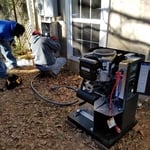
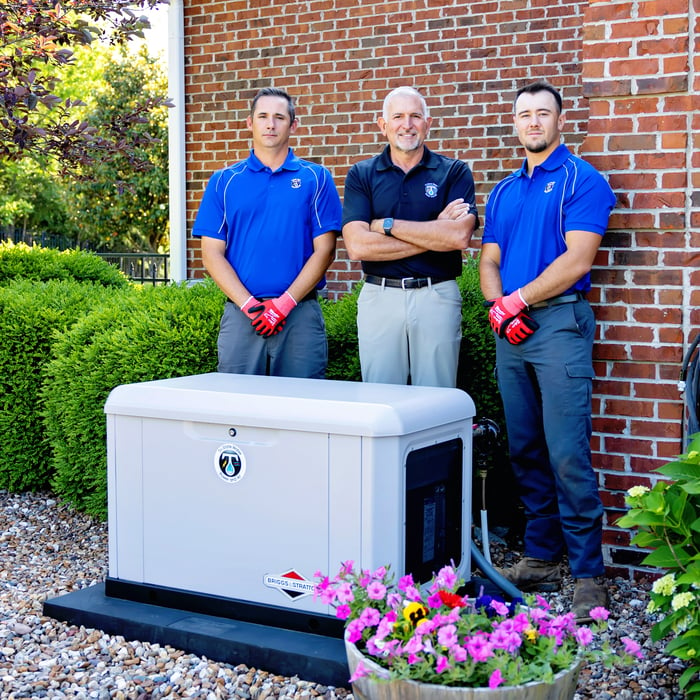
We are the experts in the field of Whole Home Generator Sales and Installation, with over 20 years of experience in the game. We provide turn-key installation by licensed professionals - 24 hour emergency service - Remote Monitoring - Long term maintenance and service by factory trained technicians.

Additional Photos
Additional Photos
Additional Photos
Additional Photos
Additional Photos

+1

94 neighbors recently requested a quote
Avatar for The Computer Guy
The Computer Guy
New to Angi
Telephone Jacks and Wiring - InstallTelephone System - Install or UpgradeTelephone System - Repair

Serving Prescott, AR and surrounding areas

Approved

Emergency services offered

Small jobs welcome

Offers commercial services

I provide professional repair and support services for most technology-related issues, including desktops, laptops, tablets, printers, scanners, kiosks, healthcare systems, and point-of-sale (POS) equipment.\n\nWith years of experience and a lifetime spent working in the technology field, I can diagnose, repair, restore, and reinstall software and operating systems. I also specialize in recovering deleted files, photos, and important data, with recovery options available to a USB drive or secure cloud storage.\n\nMy rates are affordable and straightforward: $65 per hour, with on-site service available within a 60-mile radius of Hampton, Arkansas (71744). For locations beyond 60 miles, a two hour minimum and a travel fee of $1 per mile applies.\n\nIf you're experiencing technology problems, I'd be happy to help get you back up and running.\n\nThank you for your consideration.

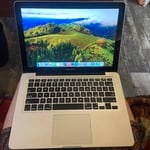
Macbook (early 2012)
1 neighbors recently requested a quote
Showing 1-10 of 45
Electrical questions, answered by experts

It prevents electrical surges, protects your home from things like electrical fires, and prevents you from getting shocked if an errant surge runs through your power line. Without grounded wires, your appliances could also get damaged during lightning storms.

The most common type of electrical outlet is a 3-prong outlet, which has two flat blades (one is wider than the other) and a round grounding pin. Older homes typically have 2-prong outlets that aren’t as safe as more modern options and are generally not up to current electrical codes.  Other outlets you can find in your home include 20A, 125 volt varieties for larger appliances like refrigerators or washing machines. 

There are also GFCI outlets, which protect against electrical shock in wet areas, such as bathrooms and kitchens, and arc fault circuit interrupter (AFCI) outlets, which protect against electrical fires caused by arcing.

The American Wire Gauge system calculates wire size diameters using the complicated formula D(AWG)=.005·92((36-AWG)/39) inch. A simpler rule of thumb is that every six-gauge decrease doubles the wire diameter, and every three-gauge decrease doubles the wire’s cross-sectional area. On the other hand, wavenumbers are typically measured in reciprocal meters (1/m or m−1) or reciprocal centimeters (1/cm or cm−1).

Electrical meter risers connect your home’s electrical meter to overhead power lines so you can receive electrical service from the grid. Electrical meters also have a weatherhead, which protects the utility lines connected to your home’s electrical system via the service entrance cable. Risers connect the weatherhead to your electrical meter socket, which connects to the meter.

The color of your cable will help you to identify its function. In the U.S., the National Electrical Code (NEC) designates the color code for electrical cables. “Hot” cables are black, red, and blue. In cases of higher voltage lines, orange might also be used to indicate a hot cable. White or gray indicates a neutral, and green or green with a yellow stripe indicates a ground.

The Prescott, AR homeowners’ guide to electrical services

From average costs to expert advice, get all the answers you need to get your job done.