
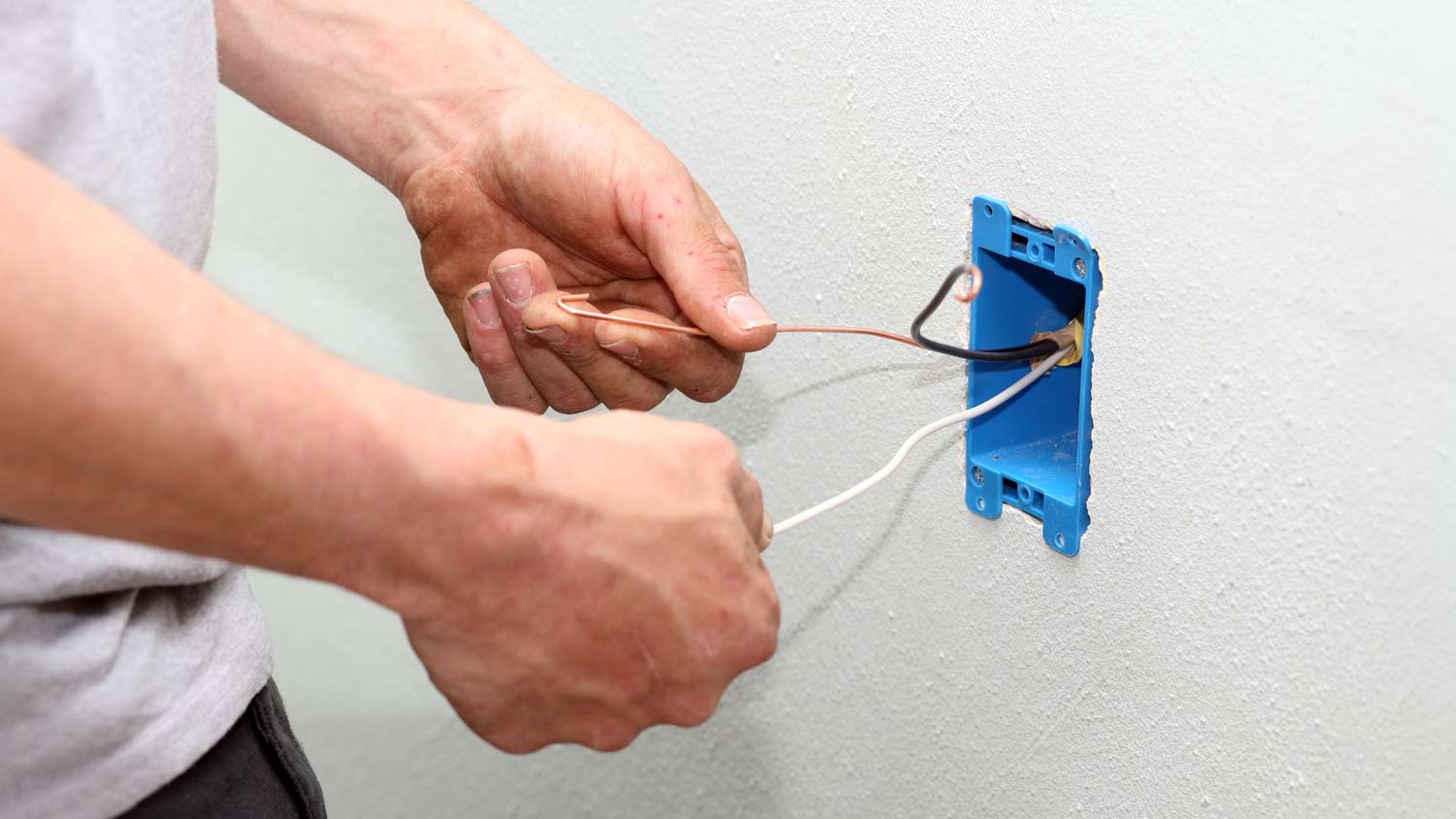
The white wire in an outlet is known as the neutral, but what does the neutral wire do? Here’s the important role it plays in your home’s electrical system.
There's a reason for that rainbow of wires


Understanding colour wiring codes helps you identify which wires carry power, which return electricity, and which provide grounding for safe electrical work.
Hiring an electrician costs $163 to $535 for common jobs, with hourly rates from $50 to $100 and rewiring ranging from $1,500 to $10,000.
Black wires carry electricity from your electrical panel to outlets, while white or gray neutral wires provide the return path back to the panel.
Hiring a local electrical professional keeps you safe from shocks and fires while handling hot wires, ground connections, and outlet repairs with confidence.
Unless you’re a skilled electrician, you may not realize that electrical wires speak their own language—with their colors. All home electrical wires made in the U.S. follow standard wire color codes set up by the National Fire Protection Association. Each electrical wire color identifies which wires are hot, which are neutral, and which are ground.
Before you try to repair a faulty switch, change an overhead light fixture, or splice wires, learn about the colorful—and incredibly important—world of electrical wiring. Before we begin, it’s important to note that working with any type of electrical wiring is best left to a professional because it can be very dangerous and even fatal.
Knowing proper electrical terminology is key when working with wires. The term “hot” means that the wire is carrying power from the electrical panel to its destination. A ground wire carries electricity to the ground during an abnormal electric current. Neutral wires carry electricity back to the electrical panel.


If you’ve ever felt a little jolt when accidentally coming in contact with an exposed wire or trying to repair a switch, you know how dangerous electrical wiring can be.
Thankfully, the different electrical wire coatings around the copper conductor wires can help you identify all the clues you might need to determine whether the wire is a ground, hot, or neutral.
Green is the most common ground wire color, but green wires with yellow stripes and bare copper wires (with no colored insulation) are also ground wires. Ground wires are conductors, like shock absorbers, whose purpose is to give electricity a safe place to go—into the ground below your home.
A ground wire helps the positive charges in your home’s outlets and electrical panels get to the ground in a direct, controlled, and safe way, where they can be released without the risk of fire or an electrical shock.
In other words, these wires reduce the risk of an electrical overload by redirecting excessive electricity during a surge from things like a short circuit or lightning strike.
Chances are, if you have a newer home built after 1960, you have a properly grounded system. However, if your home was built before 1960, there’s a safe and easy way to make sure your electrical system is grounded. Just take a look at your outlets.
Grounded outlets have two slots and a D-shaped slot. These are connected to a ground wire.
Outlets with only two slots but missing the D-shaped slot may not be connected to a ground wire.
Still not sure? Don’t risk the chance of getting shocked and suffering severe or fatal injuries and instead reach out to a local electrician.
You may have built simple circuits in science class using a battery and a light bulb, with electrical current traveling from the battery (the source) to the bulb, and then back to the source. The wire that carried the electricity was the hot or live wire.
In your household’s wiring, this wire is typically black, but it may also be red (more on that in a second). Black wires are always hot wires that carry electricity.
You should always treat these with extreme care. They feed a switch or outlet and are also sometimes used as switch legs or the connection that runs to the electrical outlet from the switch.
You will usually only see a red wire when an outlet is a 240-volt outlet or when a wall switch controls the outlet. In this case, when the switch is "on," the red wire will supply power to the outlet instead of the black wire. Like black electrical wires, red wires are also hot or live wires.
Red can also be the connecting wire between two smoke detectors that are hardwired. Also, if your circuit box is wired for 240 volts instead of 120 volts, you may even see both red and black wires.
“Another common location where you can see a red wire is a 3-way switch,” says Tyler Keezer, home energy specialist at Switch Electric. “This is when you have two switches in a home that control the same light.
The red wire is used as a second path to send electricity down from one switch to the other. When you’re working on these switches, you need to use caution because the red wire can also have voltage on it depending on what position the 3-way switches are currently in.”
It’s uncommon to see blue and yellow wires in a typical outlet. While these wires are live wires and carry power, you might only see yellow wires as switch legs to ceiling fans or outlets controlled by light switches.
You may also see blue wires used in three- or four-way switches. For example, if you have a light switch at the bottom and top of a staircase that controls the same light fixture.
This is very uncommon, though, and typically you will see a red wire in this type of configuration as mentioned earlier. You may have seen blue wires if you’ve ever wired a three-way switch or a four-way switch.
White or gray electrical wires are neutral wires; white wire is more common than gray in most households. The purpose of a neutral wire is to provide a return path for electricity in a circuit, and typically connects at the main electrical panel to a single conductive piece of metal known as a neutral bus bar.
Although they are called neutral wires, they can still carry electrical current, so as always, it's best to treat these wires cautiously.
Fixing electrical problems is not as simple as changing a light bulb. In fact, the U.S. Fire Administration lists electrical malfunction as one of the top causes of house fires.
Wires are color-coded for a reason, so before you start tinkering with an outlet or installing a new appliance in your home, make sure you understand the differences and treat all of them with extreme caution.
For the most common jobs, hiring an electrician will cost between $163 and $535. More extensive electrical work will cost more, as hiring a pro costs between $50 and $100 per hour. The cost to hire an electrician can depend on the size of your job as well. If you’re rewiring your entire house, for example, it can cost between $1,500 and $10,000, while adding a light switch usually costs between $85 and $200.
According to data from Angi customers, most wiring and panel projects (65.7%) involve upgrades to existing service. On the other hand, 34.3% of people need general electrical repairs, such as fixing blown fuses and flickering lights. If any of this sounds familiar, get in touch with an electrician for assistance.
Electrical work is extremely dangerous and can even be deadly if done incorrectly. Hiring an electrician will save you from injuries, property damage, and potential house fires. Also, attempting to do electrical work yourself can void your homeowner’s insurance and will not cover any damage done to the home because you did the work yourself and without permits.
I recently had Mosby Electric perform an electrical installation on 8-14-2026, and I couldn’t be more satisfied with the service. From the moment I called, their team demonstrated fast arrival and professionalism. The electricians were highly knowledgeable, completing the installation...
 Mosby Electric
Great company! Price was competitive, technician showed up on time and completed the job (exterior electric Radon fan replacement) quickly. Would hire them again.
 MaGen Property Inspections and Radon Mitigation
I conferred with 2 other contractors before Armstrong Electric. Nick and his crew showed me that the project was not as convoluted as the other contractors made it appear to be. They completed the entire project on time. They were professional, friendly and cleaned up after at completion. I...
 ARMSTRONG ELECTRIC, LLC
The techs on my project, Shawn and Cliff, were great. They were prompt, courteous, and efficient. I am very happy with the results and would definitely contact Mr. Electric for any future electrical projects.
 Mr. Electric of Columbus
Victor was wonderful. He was on time, professional, and explained everything he was doing. He was thorough and figured out that the problem was electrical instead of with my HVAC system. Very knowledgeable. I will be using this company in the future for any HVAC needs. Thanks!
 Hubbs Heating & Air LLC
They were excellent. They did a great job. I was totally satisfied. They put tremendous effort in making sure the work was completed. They were great. They provided immediate response to any inquires I made. I would hire them again. I would recommend them to anyone who needs electrical work....
 JCB & Associates, LLC DBA Property-Tech Industries
Initially, the repairman could not find the problem. Apparently, there was some electrical shortage, but he could not find the definite problem. He left, but called back later to say he had a new idea. He returned and replaced the light switches on the doors. The refrigerator seemed to return...
 Appliance Pro LLC
The initial quoted price from a walk-through seemed high, but we discussed that the quote represented worst case scenario (re-wiring to two floors) and we were excited about the opportunity to have the work done in a timely manner with closing for fire safety reasons, etc. When the job was...
I have to tell you I am all about customer service - I will go out of my way and even pay more for it if you give me great customer service. <br> <br>In a world where this is hard to find, these guys were awesome! I can not sing their praises enough. They were prompt, personable, funny, got...
 Waibel Electric
When I challenged the markup on the generator, Bruder Electric withdrew its bid. They only want naïve customers.
From average costs to expert advice, get all the answers you need to get your job done.
The white wire in an outlet is known as the neutral, but what does the neutral wire do? Here’s the important role it plays in your home’s electrical system.

Nearly every electrical wire in your home has a different purpose. This article will cover the types of electrical wires, what they’re for, and how you can tell them apart.
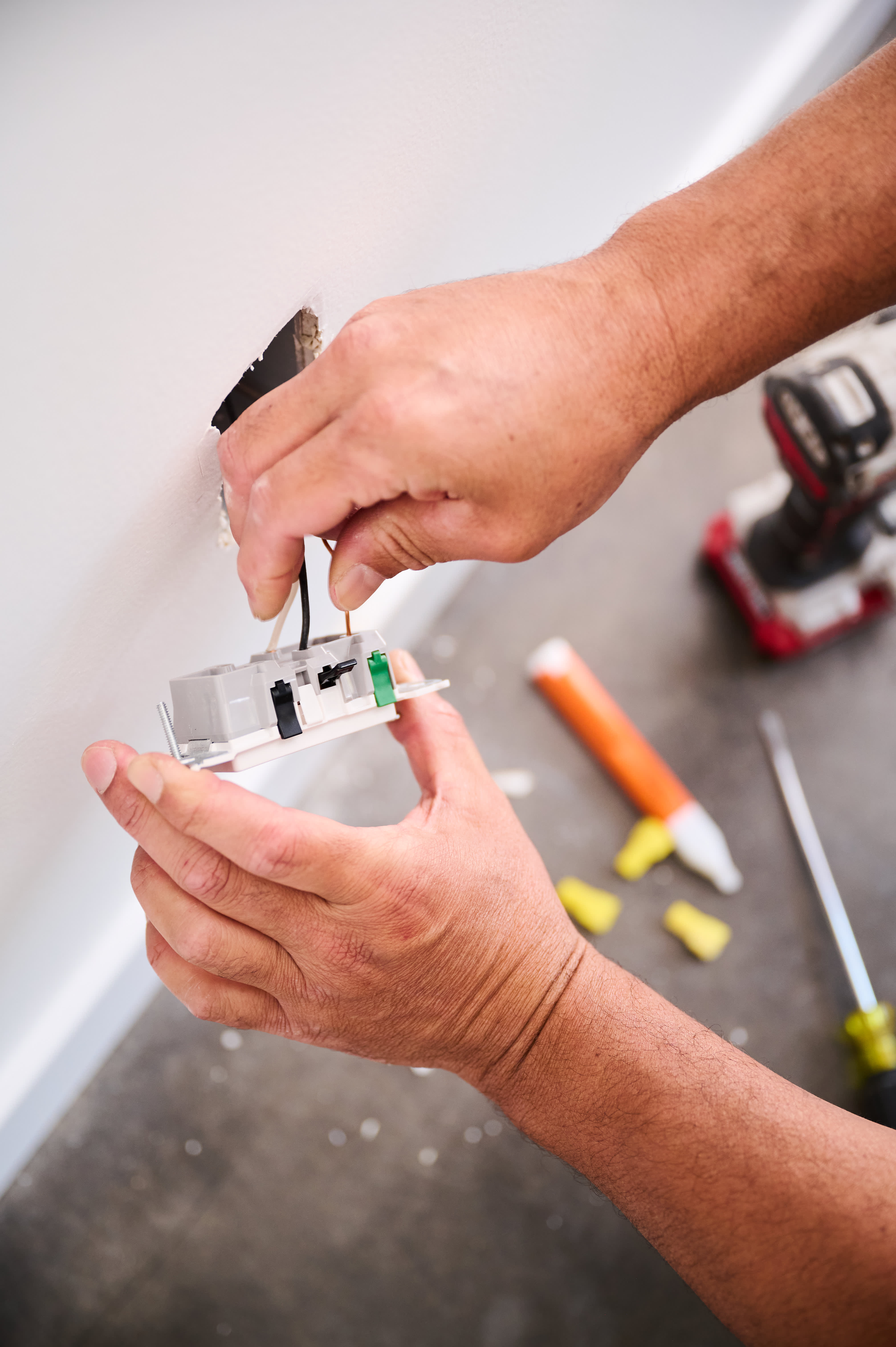
Do you know if the black wire is positive or negative? If not, stop right now and check out our guide on differentiating electrical wires.

Understanding what wire colors mean will help you complete electrical projects safely. Follow this guide to distinguishing blue and brown wires.

Can’t tell the difference between line vs. load wire? The line wire receives the incoming electricity and the load wire shares it with other outlets.

You can find several types of electrical wires in your home, but do you know which one is which? This chart of electrical wire types will help you identify the wires you’re working with.