
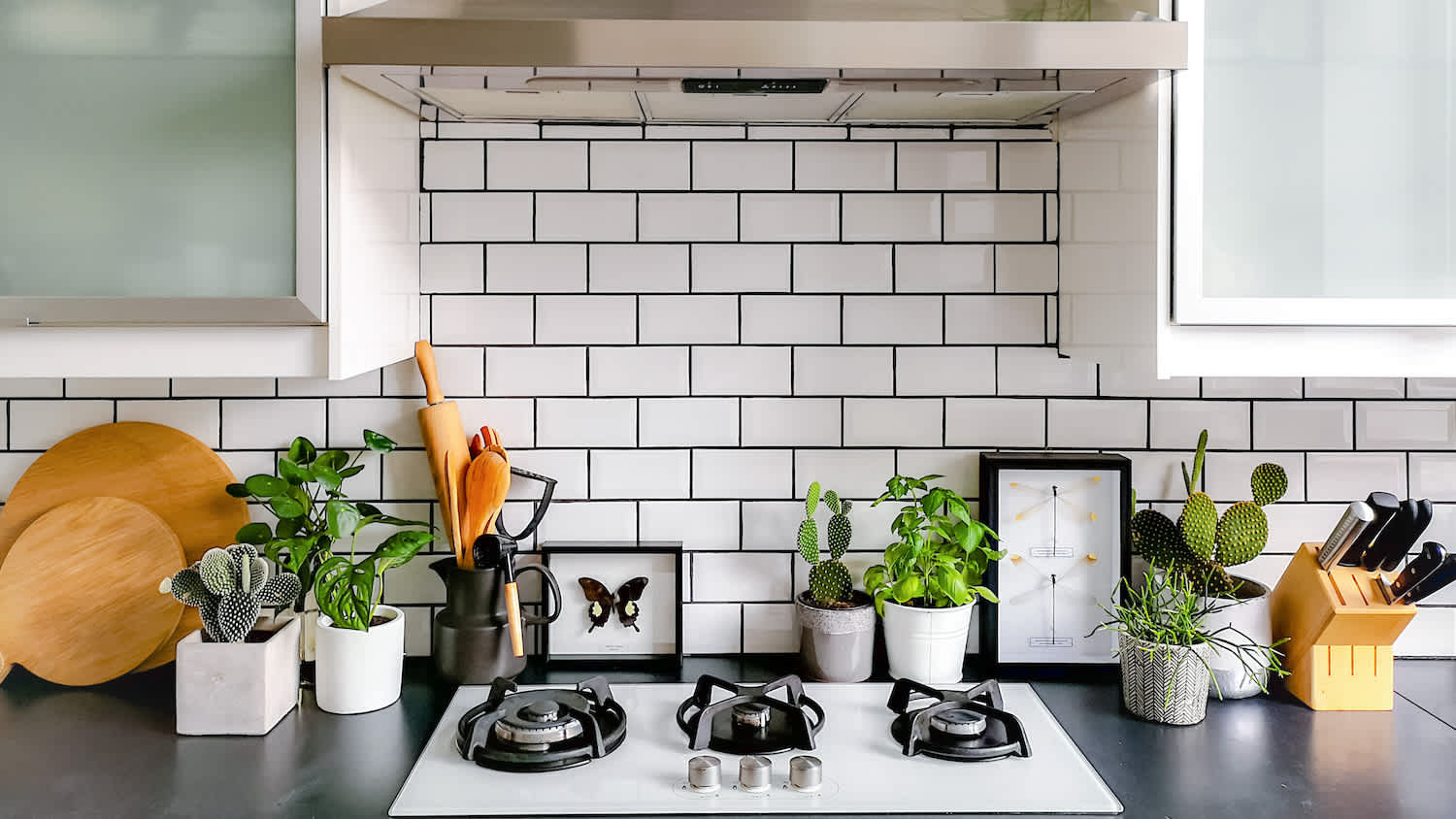
Adding bullnose tile to your bathroom design can create a finished look and protect the tile edge. But what is bullnose tile and where can you use it?
Master corner tiling for a seamless installation

Tiling into a corner requires measuring from the last tile to the corner wall, then subtracting 1/4 inch for your cut line to allow proper spacing.
Professional tile installation costs $400 to $4,250, and tool rentals run $20 to $40 per day, so planning your budget helps you decide between DIY and hiring help.
You should use waterproof flexible silicone caulk instead of grout for inside corners, as caulk allows tiles to shift slightly without cracking as walls settle over time.
Hiring a local tile professional provides reliable help with precise corner cuts and caulking, keeping your installation looking clean and protecting against future tile damage.
Tiling installation seems pretty straightforward, but what about when you get to the inside corners? Knowing how to tile inside corners is key to a successful tiling job. So if you want to bring your shower tile ideas to life (or whatever else you have in mind), this is a great skill to learn.
When you install tile, you usually start from the bottom middle of the wall and work your way up in rows. This means that the tile pieces in your corners aren’t going to fit as they are. So, you’ll have to cut them to size.
Also, you can’t grout inside corners (use caulk instead). As the walls settle, the tiles shift a little. When the corners are grouted, there’s no room for the tiles to move, leading to cracks or other damage. And once you have damaged tiles, you’re susceptible to mold and mildew issues.
Depending on the bathroom design, you might also have inside corners by your tub. If you happen to grout those corner lines, you can potentially cause your tub to flex or crack over time.
Since tile installation costs can reach thousands of dollars, it makes sense to do it right. Learning the basics now will help you avoid common pitfalls later.

To prep for tiling inside corners, make sure you have all of the tiling tools and materials you need on hand. In addition to your tile, mortar, and grout, grab some waterproof flexible silicone caulk.
Also, you’ll need some way to cut your tile. Depending on the tile type, that might be a tile cutter, grinder, or wet saw.
Finally, finish all of the tiling except for the corners before starting the steps below. When working on tiling the wall, you should apply the mortar to the entire wall, including the area by the corners.
Here are five easy steps to tile inside corners.

Grab a measuring tape and figure out the distance between the last tile and the corner wall. Take that number and subtract 1/4 inch. That’s where you’ll want to make your tile cuts.
Use a pencil and draw the cut line on the back of your tiles. To do this precisely, make three measurements on the tile and connect them together with a straight edge. Take your time during this step, because making mistakes here will end up being costly.

The cutting tool you need will depend on your tile type. You may need a manual tile cutter, a grinder, or a wet saw.
Always use protection while cutting tile. This might include gloves, goggles, and a respirator, depending on the material you’re working with.
Manual tile cutters can cut several tile types including ceramic, glass mosaic, porcelain, and terra cotta. If you’re wondering how to install ceramic tile in corners, know that you can use any basic cutter since the material is so soft and easy to cut. If you have more durable materials, like porcelain or glass, you should grab a higher-end cutter to get the job done.
To use a manual tile cutter, place your tile along the top of the cutter. Once you have the cut area aligned properly, slide the cutter from the bottom up.
And while manual tile cutters are the easiest to use out of all of the tools, it doesn’t leave a smooth edge. If you’re looking for pristine tiling work, you should skip the manual cutter and use a wet table saw instead.
For any tile or natural stone, you can use a 4-inch angle grinder with a diamond blade. The grinder is handheld, so you’ll need a steady hand and some skill to get a perfectly straight cut. The cut edge is smoother than what a manual tile cutter produces, but not as smooth as a wet saw.
This tool produces a lot of dust, so use a respirator and work outside.
The wet table saw is a must-have tool for most tile installation jobs. You’ll need to use one for natural stone tiles, as well as for softer tiles like ceramic too.
True to its namesake, this table saw feeds water onto the cutting surface. You place your tile at the base of the cutter, and then slide it upwards into the moving saw.
This tool helps you work quickly and cut multiple tiles within minutes. Plus, it leaves clean edges so your installation will look nice and neat.
Operate the saw outside and take necessary precautions before turning it on. If you’ve never used a table saw before, you should learn the ins and outs of them before attempting to turn it on.
As with any power tool, safety is of the utmost importance. If you’re unsure about the table saw, either pass the job along to a pro or have a knowledgeable friend supervise your first tile cuts with the saw.

Before moving forward with pressing the tile onto the mortar, you should lay out the cut tile pieces so you know which one is going where.
As you tile into a corner, keep in mind that one piece will reach all the way to the wall. The tile piece next to it will overlap with a small gap. This gap should be the same width of one spacer. You’ll eventually fill this space with caulk.

Next, grout the tiles except for the corner seams. Allow the grout to completely dry, which can take 24 to 48 hours depending on the grout type and the temperature in the room.

The last thing you have left to do is to caulk the corner seams. Take your waterproof flexible silicone caulk and apply it from top to bottom.
Then, mix a dash of dish soap in water and put it into a spray bottle. Spray the soapy water onto the caulk, and then use the flat side of a popsicle stick to smooth it out. As you do this, the excess caulk will come off, leaving you with a nice, clean finish.
The most difficult part of knowing how to tile corners is usually the cutting. Instead of trying to use a handheld manual tile cutter (which are like fancy scissors designed for tile) or even a grinder with a diamond saw, it’s usually easiest to go with a manual tile cutter or a wet saw.
If you don’t want to buy a saw because you doubt you’ll need it again, then you can save money by doing a short-term rental from your local hardware store. This is a good way to cut costs when you’re looking at the cost to install tile floors.
Manual tile cutter rentals run about $20 per day, $75 a week, or $230 a month. A small wet saw rental that cuts up to 14 inches is $40 a day, $170 a week, or $515 a month.
As long as you’re comfortable using the cutting tools, then you should be able to handle a corner tile installation. In particular, if you’re working with easy-to-cut materials like ceramic or mosaic glass, then tiling corners should be fairly manageable.
However, if you’re not used to cutting tiles or are working with expensive materials like marble or granite, you might not have room for error. In these cases, it makes sense to hire a tile contractor near you to do the job for you. After all, having to redo cuts or making mistakes may end up being more costly than getting a pro to handle it from beginning to end.
Terrible experience. Walls/trim/floors/cabinets/doors all have drip marks, overspray, etc. Tiling at the fireplace had to be redone by another vendor due to incorrect and shoddy install by Profect. Contractor had his children in our house while he was on site without prior authorization or...
 Profect painting & exteriors
It was wonderful working with Yordy and his team. They were very professional and are experts in what they do. They have completed the work on time, with better quality and with in fairly reasonable price. We just started with backsplash work , but liking his work, we went on to provide...
 Flooring Solutions
We were having 2”x 2” tile installed . There was a small installation error and the new additional replacement tile was from a different lot and the colors didn’t match. Joe assured us that he would rectify everything , which he did without hesitation. We decided to go with the 18” x 36” tile...
 CarifaTile
For several months I was looking for somebody to tile a wall in my master bath and move lighting fixtures, and could not find anybody who was responsive. I contacted Rowe through Home Advisor and within days they came by to assess the job and provide an estimate. The cost was very...
 Rowe House Development
It went very well! The end product was amazing and we keep getting a lot of compliments from friends! M&E were very professional and they made sure we were happy with the product before leaving. They met with us in our home and at the tile shop to make sure we were okay with our tile and...
 M&E Remodeling
Involved an extensive bathroom remodel, including removing tub & installing walk in shower, new drywall, custome tile work to ceiling, plumbing, etc. Overall, job was done on time and on budget. Nick & his team were very professional and had high attention to detail. Quality was great. Highly...
 Stamos Flooring and Remodeling LLC
Very pleased with the service and level of professionalism. Courteous and very unobtrusive in performing service. Unlike several other companies, Bradford Xteriors was willing to perform work on a three story home with a clay tile roof. <br />
 Bradford Xteriors
This company did a very good job on the brick wall and it looks just amazing. The staff was always professional and was practically OCD on how the bricks were stacked and how they were laid. Although it took longer than expected, I am willing to sacrifice time over perfection anyday. The...
 My Handy Mate LLC Improvement & Remodeling
He did the tile work and he was good at it. He used other subcontractors for the rest of the work (like putting in the cabinetry) and they were okay but not great. He was a great guy! He was easy to work with and had a good eye for the detail of his work. There were a couple of things that I...
 Brian Miller Custom Remodeling
I was very impressed with Miller Cantrell! I live in an old home in which the sewage line that runs from my home to the sewage system is a line of clay tile. These eventually collapse and need to be replaced - an expensive problem and sure to happen at the worst time. I told them that my...
From average costs to expert advice, get all the answers you need to get your job done.
Adding bullnose tile to your bathroom design can create a finished look and protect the tile edge. But what is bullnose tile and where can you use it?
Knowing how to grout peel-and-stick tiles can help you achieve a high-end look on a budget. This guide will show you how to do it.
Life happens and tiles crack. This two-method guide will show you how to fix cracked tile in as little as an afternoon—with no experience necessary.
Can you tile over tile? Yes—if you prep right. Learn how to prep, choose adhesive, and avoid common mistakes for a successful tile-over-tile project.

How do you cut crown molding inside corners? The answer requires practice with a coping saw and patience for detailed adjustments that create tight seams.
Choosing the right trowel for tiling will prevent cracked tiles and keep floors solid. Wondering what size trowel to use for tile work? Here’s what you need to know.