


Tile varies dramatically in price, but there’s something for every budget. This guide will help you plan for tile installation costs, no matter the project.
Ceramic tile service costs depend on your project and location. Check with a local pro for your specific job.


Professional bathroom retiling costs between $450 and $8,000 for your project, with tile material and bathroom size determining your final total.
Tile shape and size affect your labor, large squares need less cutting than small irregular pieces.
You should budget for add-ons like bathtub refinishing at $340 to $630, plus disposal and repair work.
Hiring a local tile professional ensures your bathroom project is done well and helps the property retain maximum value.
Few things are more striking in a home than a newly retiled bathroom. The cost to retile a bathroom is $2,000 on average, and most people pay between $450 and $8,000. For a full bathroom retiling with high-end materials, you could end up paying $10,000 or more. You can expect to pay between $10 and $50 per square foot for bathroom retile costs.
Replacing worn and cracked tile with a sleek, modern new look can really add a "wow" factor to your home's interior—and it could be part of a bathroom remodel that raises your home’s value. This guide breaks down the costs and all the factors that affect it.
As you can see, bathroom retile costs can vary greatly because of the different variables involved. For a more accurate cost estimate for your bathroom retiling project, it’s always best to consult a tile installer, but below are some key factors that will affect your price:
On average, the cost of materials to retile a bathroom runs between $2 to $30 per square foot, plus the extra labor cost of $8 to $20 per square foot.
| Bathroom Size | Average Total Cost (Materials and Labor) |
|---|---|
| 25 sq. ft. | $250–$1,250 |
| 50 sq. ft. | $500–$2,500 |
| 75 sq. ft. | $750–$3,750 |
| 100 sq. ft. | $1,000–$5,000 |
| 125 sq. ft. | $1,250–$6,250 |
| 150 sq. ft. | $1,500–$7.500 |
| 175 sq. ft. | $1,750–$8,750 |
| 200 sq. ft. | $2,000–$10,000 |
Besides the space size you’re looking to tile, one of the biggest cost factors in your bathroom retiling project will be the tile type you choose. There are many options in a wide range of budgets, so you should be able to find the right fit for your needs.
| Tile Material | Cost per Square Foot, Installed | Benefit of Material |
|---|---|---|
| Vinyl | $1–$15 | Most affordable tile option |
| Terracotta | $5–$15 | Scratch-resistant; different finish styles |
| Slate | $9–$38 | Adds resale value to home |
| Ceramic | $10–$45 | Non-allergenic and extremely durable |
| Glass | $10–$100 | Eco-friendly and mold-resistant |
| Granite | $11–$42 | Available in a range of styles |
| Marble | $11–$54 | Elegant appearance |
| Travertine | $12–$53 | Easy to replace if needed |
| Porcelain | $14–$45 | Low maintenance |
| Pebble | $30–$40 | Easier application process than other tiles |
Believe it or not, the shape and size of your tile can significantly impact the cost of your overall bathroom retile. If you have large square tiles and a perfectly square bathroom, that’s a much easier job than a bathroom with many edges and small, irregularly shaped tiles to lay.

Tile patterns can transform the look of your tiling materials. Your preferences will determine whether you want something standard, like the straight set or running bond, or something more eye-catching, like herringbone or diagonal.
The more intricate the installation, the more costly it will be.
| Tile Pattern Type | Cost per Square Foot |
|---|---|
| Straight set | $3–$30 |
| Running bond | $3–$35 |
| Mosaic | $3–$36 |
| Diagonal | $4–$36 |
| Herringbone | $4–$36 |
To get a general idea of your installation costs, see how much you can expect to pay for tiling, depending on the location.
| Location | Cost per Square Foot | Average Cost |
|---|---|---|
| Bathroom floor | $7–$25 | $800–$7,00 |
| Bathroom wall | $7–$25 | $800–$8,000 |
| Shower floor | $5–$25 | $500–$1,000 |
| Shower wall | $5–$25 | $800–$2,600 |
| Walk-in shower | $5–$25 | $800–$3,000 |
Labor costs fluctuate depending on the ease or difficulty of installation. Due to the space, bathroom floor tile installation is more straightforward than shower tile installation. Vinyl ceramic, for example, is easier to install than natural stone like marble or granite. You can expect labor costs for your local tile installer to run $4 to $8 per square foot for ceramic and porcelain, while natural stone installation costs $6 to $15 or more per square foot.
When making a budget for your tiling project, consider these additional costs.
Depending on the material, removing your existing tile or flooring costs $1 to $7 per square foot.
Tile removal is the most costly, costing $2 to $7 per square foot. This is because it is time-consuming and laborious. Each tile piece and grout line must be removed before a new installation begins.
On the other hand, carpet removal is the most affordable at $1 to $1.50 per square foot. Different flooring materials cost $1.50 to $3.50 per square foot to remove.
Proper tile installation requires a clean, level floor. If you need subfloor repair or replacement, it can cost $40 to $65 per square foot. People commonly need subfloor repairs due to water damage.
The cost of tiling a bathroom can also vary depending on the room layout and accessibility. Some bathrooms have odd curves or bends, which require extra care and tile cutting during installation. Other bathrooms may be more challenging to access. You can expect to pay more for labor costs in these situations.

If you have a retiling job that needs completing, the best way to ensure the project is done right is by working with a trusted, local tiling contractor. These experts will bring their skills and experience to provide a better end result in a fraction of the time it would take to do it yourself.
There are many benefits to working with an expert for this project, including:
Greater experience in different tile types, installation methods, and how to achieve the best results in different parts of the home
Access to specialized tools that make tile cutting and installation faster and easier
Better attention to detail to small aspects of the project, such as tile spacing and grout
Save time and money by ensuring tile installation is done right the first time
Easier solutions if unexpected issues arise (e.g., needing to rethink the tile design, etc.)
Completing a large retiling project yourself isn’t impossible, but without the necessary tools and experience, you’ll find it very difficult to complete this job without countless wasted hours and probably more than a few broken tiles along the way. However, you can prep for your tiling pro’s arrival in a few ways, such as:
Removing any fittings or hardware on walls to be tiled
Repairing cracks or holes in drywall
Sanding drywall to prepare for adhesive
Clean walls to remove any dust and grime
Do some tile calculations after measuring the area to determine how many you’ll need
Thoroughly clean subfloors and remove any debris or old flooring
Depending on the state of your bathroom and budget, you might consider upgrading more than just your flooring or walls to make your most essential room of the house a proper room of luxury. If you’re having trouble deciding what projects to tackle (and in what order), consult your tile installation pro before starting the job.
Bathtub refinishing cost: $340–$630
Bathtub replacement cost: $1,980–$9,350
Shower installation cost: $4,450–$12,370
Tub-to-shower conversion cost: $1,500–$8,000
Toilet replacement cost: $230–$540
Many different things could signal the end of your bathroom tile as you know it.
Many tiles are cracked or chipped: Having one or two chipped or cracked tiles isn’t a huge deal, and it’s not particularly difficult or expensive to fix. However, if you notice tile damage everywhere you look in your bathroom, it’s a better use of your money to completely retile it than to try and repair 20 or more singular tiles.
The grout stays moldy: You’ve followed the right protocol for cleaning mold in your bathroom, but it just keeps creeping in. The problem could be moisture stuck under your tiles or a different problem entirely. Either way, the best way to eliminate the issue is to have a pro check out the situation and retile your bathroom.
The tiles are covered in stubborn stains. Your bathroom should be a place of rest and rejuvenation, not a stain-filled space that stresses you out. If your tiles are clinging to severe stains no matter what cleaning methods you use, it may be time for replacement.
You’re tired of the aesthetic: Your feelings about your tile are also important. If you’re just not loving the vibe lately, start shopping for new tile, even if your tile isn’t at the end of its lifespan yet (we don’t judge).
Retiling a bathroom can get pricey, but there are ways to reduce the project's costs. Here are a few money-saving tips:
The cost of labor and materials can vary by supplier. To find the best deal, get quotes from at least three tiling companies before choosing one.
If you’re willing to compromise on your first choice of tile materials, you can save a lot by choosing a more cost-effective alternative. For example, if the quoted cost for porcelain tiling in your bathroom is too high for your budget, you might choose vinyl instead.
Another option is to choose lower-grade materials. However, be careful when doing this and ensure the grade is still high enough to withstand the expected wear and tear, especially for flooring.
You might also take on part of the job on your own. You could remove the tile yourself instead of having the pro do everything for you.
Measure the space to be retiled to get a sense of how many tiles you’ll need to complete the project.
Talk to your pro about material options, balancing cost with aesthetics and functionality for different rooms and uses.
Don’t forget to inquire about the cost of add-ons, such as bathtub refinishing, toilet replacement, or colored grout.
Ask your pro for their opinion on the durability of various materials—high-traffic areas need a more resilient tile, while backsplashes may be a good place to compromise for lower costs.
Home is the most important place on earth, which is why Angi has helped more than 150 million homeowners transform their houses into homes they adore. To help homeowners with their next project, Angi provides readers with the most accurate cost data and upholds strict editorial standards. We extensively research project costs to develop the pricing data you see, so you can make the best decisions for you and your home. We rely on reputable sources, including the U.S. Bureau of Labor Statistics, academic journals, market studies, and interviews with industry experts—all to ensure our prices reflect real-world projects.
Want to help us improve our cost data? Send us a recent project quote to [email protected]. Quotes and personal information will not be shared publicly.
Terrible experience. Walls/trim/floors/cabinets/doors all have drip marks, overspray, etc. Tiling at the fireplace had to be redone by another vendor due to incorrect and shoddy install by Profect. Contractor had his children in our house while he was on site without prior authorization or...
 Profect painting & exteriors
Finished Basements Plus was wonderful from beginning to end! First, they came out quickly for an estimate. I had 4 estimates and theirs was by far the best. (2 of the estimates were more than $20K higher than for the exact same work). Beyond their fair pricing, the work was excellent. They...
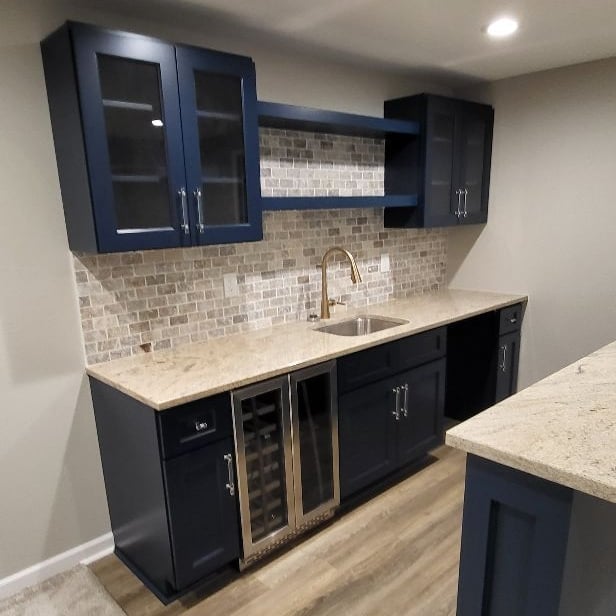 Finished Basements Plus Inc.
It was wonderful working with Yordy and his team. They were very professional and are experts in what they do. They have completed the work on time, with better quality and with in fairly reasonable price. We just started with backsplash work , but liking his work, we went on to provide...
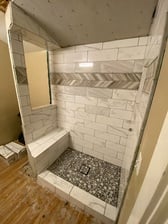 Flooring Solutions
We were having 2”x 2” tile installed . There was a small installation error and the new additional replacement tile was from a different lot and the colors didn’t match. Joe assured us that he would rectify everything , which he did without hesitation. We decided to go with the 18” x 36” tile...
 CarifaTile
For several months I was looking for somebody to tile a wall in my master bath and move lighting fixtures, and could not find anybody who was responsive. I contacted Rowe through Home Advisor and within days they came by to assess the job and provide an estimate. The cost was very...
 Rowe House Development
It went very well! The end product was amazing and we keep getting a lot of compliments from friends! M&E were very professional and they made sure we were happy with the product before leaving. They met with us in our home and at the tile shop to make sure we were okay with our tile and...
 M&E Remodeling
Involved an extensive bathroom remodel, including removing tub & installing walk in shower, new drywall, custome tile work to ceiling, plumbing, etc. Overall, job was done on time and on budget. Nick & his team were very professional and had high attention to detail. Quality was great. Highly...
 Stamos Flooring and Remodeling LLC
Very pleased with the service and level of professionalism. Courteous and very unobtrusive in performing service. Unlike several other companies, Bradford Xteriors was willing to perform work on a three story home with a clay tile roof. <br />
 Bradford Xteriors
This company did a very good job on the brick wall and it looks just amazing. The staff was always professional and was practically OCD on how the bricks were stacked and how they were laid. Although it took longer than expected, I am willing to sacrifice time over perfection anyday. The...
 My Handy Mate LLC Improvement & Remodeling
He did the tile work and he was good at it. He used other subcontractors for the rest of the work (like putting in the cabinetry) and they were okay but not great. He was a great guy! He was easy to work with and had a good eye for the detail of his work. There were a couple of things that I...
 Brian Miller Custom Remodeling
From average costs to expert advice, get all the answers you need to get your job done.
Tile varies dramatically in price, but there’s something for every budget. This guide will help you plan for tile installation costs, no matter the project.
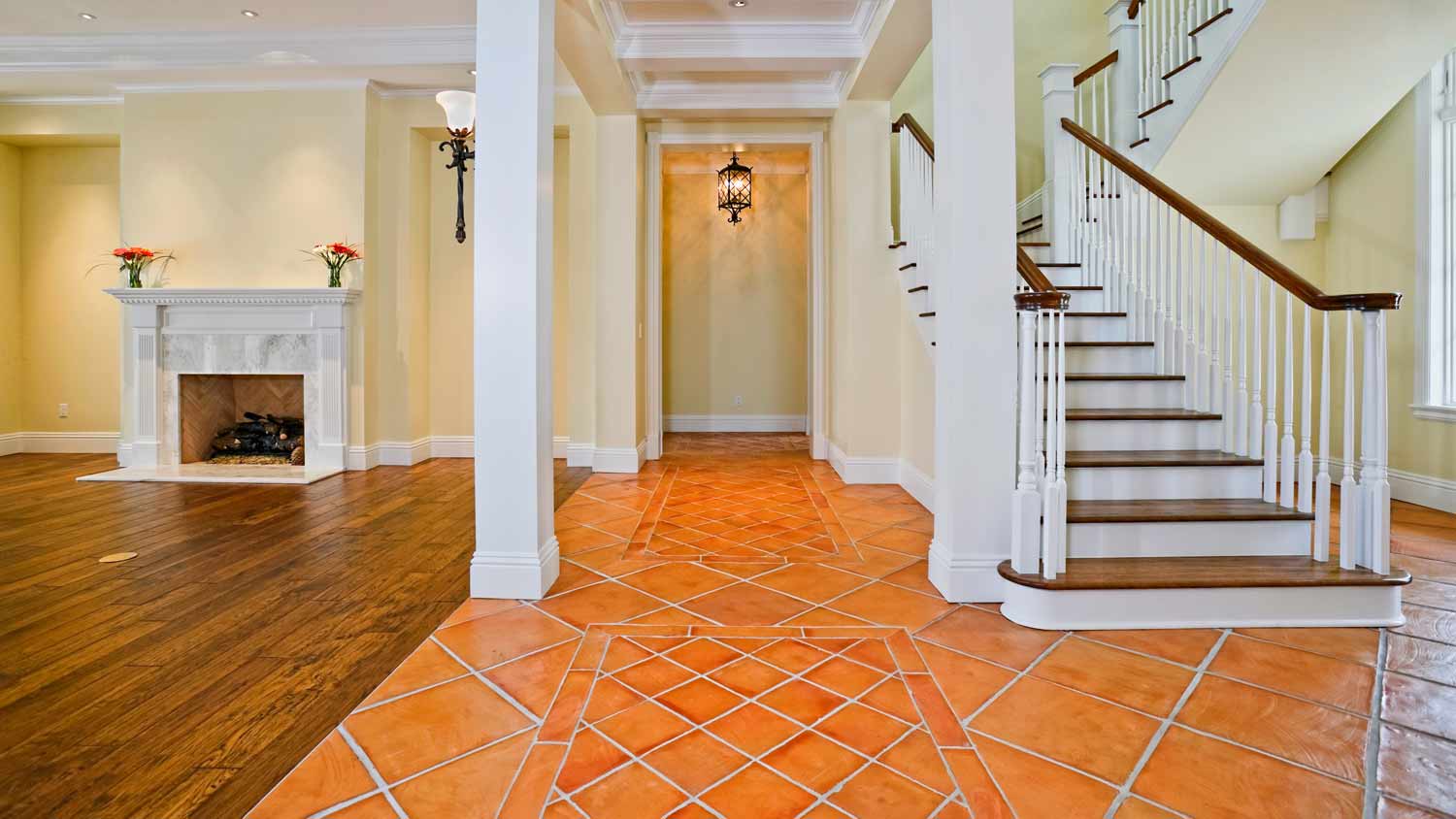
How much does a Saltillo tile floor cost? It depends on the size of your space, but on average, you’ll pay between $6 and $28 per square foot for this tile.
The cost to install a bathroom fan will vary based on multiple factors, including the bathroom size, how many fans you need, the type of fan, and more.
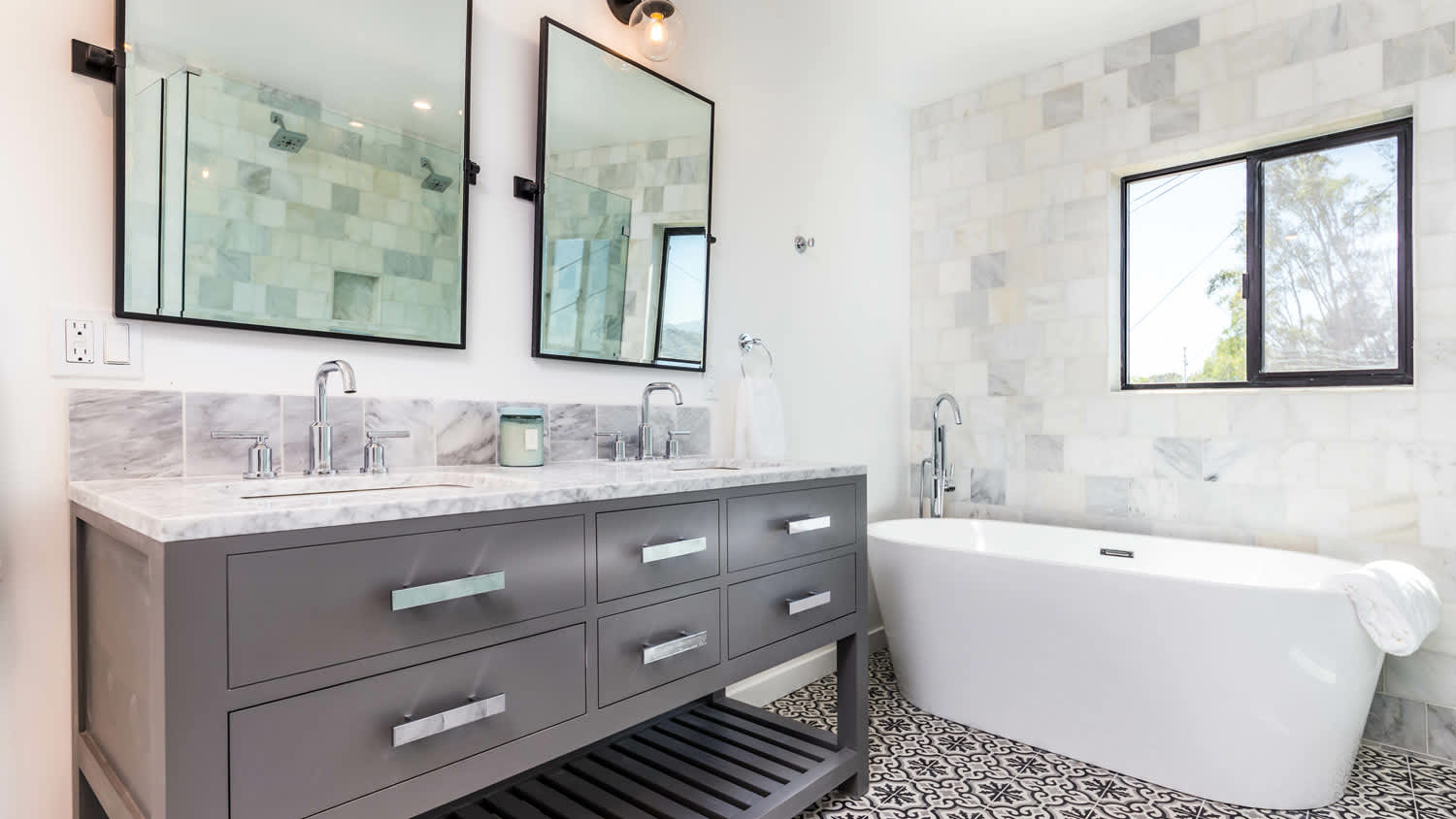
This article explores the benefits of hiring a tile contractor to install tile for a bathroom remodel. Here’s what you need to know to find the right pro for your project.
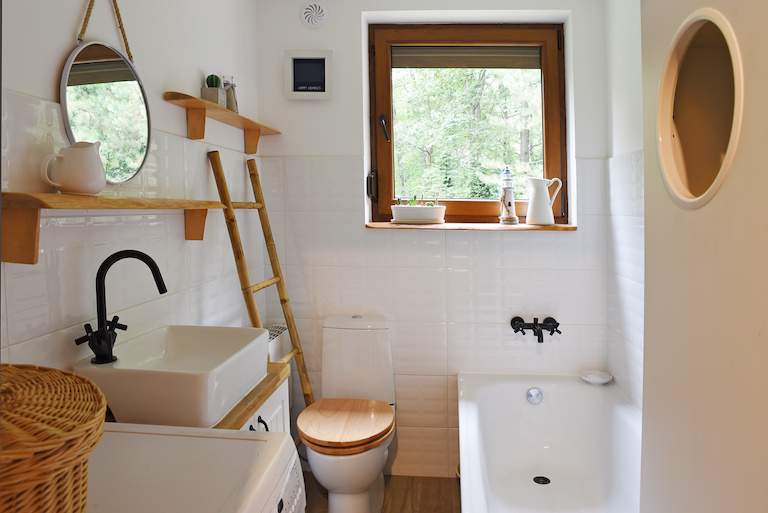
So many tile choices, so much pressure to get it right. This guide shares all you need to know to choose the best tile size for small bathrooms.
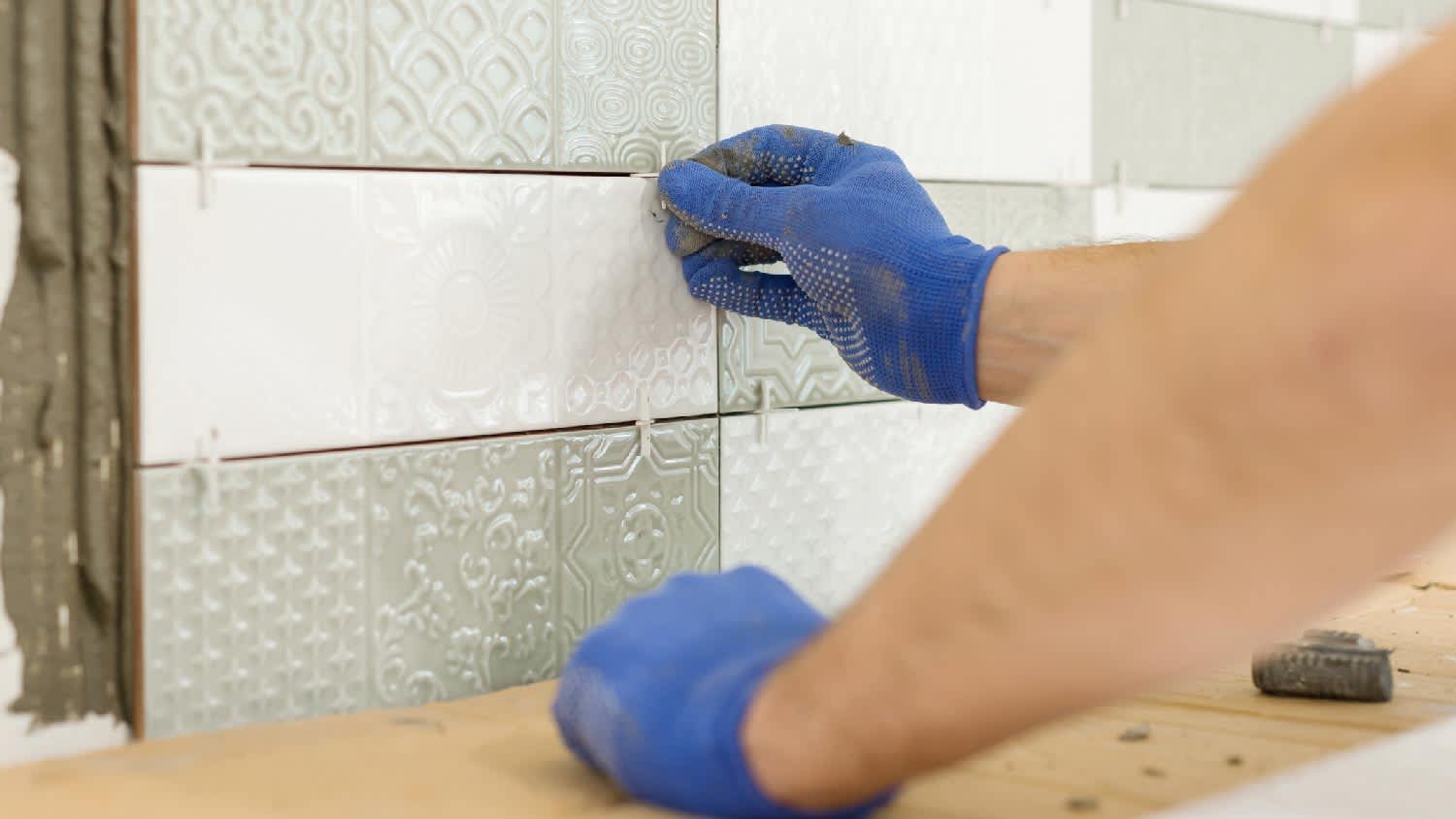
Time for a bathroom tile makeover? Before you get started, discover the secret behind evenly laid tiles—the tile spacer. We've included everything you need to know about choosing the right size and shape tile spacer for your next project.