

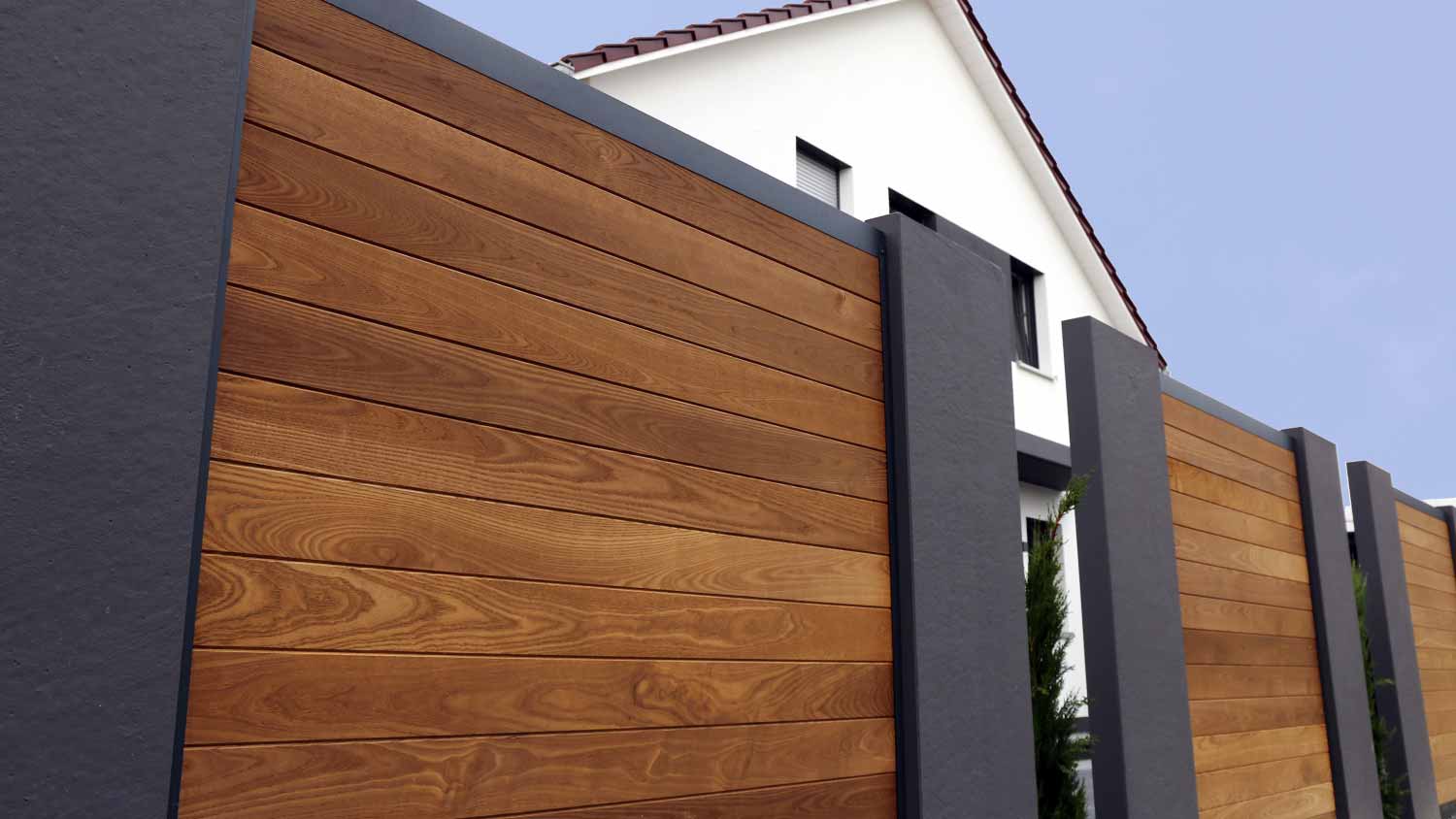
Find composite fencing costs based on fence type, labor, and more in this guide. You can expect your project to cost $11 to $45 per linear foot.
Fencing service costs depend on your project and location. Check with a local pro for your specific job.

Privacy fence installation costs between $1,800 and $8,000, depending on your material, height, and layout.
Your fence material drives your total price, with wood costing less than composite or vinyl for your project.
Account for old fence removal in your budget, plus tree or stump removal ranging from $200 to $2,000.
Hiring a local fence company ensures your posts are properly set to prevent leaning or shifting and keeps your property secure.
In 2026, the national average cost to install a privacy fence is $4,300. Most projects fall between $1,800 and $8,000, or roughly $10 to $50 per linear foot, with your final price driven by fence material, height, and total width.
Privacy fence installation costs $10 to $50 per linear foot, so your yard's total perimeter is the primary cost driver. The fence material you choose and your yard's layout will also shift the final price. The table below breaks down average privacy fence installation costs by size in linear feet:
| Fence Size (in Linear Foot) | Typical Cost Range in 2026 |
|---|---|
| 50 | $500–$2,500 |
| 100 | $1,000–$5,000 |
| 150 | $1,500–$7,500 |
| 200 | $2,000–$10,000 |
| 250 | $2,500–$12,500 |
| 300 | $3,000–$15,000 |

The cost of any fence you install depends significantly on height, with 6-foot and 8-foot options being the standard choices for privacy fences. For a 150-linear-foot privacy fence, expect to pay about $4,700 for a 6-foot fence and $6,300 for an 8-foot fence. Your HOA or city may have limitations on the maximum height you're allowed to build.
Check your local regulations before building a tall fence. Most cities will allow you to build a 6-foot fence, but special permits may be required for fences over 7 feet. A fencing expert will know all of the laws in your area, so consider calling a local pro.

The material you choose for your privacy fence is one of the most significant factors in your total project cost. Wood and corrugated metal are among the most budget-friendly options, coming in around $2,500 to $2,700, while composite and vinyl cost more but require less maintenance over time. The table below breaks down average costs by material for a 150-linear-foot privacy fence:
| Fence Material | Description | Average Cost in 2026 |
|---|---|---|
| Wood | Lower-cost, less durable | $2,700 |
| Bamboo | Lightweight, little maintenance required, not as long-lasting | $2,800 |
| Vinyl | Little maintenance required, more costly than wood | $3,700 |
| Composite | Long-lasting, wood-like appearance, very costly | $4,200 |
| Corrugated metal | Low-cost, durable | $2,500 |
Where you live can affect what you pay for a privacy fence, with urban and coastal markets commanding higher labor and material costs. Some rural areas see higher totals as well, simply because properties tend to require more linear footage. Here is how privacy fence prices compare across major metro areas:
| Location | Privacy Fence Cost Range in 2026 |
|---|---|
| Atlanta, Georgia | $1,600–$3,825 |
| Boston, Massachusetts | $2,100–$5,425 |
| Cincinnati, Ohio | $1,575–$3,400 |
| Denver, Colorado | $1,600–$4,000 |
| Houston, Texas | $1,500–$3,750 |
| Los Angeles, California | $1,725–$4,450 |
| New York, New York | $1,900–$4,825 |
| Orlando, Florida | $1,875–$4,150 |
| Kansas City, Missouri | $2,125–$4,900 |
| Seattle, Washington | $2,000–$5,100 |

Labor, height, add-ons, and site conditions can all push your privacy fence cost in different directions. Two neighbors installing fences on the same street can end up with dramatically different final prices depending on their choices. Understanding each cost factor upfront helps you build a realistic budget before you hire a pro.
When you hire a trusted fencing contractor near you, expect labor to account for about 50% of your total project cost, with contractors charging $50 per hour or $10 to $15 per linear foot. These rates apply to new installations, but labor makes up an even greater share of the overall cost when repairing an existing privacy fence.
Steep slopes or uneven terrain make fence installation more complex and more expensive than work on a flat surface. If your yard has a substantial grade, regrading or leveling your lawn costs $900 to $3,000 and may need to happen before any fencing work begins. Factor this into your budget early so the added cost does not catch you off guard.
The cost of a building permit typically ranges between $20 and $60, depending on local laws. Not all fences require a construction permit, but checking with your local municipality and HOA before breaking ground is always the right move. Cities, densely populated suburbs, and private housing associations are most likely to require permits for fences that exceed a certain size or height.
The cost to install a gate on a privacy fence ranges from $200 to $8,000, depending on materials and design. A manual wood gate averages $400, while security gates with automatic sensors and smart features can push costs into the thousands. Some contractors include a basic swinging gate in their per-linear-foot estimate, but upgrades like double doors, keyed locks, and specialized materials will cost extra.
Wood privacy fences benefit from paint or stain to prevent rot, warping, and natural wear and tear. The exact cost of painting or staining a fence varies based on material, preparation requirements, and your location. To avoid surprises, budget an additional $750 to $4,250—or choose a vinyl privacy fence and skip this step entirely.
Removing an old privacy fence adds $3 to $5 per linear foot to your project budget. Keep in mind that this figure covers removal only and does not include any additional labor costs associated with the new installation.
The cost of tree removal to clear the way for a fence ranges from $200 to $2,000, depending on the tree's size, species, and proximity to utility lines and structures. Stump grinding prices add about $320 on top of that. If you plan to add new greenery after installation, budget another $25 to $50 per plant.
The cost to repair a fence is significantly more affordable than replacing one entirely, since you're only paying for limited materials and labor. Homeowners often spend $300 to $950 to repair a privacy fence. Replacing a fence means paying for removal and disposal of the old structure, plus the full cost to install a new fence.
That said, if your privacy fence needs major repairs due to rotting wood, broken pickets, or damage from a severe storm, it may be smarter to install a new fence. In many cases, you may be able to salvage some fence posts that are in good condition, which can lower your material and labor costs.
Opting for lower-cost materials is one way to pay less for your privacy fence, but other tips should also be considered.
Clear and level your lawn yourself before the project begins.
Meet with at least three local fence companies to compare prices.
Opt for simple fence features such as a traditional manual gate.
Work around existing trees and major landscape barriers.
Complete the final landscaping yourself after the fence is in place.
An appraiser typically won't increase the assessed value of your home simply because you've installed a privacy fence, but you might find that it's much easier to attract potential buyers with a high-quality fence. Home buyers with children and pets will especially appreciate a privacy fence in good condition and may be more likely to make an offer on your house because of the fenced-in yard. Learn more about how a fence might increase home value.
You'll spend an average of $3,300 if you DIY vs. hiring a local privacy fence installer —a savings of about $10 per linear foot. While you'll save on labor costs, you risk the chance of common mistakes like uneven posts, misaligned panels, and improper footing. Hiring a pro guarantees the job is done safely and to your liking.
Installing a privacy fence requires specialized tools and expertise. Here's why it's best to hire a pro for the job:
Professionals know how to properly set posts ot prevent leaning, shifting, or uneven panels.
Experienced pros have the tools and experience to safely handle heavy materials.
Working with a pro ensures your project aligns with local building code and permit regulations.
Professionally installed privacy fences enhance security, boost curb appeal, and can increase your property value.
If you want to assist with the installation process, consider tackling the following tasks:
Help your pro measure and mark the fence line.
Keep materials and tools nearby and easily accessible for your pro.
Clear debris, rocks, and landscaping from the work area.
Clean up the area and install landscaping and decor once the installation is complete.
Be ready to discuss with a fence pro which material—wood, bamboo, vinyl, composite, or metal—will fit your budget.
Provide your pro with the estimated height, length, and slope of your fence.
Ask your pro about potential add-ons, such as lighting, decorative caps, or gates.
Leave room in your budget for unexpected material increases, labor fees, or add-ons.
Home is the most important place on earth, which is why Angi has helped more than 150 million homeowners transform their houses into homes they adore. To help homeowners with their next project, Angi provides readers with the most accurate cost data and upholds strict editorial standards. We extensively research project costs to develop the pricing data you see, so you can make the best decisions for you and your home. We rely on reputable sources, including the U.S. Bureau of Labor Statistics, academic journals, market studies, and interviews with industry experts—all to ensure our prices reflect real-world projects.
Want to help us improve our cost data? Send us a recent project quote to [email protected]. Quotes and personal information will not be shared publicly.
A reliable team for moves across state. My switch to a new place needed careful lifting through tight hallways. The movers checked the doorway first, then carried heavier pieces with slow, controlled movements. Their patience helped prevent damage, and I?d choose them again.
We have used Window Warriors many times with no issues. They arrived on time and were very professional . We have pets and Window Warrior team treated them very well, well trusted team.
 Window Warrior of Columbus, Inc.
We have bought and sold numerous times over the past 50 years. Sherman Hall and Top Line are top notch. Thorough and detailed, he explains every possibility, probability, and eventuality. High class and pleasant. The best.
 Top Line Home Inspections, LLC
Our homes curb appeal skyrocketed thanks to Custom Paint Jobs LLC s exterior painting.
 Custom Paint Jobs, LLC
Window Depot did an amazing job on my deck. I wasnt sure what I wanted to do, but their composite decking was affordable and will last a long time. I am excited to have family over, and I am no longer embarrassed by my backyard. Jeff and the ground crew were polite, respectful, and caring for...
 Window Depot USA of Central Ohio
Storms Mobile Welding was great to work with. They were prompt, professional and did an overall excellent job on the project. I highly recommend.
Great job...edging and pre clean up went well with a great job with seal coat. Friendly, efficient and professional.
 All Star Paving and Sealing
Did an amazing job transforming my yard. Also installed sod in places, would recommend to everyone.
 Cardinal Landscaping & Construction LLC
We hired Andrew and the team from Midwest Lightscapes for a custom lighting design and installation on a Victorian Village home. The house had outdated low-voltage halogen outdoor lights and many of them were not working. Andrew designed and installed a new system including uplighting on the...
 Midwest Lightscapes
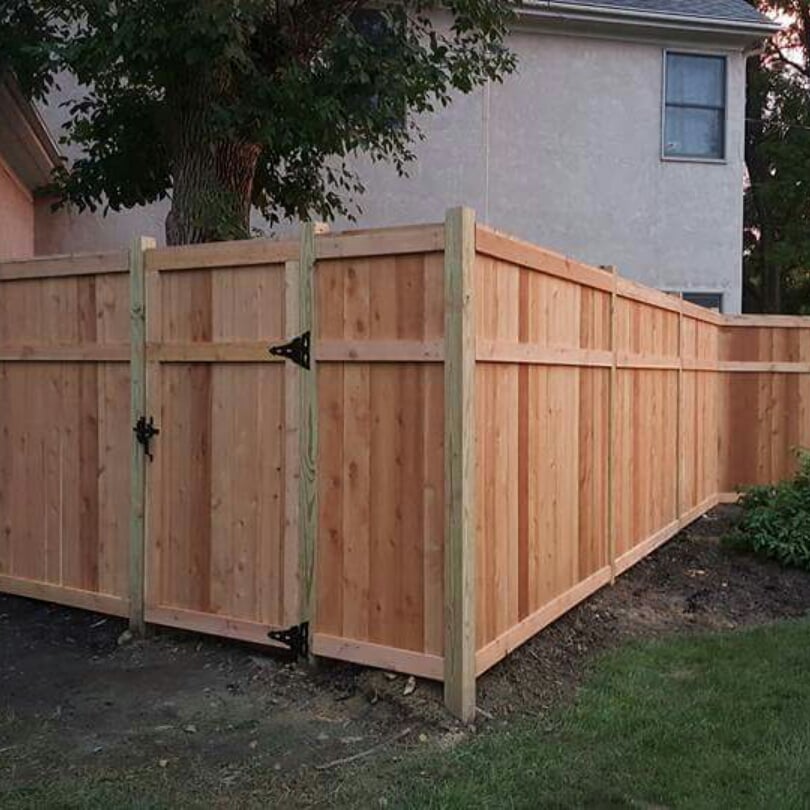
The work was completed in a day and a half. They cut small trees, pulled out an old swing set, pulled out railroad ties and left the place spotless when the job was complete. I am very happy with the fence and their efforts were above and beyond my expectations.
 Elite Fence
From average costs to expert advice, get all the answers you need to get your job done.
Find composite fencing costs based on fence type, labor, and more in this guide. You can expect your project to cost $11 to $45 per linear foot.
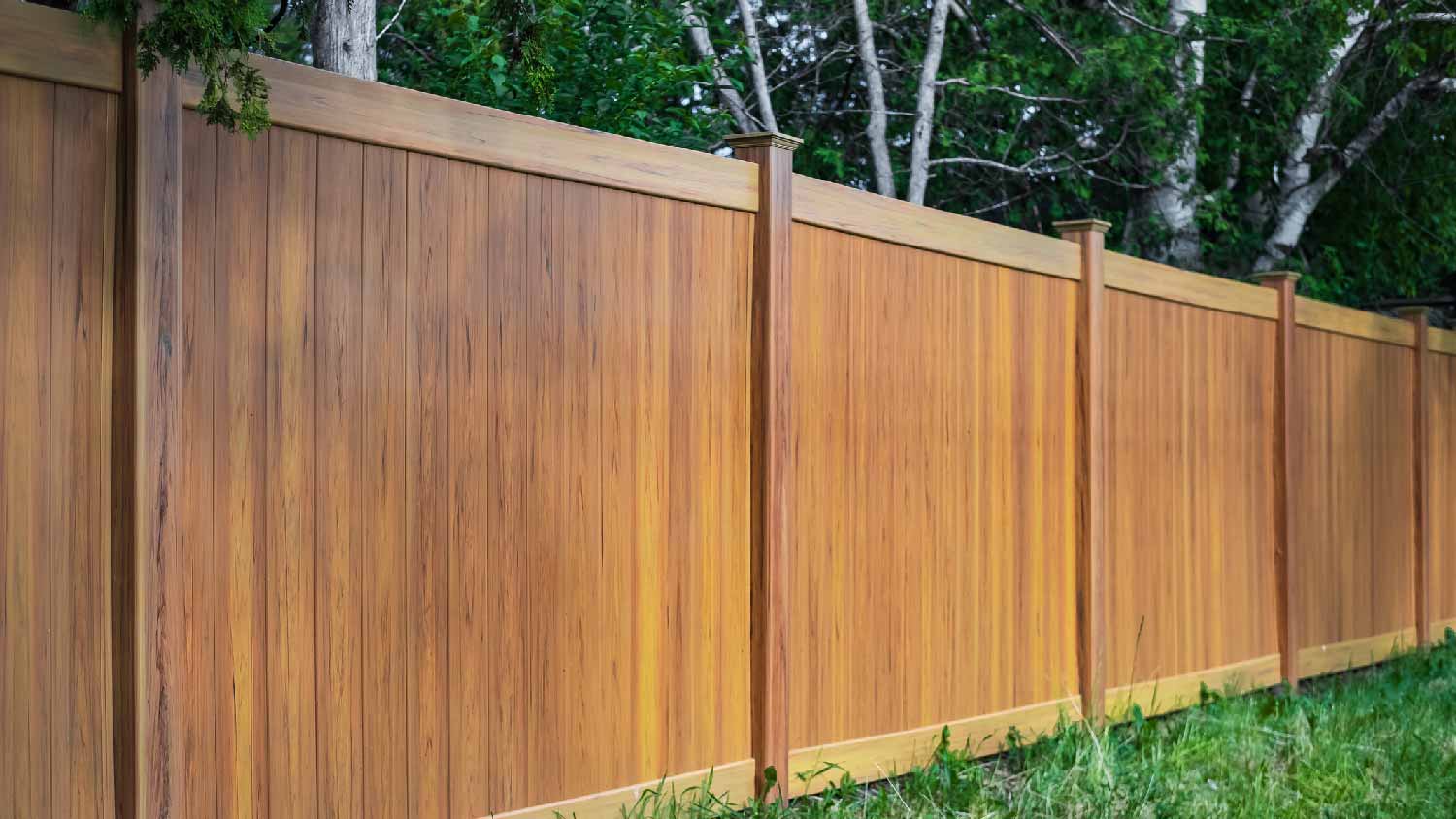
A board on board fence costs more than the typical privacy fence because of the increased materials and installation complexity. Estimate your cost with our guide.
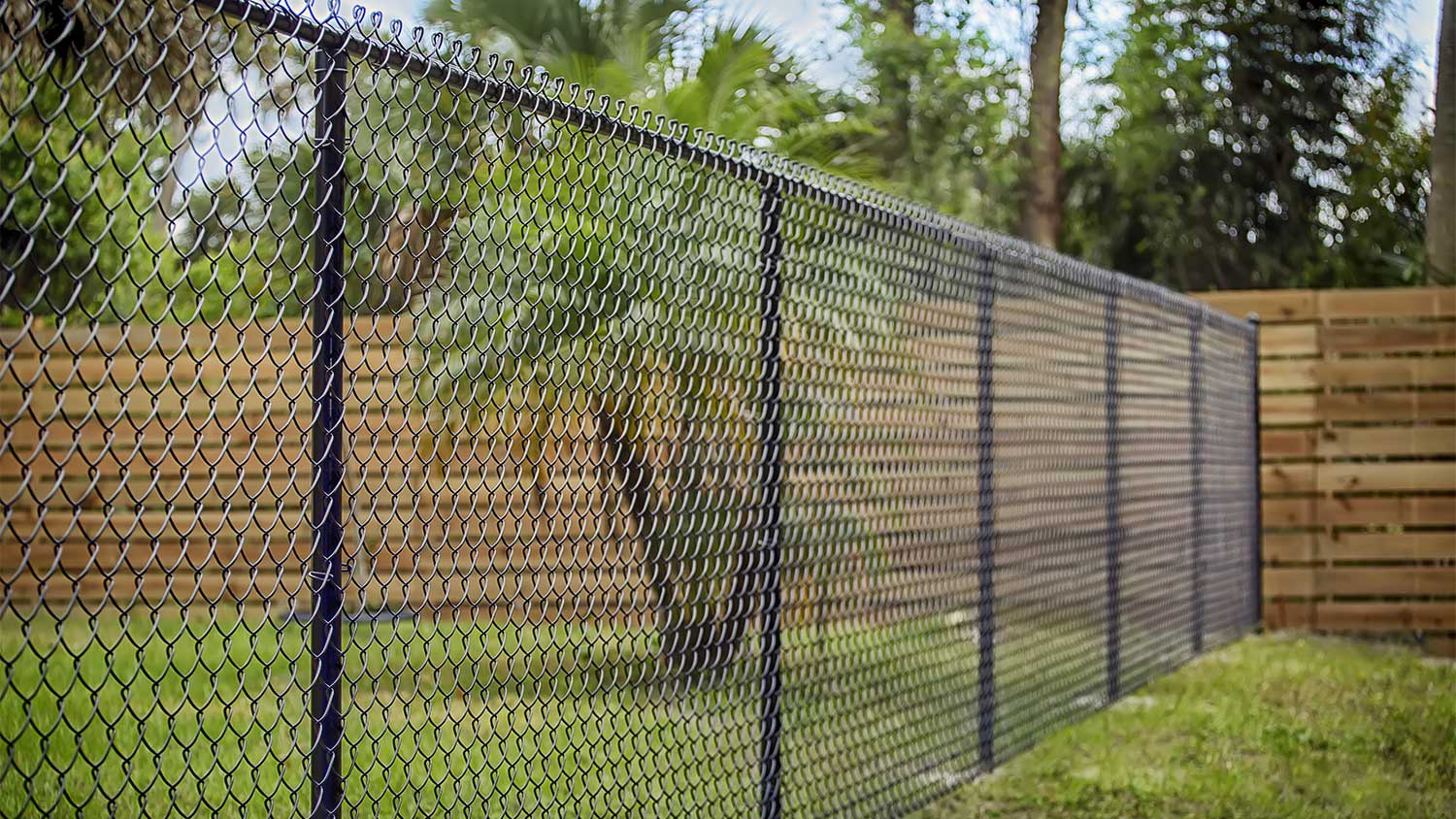
Black fencing adds some elegance to your property while maintaining security. Use this black chain-link fence cost guide to get an estimate for your fencing.
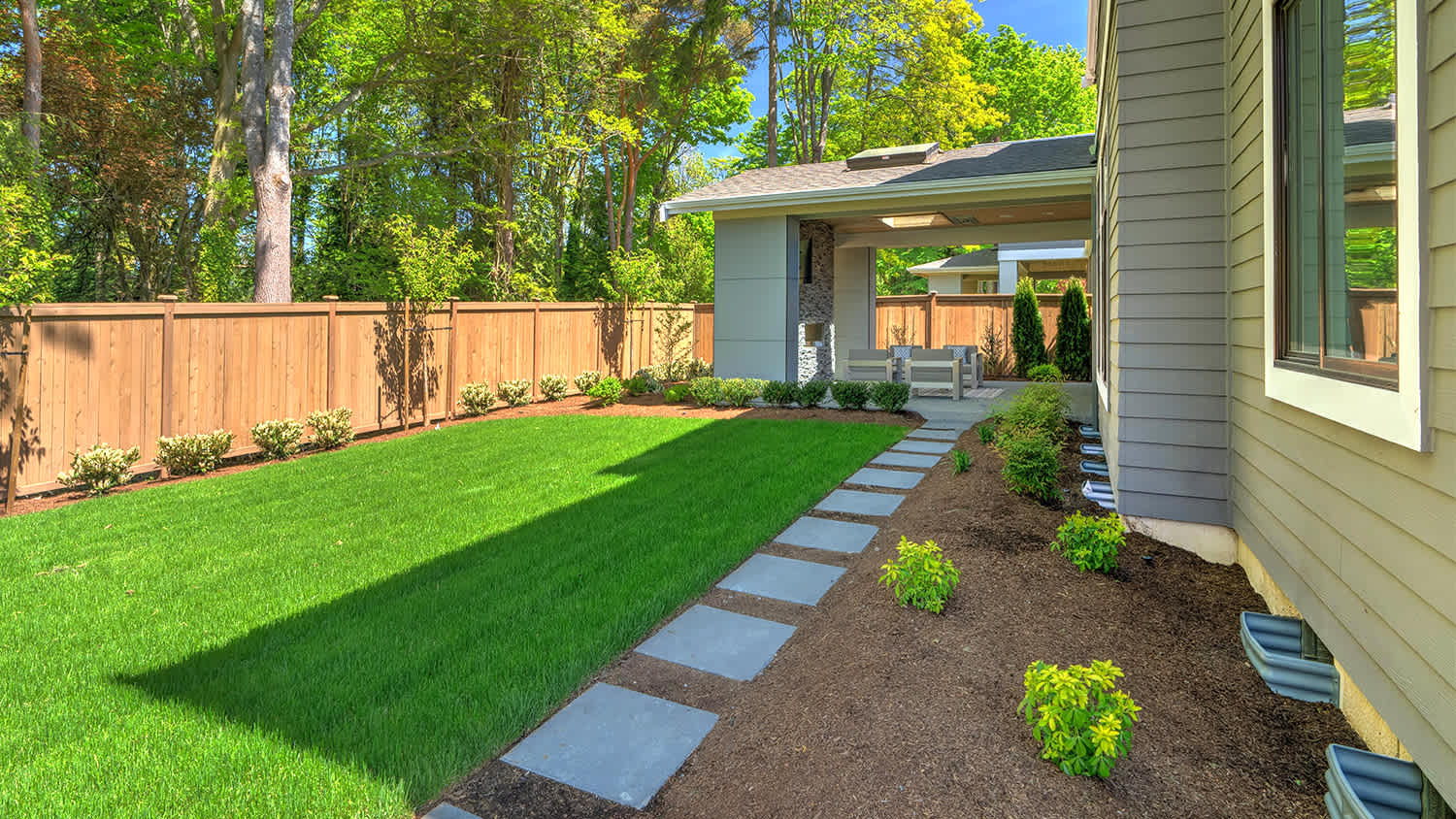
When it comes to the fence for your home, privacy can be paramount. That’s why privacy fences are such a great choice for many. Find out if they’re right for you.

You have the right to feel safe in your backyard. If your home is easily visible from the road or a neighbor’s property, consider these privacy fence ideas.
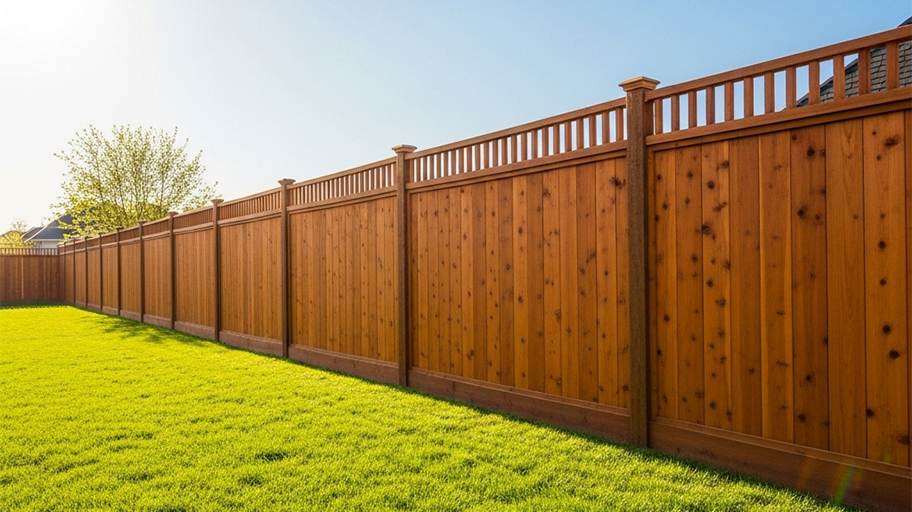
Did you know you can extend the height of your fence for more privacy? Read on to learn how to make a fence taller.