


Staining a fence is a great project if you’re a handy DIYer. Learn how much it costs to stain a fence and how you can influence the price.
Exterior painting costs depend on your project and location. Check with a local pro for your specific job.

Professional fence painting costs $750 to $4,250 depending on your fence height, material, and design complexity.
Your fence material affects labor and supplies, with wood and composite requiring less work than metal or vinyl for your project.
Plan for prep like pressure washing and repairs, which add $150 to $900 or more to your total project cost.
Hiring a local fence painting professional applies an even finish and saves you time while avoiding strenuous physical work.
In 2026, the national average cost for fence painting is $1,700. Most homeowners spend between $750 and $4,250, with the final price driven by fence size, material, and the type of finish you choose. Prep work like pressure washing and repairs can add $150 to $900 or more to your total.
Painting or staining a fence typically costs $3 to $14 per linear foot or $1 to $3 per square foot, with fence length being the single biggest driver of your total. Beyond length, the condition of your fence, the material type, and labor and supply costs all shape the final price. Use the breakdown below to see how these factors combine:
Fence length has the largest impact on painting costs, with most projects running $3 to $14 per linear foot—shorter fences on the low end and taller fences on the high end. That per-foot rate covers only one coat of paint or stain, and most jobs require at least two coats plus a coat of primer. Painters also tend to charge a $250 to $500 minimum, which means small jobs may not be as economical as they appear.
Here is how fence painting costs scale by fence length:
| Length of Fence (Linear Feet) | Typical Cost (One Coat) in 2026 |
|---|---|
| 50 | $150–$700 |
| 75 | $225–$1,050 |
| 100 | $300–$1,400 |
| 150 | $450–$2,100 |
| 200 | $600–$2,800 |
| 300 | $900–$4,200 |
| 400 | $1,200–$5,600 |
Prep work is a standard part of nearly every fence painting or staining project, covering tasks like stripping old paint ($1,500 to $3,600), trimming vegetation, cleaning the surface, and completing any necessary repairs—all of which add to your total cost. Here are common fence painting prep costs to plan for:
Fence repairs cost an average of $300 to $900
Pressure washing costs an average of $150 to $300
Sandblasting costs: $2 to $8 per sq. ft.
In general, expect to spend $20 to $80 per gallon on paint, $20 to $50 per gallon on stain, and $20 to $50 per gallon on primer. Finish type adds another layer of cost: transparent stain is the most affordable, solid stain carries the highest price tag, and glossier paint sheen levels cost slightly more than flat finishes. Always confirm that your chosen formula and finish are compatible with your specific fence material before purchasing.
Paint and stain are close in price, but the formula you choose—acrylic, latex, or oil-based paint—does create some variation, and certain states have banned oil-based options due to high VOC levels.
Here are some pros and cons of painting versus staining a fence:

| Staining a Fence | Painting a Fence |
|---|---|
| Ideal for wooden fencing | Works with metal, wood, or vinyl fencing |
| Less prep than painting | Less product required for coverage |
| Only requires one coat | Large range of colors and finishes |
| Natural look | Prone to chips and peeling |
| Low maintenance | Requires two or more coats |
| Prone to fading | Requires more prep work |
| Transparent finishes don’t offer UV protection | Labor costs may be higher |
Professional fence painters typically charge $25 to $100 per hour, with labor factored into the per-linear-foot or per-square-foot rate they quote. Choosing to hire a painter rather than doing the work yourself costs about 60% more, but you gain professional-grade results and avoid the time and physical effort of the job.
I usually recommend exterior home painting in spring and fall since temperatures outside can impact how well your paint adheres and how long that exterior paint job lasts. I don’t recommend painting when there’s any risk of below-freezing temperatures or when it’s above 80 degrees or higher. The sweet spot is right around 60 degrees or so for paint that dries thoroughly and has good adhesion.
Fence painting costs vary by material, with simpler designs and paint-friendly surfaces keeping prices lower. Metal fences cost more than wood because they require a layer of rust-proof primer before any paint is applied. Decorative accents like lattices add labor time and push costs higher regardless of material. Here is how fence painting costs break down by fence type:
| Type of Fence | Cost (per Linear Foot) in 2026 |
|---|---|
| Wood (Traditional Picket Fence) | $2–$5 |
| Wood (Privacy Fence) | $2–$10 |
| Vinyl | $3–$10 |
| Metal and Aluminum | $4–$10 |
| Wrought Iron | $5–$12 |
| Shadowbox | $4–$14 |
Painting or staining a traditional wooden picket fence costs $2 to $5 per linear foot, though you may pay up to $10 per linear foot for a privacy fence due to its greater height requiring more product and labor. Decorative accents like lattice or other woodwork will push costs even higher regardless of which wood fence style you have.
Painting a vinyl fence costs $3.75 to $10 per linear foot, and the job typically requires an adhesive primer and an epoxy-based acrylic paint to bond properly to the smooth surface. While most homeowners skip this step, painting is a practical way to refresh a fading fence and delay a full replacement. Before starting, confirm that painting won't void your fence's warranty.
Painting a metal or aluminum fence costs $4 to $10 per linear foot, with the final price depending on the type of metal and whether a rust-proof primer is needed—a step you can skip only if the metal is already rust-resistant.
Outdoor metal surfaces like chain link fences require the use of oil-based paint, which costs slightly more than water-based alternatives and is not legal in every state due to VOC regulations.
Painting a wrought iron fence costs $5 to $12 per linear foot, making it one of the more expensive fence types to refinish. The higher rate reflects the extra labor involved: painting a wrought iron fence requires scraping off rust and applying a rust-proof primer before any topcoat goes on. That prep work alone can add around $1,250 to the total cost of the job.
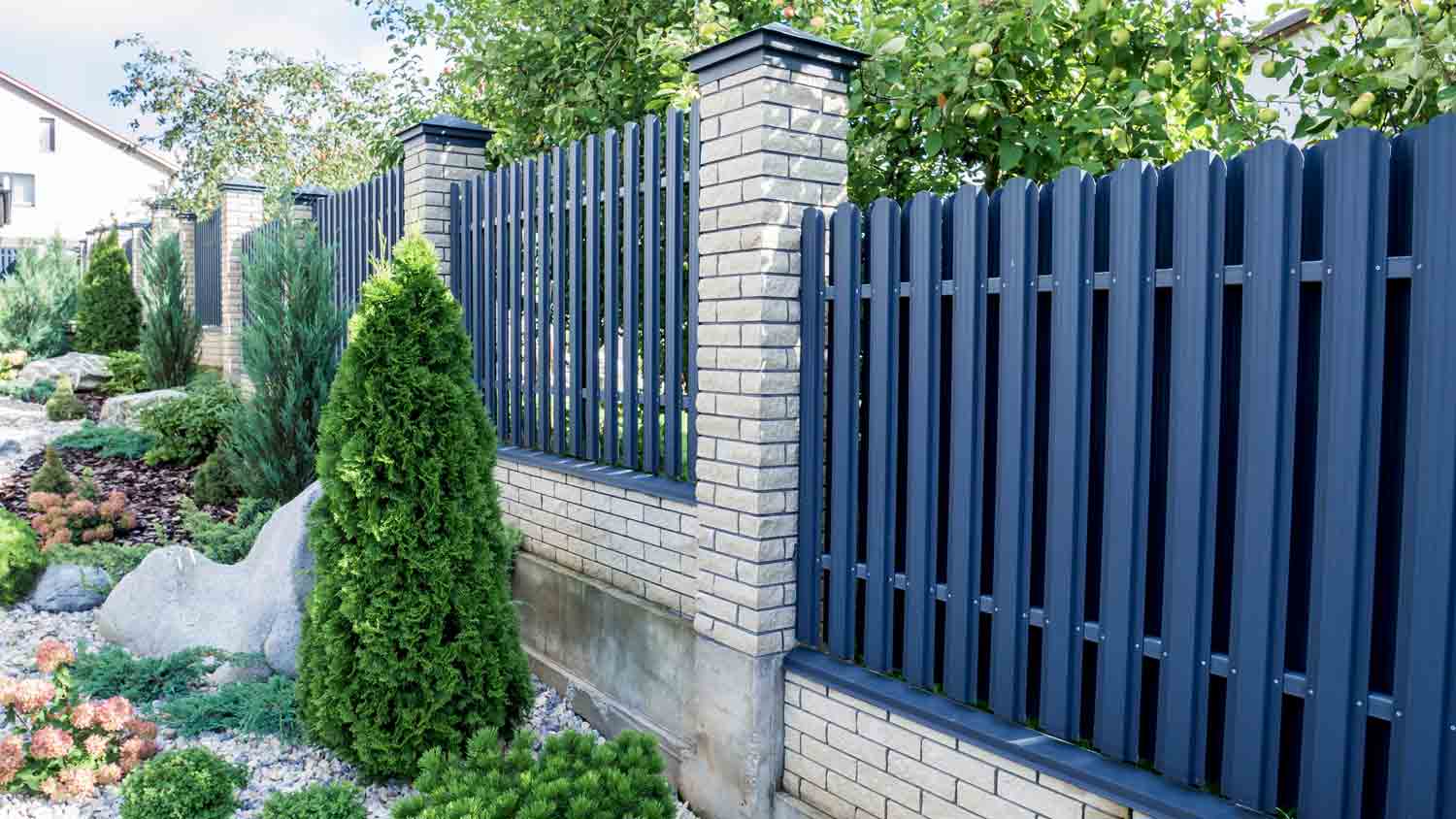
Shadow box fences cost $4 to $14 per linear foot to paint—the highest range of any fence type—because their alternating slat design makes stripping old paint and applying an even coat significantly more difficult. The more labor-intensive the job, the higher the cost, and shadowbox fences consistently land at the top of that scale.
Fence type and size are just two pieces of the pricing puzzle—paint volume, number of coats, and which sides you paint all affect your final bill. One gallon of paint or stain typically covers 200 to 400 square feet, so larger or more complex fences will require more product and drive up material costs. Here are some additional costs to factor into your budget.
The number of coats your fence needs directly multiplies the effective linear footage your contractor must cover—a 100-linear-foot fence requiring two coats means painting 200 linear feet in total. Most staining jobs require one or two coats, while painting typically calls for one coat of primer plus two coats of paint. Metal and vinyl fences often need specialized primers and may require additional coats beyond the standard count.
Painting or staining both sides of your fence delivers full protective coverage, not just surface color, which is why it's the recommended approach for most homeowners. Fences that sit on property lines can complicate access to the neighbor-facing side, so it's worth having that conversation before work begins. Painting only one side will reduce your cost, but it leaves the other side exposed to moisture and UV damage.
While painting your fence yourself can save you up to 60% of the project's cost, there are several reasons to reconsider the task and hire a professional to do the work. Painting a fence is more than just slapping on a coat or two. Proper fence painting requires multiple preparation steps, potential repair work, precise finish application, and extensive cleanup. A local fence painter can get the job done with professional tools and materials, ensuring a finished look and a durable paint job.
Painting a fence is far more involved than meets the eye, so here's why hiring a pro makes sense:
Pros know how to prep surfaces correctly, including washing, scraping, sanding, and making necessary repairs.
They can select the right stain or paint for your fence material, climate, and budget.
Pros have the skills and tools necessary to perform the involved tasks, regardless of the type of fence or project scope.
Fence painters manage necessary safety elements, including working from ladders and addressing concerns about overspray.
Experienced pros work efficiently and more quickly than DIYers, reducing the project's timeline.
Reputable fence painters provide material and quality warranties to protect your investment.
If you DIY, you'll need to purchase tools and materials, including paint or stain, brushes, rollers, trays, and drop cloths—whereas a fence painter comes equipped with everything for the project.
If you want to participate in your fence painting process, here are some tasks you can do:
Trim bushes, trees, weeds, and other vegetation away from the fence.
Remove lawn furniture and other obstacles from the work area.
If possible, you may be able to perform minor fence repairs before the project begins.
Consider helping with some of the cleanup work after the job is completed.
It is worth it to paint a fence because it extends its longevity by protecting it against the elements. Another great reason to paint a fence is that it increases your home's curb appeal. This comes in particularly handy if you plan to put your home on the market. Finally, it's especially worth it to paint a fence if you DIY the job, because you'll save hundreds of dollars in labor fees.
If you need to tighten your budget, look no further. There are some ways you can save on the cost of staining or painting a fence. In this case, materials matter. Here are some things you can do.
Designer paints and stains can add up to hundreds more than affordable brands. Keep in mind, high-end paints are made from higher-quality ingredients, so you may be able to get away with fewer coats—particularly when you're going from a darker color to a lighter color. If you do use more affordable paint, spring for a better primer.
You'll save money if you choose the right paint or stain the first time around and don't have to repaint your fence a couple of months down the line. Certain formulas won't adhere to certain materials. For example, latex paint will likely peel away from a wrought-iron fence, and you'll need an epoxy-based acrylic paint to stick to the smooth surface of a vinyl fence. Do your research before buying materials.
Maybe you're comfortable with painting, but not stripping paint. Maybe you know how to prep a surface, but struggle getting an even coat. Either way, you can take on a portion of the labor to save on contractor costs.
You might think you could save a few bucks by scoping hardware stores for paint sales, but it's typically more cost-effective for your contractor to purchase the paint. Professional painters often have volume discounts with suppliers because they purchase paint regularly. You might save anywhere from 15 to 30% per gallon.
Be ready to provide details about your fence, including height, length, material, finish, and desired appearance.
Confirm the scope of the project and whether one or both sides of the fence will be addressed.
Discuss any necessary fence repairs before painting begins.
Talk with your contractor about the best finish for your fence based on your climate, needs, and budget.
Inquire about project timing, including any weather and access issues.
Home is the most important place on earth, which is why Angi has helped more than 150 million homeowners transform their houses into homes they adore. To help homeowners with their next project, Angi provides readers with the most accurate cost data and upholds strict editorial standards. We extensively research project costs to develop the pricing data you see, so you can make the best decisions for you and your home. We rely on reputable sources, including the U.S. Bureau of Labor Statistics, academic journals, market studies, and interviews with industry experts—all to ensure our prices reflect real-world projects.
Want to help us improve our cost data? Send us a recent project quote to [email protected]. Quotes and personal information will not be shared publicly.
Custom Paint Jobs LLC took our exterior from drab to fab! We couldnt be happier.
 Custom Paint Jobs, LLC
From average costs to expert advice, get all the answers you need to get your job done.
Staining a fence is a great project if you’re a handy DIYer. Learn how much it costs to stain a fence and how you can influence the price.
A board on board fence costs more than the typical privacy fence because of the increased materials and installation complexity. Estimate your cost with our guide.
Fence repair costs depend on the extent of damage, your fence's material, and how much of the fence you need to fix. Explore all the price factors in this guide.
Thinking about fence painting and staining? Learn about material options, costs to expect, and how to hire the right local exterior painter for the job.
Stain your fence when it’s dry outside to protect the wood from sun and moisture damage to ensure it lasts for seasons to come.
Wondering who to hire to paint fences or who to call for fence painting? Explore pro options, the process, and what to expect before you book.