




Top-rated asphalt driveway pros.

Get matched with top asphalt driveway pros in Rudolph, WI

Enter your zip and get matched with up to 5 pros

Need a pro for your asphalt driveway service project in Rudolph, WI?

Select your specific project to find the pro for you.

Find Asphalt driveway pros in Rudolph

Showing 1-10 of 38
Asphalt Driveways questions, answered by experts

The answer to whether or not you need to get a permit before you start your driveway can vary widely based on local ordinances and the scope of your driveway ideas. In most urban and suburban areas, a permit is needed before building a new driveway to ensure that a homeowner is using safe materials and proper drainage practices while designing and constructing a new driveway. In some rural areas, a homeowner may not be required to apply for a permit. When building a new driveway on your own, always check with your local building department to see if you need to request a permit. When hiring a driveway contractor, verify that the right permits are being used before driveway construction begins.

If your driveway is cracked, you can repave it with a process called asphalt overlay. Overlay is more cost-effective than a full replacement but is better suited for minor cracks and issues. If you have major cracks or other problems like water pooling, asphalt overlay isn’t your best bet. Plus, paving over a cracked driveway only extends the lifetime by about 10 years, whereas replacing it would start the clock over completely to give you up to 30 years.

The cost to pour a driveway apron depends on the material and size. Concrete costs $3 to $10 per square foot, asphalt ranges from $2 to $5, and pavers are $5 to $15 per square foot. Additional expenses, like excavation, base material, and labor, can increase the total cost. For example, a standard 12x15-foot concrete apron could cost between $540 and $1,800, depending on local rates and additional work required. Always consult a local driveway paving contractor to get an accurate estimate tailored to your project.
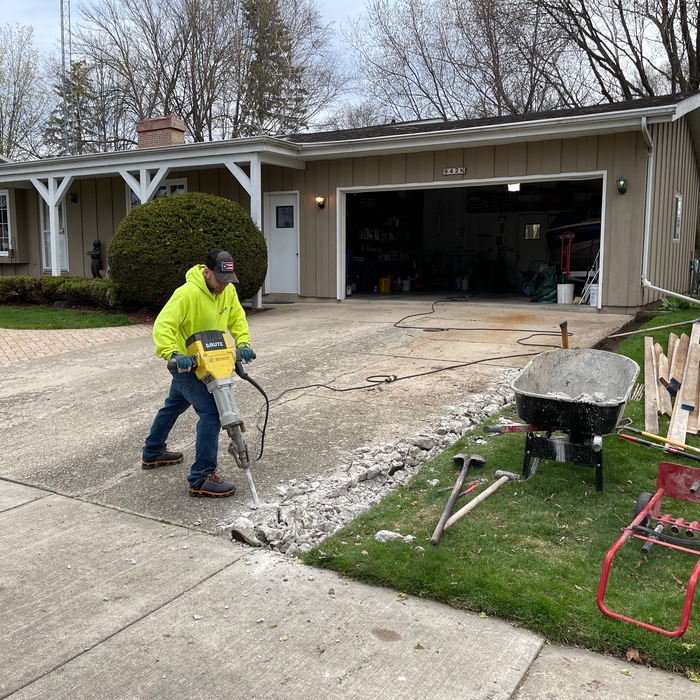
Wet cutting is usually the preferred method. It controls dust, which helps protect your lungs and makes for a cleaner working environment. Plus, the water cools the blade, preventing overheating and prolonging its life while providing smoother, more precise cuts. The downside is the mess—water and asphalt sludge can be messy to clean. Dry cutting, though convenient if water isn’t available, creates a lot of dust, which can be harmful. This also increases the risk of blade damage due to overheating. So, if you have the option, wet cutting is the better method for most asphalt jobs.

Several materials are suitable for steep driveways. Gravel and crushed stone are affordable options that provide good traction. Permeable pavers—such as plastic, rubber, or concrete—filled with gravel or crushed stones are also excellent, as they allow water to drain without causing erosion and perform well in ice and snow. Another option is resin, which can be coated with an anti-slip finish and helps prevent puddles. For added stability, you can install a retaining wall to prevent pavers and gravel from shifting over time.

The Rudolph, WI homeowners’ guide to asphalt driveway services

From average costs to expert advice, get all the answers you need to get your job done.