


Top-rated energy efficiency auditors.

Get matched with top energy efficiency auditors in Halifax, VT

Enter your zip and get matched with up to 5 pros

Need a pro for your energy efficiency auditing project in Halifax, VT?

Select your specific project to find the pro for you.

Find Energy efficiency auditors in Halifax

Avatar for Gabriel Hahn
Gabriel Hahn
New to Angi

Serving Halifax, VT and surrounding areas

Approved

Emergency services offered

Small jobs welcome

Credit card accepted

I conduct energy audit tests for homes, whether they are colonial or brand new construction. I can recommend you various forms of weathersealant, thermal wrappings, and storm window techniques, saving you thousands in the form of long-term heat insulation tech-forward solutions.
2 neighbors recently requested a quote
Avatar for Sun Run
Sun Run
5.0(
1
)

Serving Halifax, VT and surrounding areas

In business since 2021

Free estimates

Credit card accepted

We are committed to excellence in every aspect of our business. We uphold a standard of integrity bound by fairness, honesty, and personal responsibility. Our distinction is the quality of service we bring to our customers. Accurate knowledge of our trade combined with ability is what makes us true professionals. Above all, we are watchful of our customers interests and make their concerns the basis of our business.

Response time10 mins
Response rate100%
Recommended by100%of homeowners
Avatar for Green Insulation Pro's
Green Insulation Pro's
2.5(
3
)

Serving Halifax, VT and surrounding areas

In business since 2011

Free estimates

Warranties offered

Green Insulation Pro's has over 25 years of expertise in construction. We provide you with a full array of services for Home Improvements, with many �Green� environmentally friendly options to choose from. Enjoy the extra money you can save when using these Energy Efficient products, in some cases you might be eligible for additional tax savings. Let our experts show you how to save money while being kind to Mother Earth. Call our experts today for your consultation.

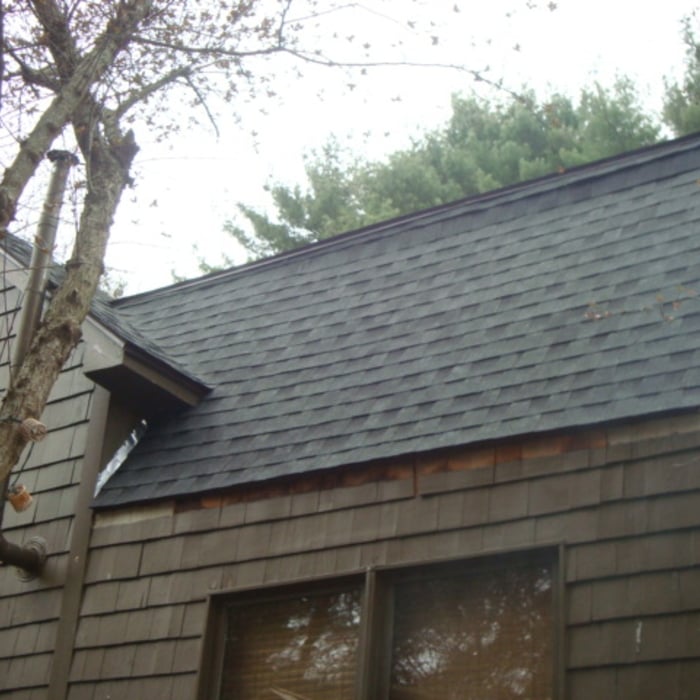
 before
 after
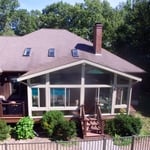
 custom roof and structure
 radiant barrier and blown in insulation
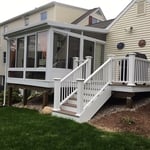
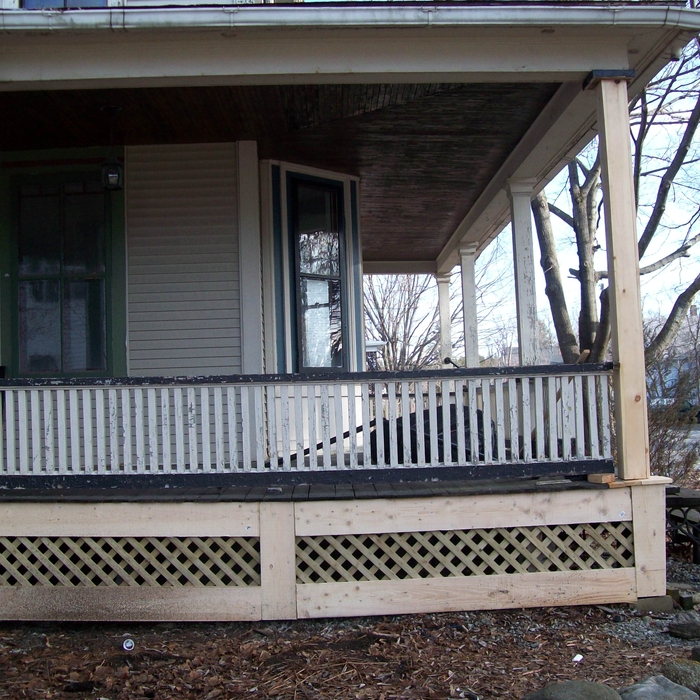
 Custom Porch 1800's

+1

Recommended by100%of homeowners
Energy Efficiency Auditing questions, answered by experts

Some types of electric fireplaces use more electricity than others. Models that produce 1,500 watts will have more of an effect on your heating bill than 750-watt models. 

Electric fireplaces use an average of $1.85 of electricity every eight hours. These minimal operational costs aren’t likely to make a big difference in your electric bill—unless you’re using it as a primary heating source for your home and it’s running most of the time.

Motion-sensor lights use one watt while on standby and five watts while turned on. They’re usually on for one hour over a 24-hour period, bringing the total wattage to about 28 watts per day. LED lights use around 6.5 to 8 watts while on. If you leave an LED light on all night, with night ranging from 10 to 14 hours, you’re looking at using 65 to 112 watts a night. You can minimally cut your wattage in half by switching to a motion-sensor light.

STC (Sound Transmission Class) is a rating that describes how well a building material or assembly blocks airborne sound. A higher STC rating means less noise will pass through the material, providing better sound reduction. This rating system applies to various building components, including windows, doors, flooring, drywall, and insulation.

For context, a typical single-pane window has an STC rating of around 25 (where normal conversations are audible), while a well-sealed, double-pane window can exceed STC 45 (blocking loud speech and most music). It is important to note that for some products, like soundproofing drywall, the STC rating refers to the entire wall system, not just the individual panel.

Additionally, STC ratings are most effective for measuring sound reduction at mid-to-high frequencies, such as human speech, and may not accurately reflect how well a material blocks low-frequency sounds like bass music or thunder. Because of these factors, it is recommended to consult a professional to determine the right STC-rated materials for your specific soundproofing needs.

Attic and whole-house fans improve a home's energy efficiency and comfort. They ventilate hot air from the attic, which reduces peak cooling loads, lowers reliance on air conditioning, and decreases indoor temperatures. This improved air circulation and expedited heat exit helps lower cooling costs, balance moisture levels, and enhance overall natural airflow, contributing to the efficient operation of other home equipment.

Leaving lights on raises the electric bill, but not as much as having high-wattage light bulbs. The best way to save on electric costs is to swap your light bulbs to LED or CFL bulbs that use far fewer watts. You can also use smart lights and light switches to control usage via a smartphone or voice-controlled device.

The Halifax, VT homeowners’ guide to energy efficiency auditing services

From average costs to expert advice, get all the answers you need to get your job done.