







Top-rated electricians.

Get matched with top electricians in Lovelady, TX

Enter your zip and get matched with up to 5 pros

Need a pro for your electrical service project in Lovelady, TX?

Select your specific project to find the pro for you.

TRUSTED BY LOVELADY, TX HOMEOWNERS

  • Average homeowner rating star icon4.2
    Average homeowner rating
  • Verified reviews icon37
    Verified electrical services reviews

Find Electricians in Lovelady

Avatar for Corrigan, LLC
Corrigan, LLC
4.8(
25
)
Lightning Protection - Install or Repair

Serving Lovelady, TX and surrounding areas

Approved

In business since 1954

Free estimates

Emergency services offered

"John Corrigan and his sons are outstanding! They did outstanding work installing our lighting rods at a reasonable price. They were prompt, very professional and honest. I would call them again and recommend them to anyone."
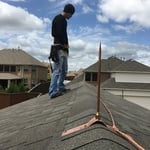
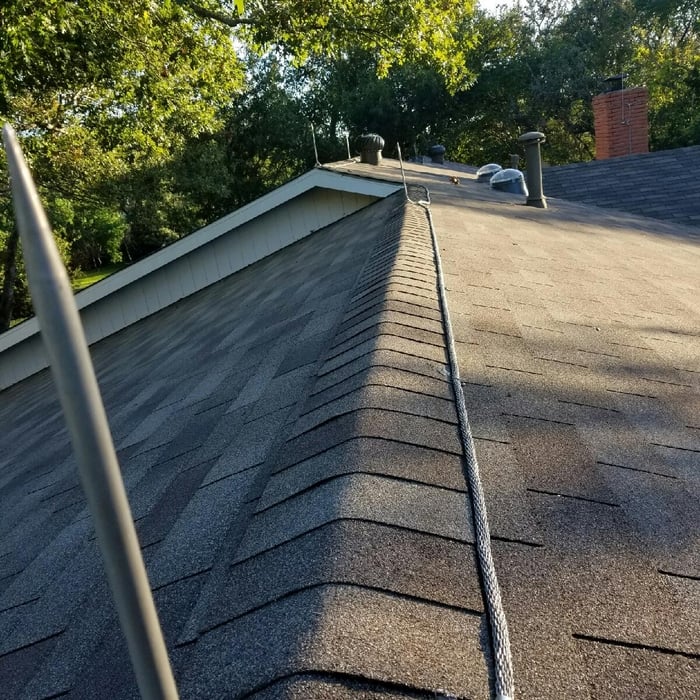
Shingle roof air terminal
Residential 1
Residential Spanish tile
Horse stable
Residential 2

+23

Response time1 day
15 neighbors recently requested a quote

Recommended by100%of homeowners
Bryce
New to Angi
Lightning Protection - Install or RepairPortable Generator - Install

Serving Lovelady, TX and surrounding areas

Approved

Hello!\nIve been a residential/commercial electrician since 2019. I can help with all electrical needs:\n- all lighting needs and troubleshooting.\n1.) under/upper cabinet lighting\n2.) can lighting/ recessed lighting \n3.) adding outlets/troubleshooting\n4.) car chargers\n5.) barn dominium’s roughin or added on. ( including pipe work )\nThose are just a few things listed that I can do, feel free to get with me about any and all electrical needs, I’ll get you taken care of.\n

TS ELECTRICAL SOLUTIONS AND SERVICE LLC
New to Angi
Fixed Generator - InstallElectrical Wiring or Panel UpgradeElectric Vehicle Charging Station Installation - For Business - Materials Not Provided+9 more

Serving Lovelady, TX and surrounding areas

Approved

In business since 2024

Free estimates

Credit card accepted

We take great pride in our experience, expertise, quality and customer service, that we provide to meet the consumer's needs. It is our mission to provide excellent workmanship, and complete customer satisfaction, from start to completion of a project. In order to understand the needs and expectations of our customers, we take great care to work and communicate, with every customer in a professional manner. Our reputation is based on service, safety and quality, regardless of how large, or small the job. Call us today!

9 neighbors recently requested a quote

...
Showing 1-10 of 78
Electrical questions, answered by experts

To avoid drilling into wire, you will need to trace your home's wiring using a stud finder, wire detector, circuit tracer, or voltage finder. Since locating wires in your home can be difficult for some homeowners, hire a professional electrician with the experience and knowledge needed to safely handle electrical systems before drilling into any walls in your home.

Most household circuits can handle about 70 strings of 50 standard mini lights, or up to 600 strings of LED lights, which consume less power than the incandescent variety. Make sure to factor in any appliances also running on the circuit.

It might seem tempting to use 14-gauge wires for your outlets, as they can run a little cheaper. But, when it comes to electrical work, it’s best not to cut costs less you overload your circuit. A 12-gauge wire will ensure that you’re protecting the outlet (and your circuit breaker) from any potential overloads that might incur, as it can handle a little more amplitude than a 14-gauge wire.

You can twist the wires before using a wire nut, but it’s not necessary. Electricians often twist wires before using a wire nut, which can help secure the connection and enhance electrical contact between wires. You can decide whether or not to twist the wires beforehand, or consult a local electrician if you need  professional opinion.

The American Wire Gauge system calculates wire size diameters using the complicated formula D(AWG)=.005·92((36-AWG)/39) inch. A simpler rule of thumb is that every six-gauge decrease doubles the wire diameter, and every three-gauge decrease doubles the wire’s cross-sectional area. On the other hand, wavenumbers are typically measured in reciprocal meters (1/m or m−1) or reciprocal centimeters (1/cm or cm−1).

The Lovelady, TX homeowners’ guide to electrical services

From average costs to expert advice, get all the answers you need to get your job done.