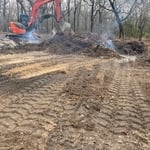
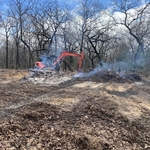
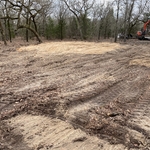
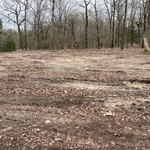
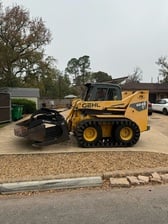
Oviedos Demolition, proudly serves its customers with pride, integrity, and attention to the details that matter most to you. This is one of the many things that set us apart from the rest. We are locally owned and operated. Give us a call.
Brushwacker Land Services is a family-owned and locally operated business specializing in a wide range of land management services. We offer expert solutions including mulching, boom mowing, excavation, stump removal, house pad preparation, dirt work, storm clean-up, and erosion control. Our experienced team also handles disking, utility-right-of-way clearing, drainage control, and clean-up after logging. \n\nWe take pride in preparing hunting lanes, homesteads, pasture reclamation, and reliable bush hogging services. At Brushwacker Land Services, we believe in delivering exceptional quality and results - focusing on the job done right rather than competing solely on price. Our commitment is top-tier service and attention to detail sets us apart as the trusted choice for all your land management needs.
With over 7 years of hands on experience. \n We are here to help you with any Demolition, Dirt work, Land Clearing, Haul off, Excavation, Forestry, Mulching, Fence line clearing, and more\n\nSmall business owner for over twenty years.\nOwner operator \nLicensed and insured \nNew and Well maintained equipment.
A leading construction company in (LOCATION) focuses on providing optimum quality in various construction services. We take great pride in our work as we have during our () years in business. Thus, you can rest assured, that no matter what construction project we handle, we will be giving nothing but highly professional and expert works. Our galleriescollections of photos from previous construction projectscan attest to the amount of time, thought, and effort that we put into the services we provide.
\n
\n
\n
\n
\n
\nOf course, while we strive to provide the most beautiful designs and outcomes, we understand that price is one of the most important deciding factors for clients. That is why we offer the fairest prices for our best quality works. Call today for your free estimate!
Ultimate Precision Roofing and Construction has become a staple of professionalism and quality work, in Mabank, TX. With several years of experience, there is no job too small, or too complex for our crew. Call us today to schedule an appointment.
We take great pride in our experience, expertise, quality, and customer service that we provide to meet the consumer's needs. It is our mission to provide excellent workmanship and complete customer satisfaction from start to completion of a project. In order to understand the needs and expectations of our customers, we take great care to work and communicate with every customer in a professional manner. Our reputation is based on service, safety, and quality, regardless of how large or small the job.
Schneider Land Development, LLC proudly serves our customers with pride, integrity and attention to details that matter most to you. This is one of the many things that sets us apart from the rest. We are locally owned and operated so give us a call today! Serious inquiries only please.
\n
Abshire’s Mulching and Excavation, LLC strives to enhance residential and commercial property value through a natural approach to land management and functionality. As a family owned and operated business, backed by a Bachelor of Environmental Science Degree and using state of the art equipment, we take your investment seriously. \n\nForestry Mulching is the process of removing undesirable vegetation without the harmful practice of topsoil, organic material and micro flora and fauna disruption. Selective mulching allows for the natural regeneration of forest floors as the customer desires.\n\nServices Include\n\nCustom land clearing-\nPonds, dams and embankments\nRight-of-ways\nFence rows\nShooting lanes\nTree trimming\nPasture mowing and more!\n\nExcavation Services-\n\nCulvert repair and installation\nErosion control, water diversion\nTrenching \nSmall Demolition\n\nLike and share Abshire’s Mulching and Excavation on Facebook!\n\n
Wide Open Lawn Care & Handyman Services LLC is committed to excellence every aspect of our business. We uphold a standard of integrity, bound by fairness, honesty, and personal responsibility. Our distinction, is the quality of service we bring to our customers. Accurate knowledge of our trade, combined with ability is what makes us true professionals. Above all, we are watchful of our customers' interests and make their concerns the basis of our business.
We pride our company on reliability, great communication, integrity, and quality work. We strongly believe in giving our absolute best in all of our projects no matter how big or small. We are experts in our trade and will always keep you educated on your particular task or project. We look forward to earning your business!
Slab foundations are more affordable than crawl spaces because they require minimal excavation, as the slab sits directly on the ground or on footers that only sink a few feet into the ground. Crawl spaces require excavation of the entire footprint of the home to several feet below the surface. Not only does that mean higher labor costs, but more materials are necessary for the concrete foundation walls.
To drill a shallow well, you may be able to use a drive well point. This is a tapered point that is driven into the ground. A drill bit at the end of PVC pipe may be another option to consider. A lot of the cost depends on what tools are available near you.
Maintain open communication and address issues as they arise, ensuring contract terms cover potential delays.
A trench that is less than 5 feet deep often doesn't require a protective system. Most residential trenches will not go this deep (the typical residential drainage trench is just 18 inches deep). In the event that an excavator needs to dig more than 5 feet beneath the surface, a protective system is required unless the excavation is in entirely stable rock.
It’s possible to transplant trees as tall as 50 feet when an experienced tree planting service uses the right equipment. However, a tree with a trunk larger than two or three inches in diameter needs to be handled by a professional in order to yield successful transplanting results. Consulting a tree planting professional is the best way to tell if your large tree can be safely transplanted.
The Chandler, TX homeowners’ guide to excavation services
From average costs to expert advice, get all the answers you need to get your job done.
Excavation costs $1,500 to $6,300 for most residential projects—but it depends on factors like the size of the area. This guide will help you plan a budget.
You can't have an in-ground pool without digging into the ground. How much does pool excavation cost, and can you take it on yourself? Our guide explains.