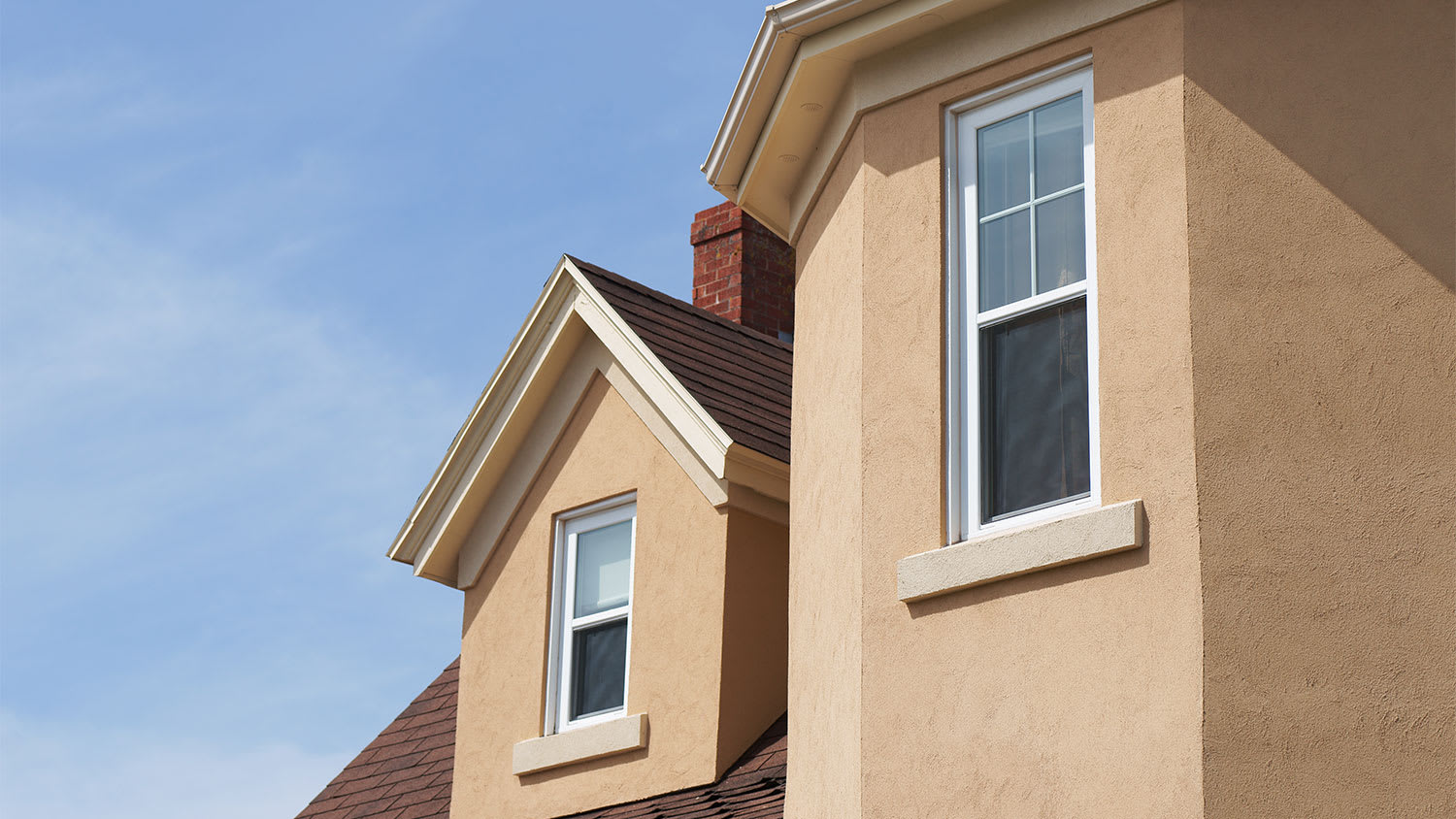
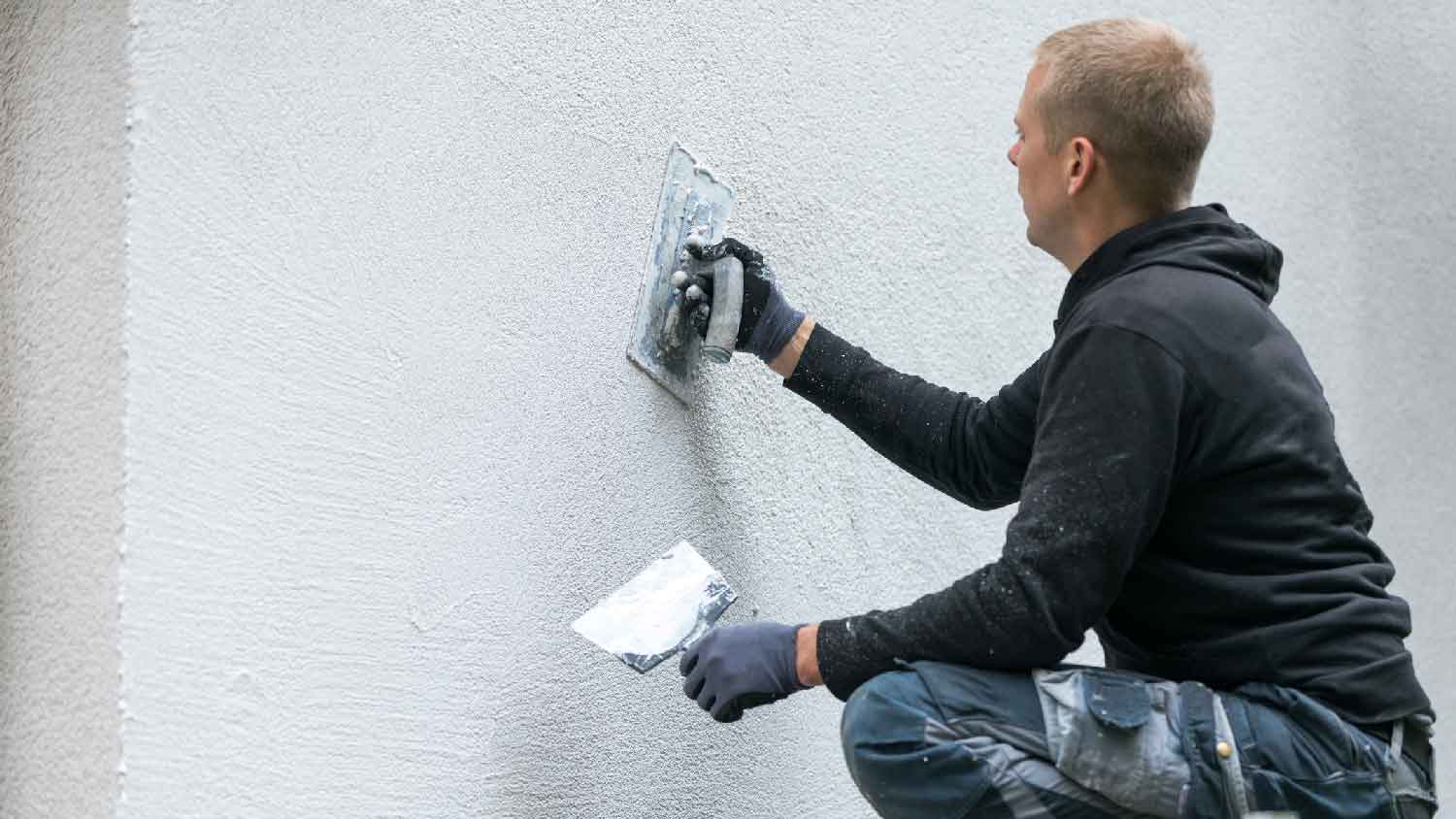
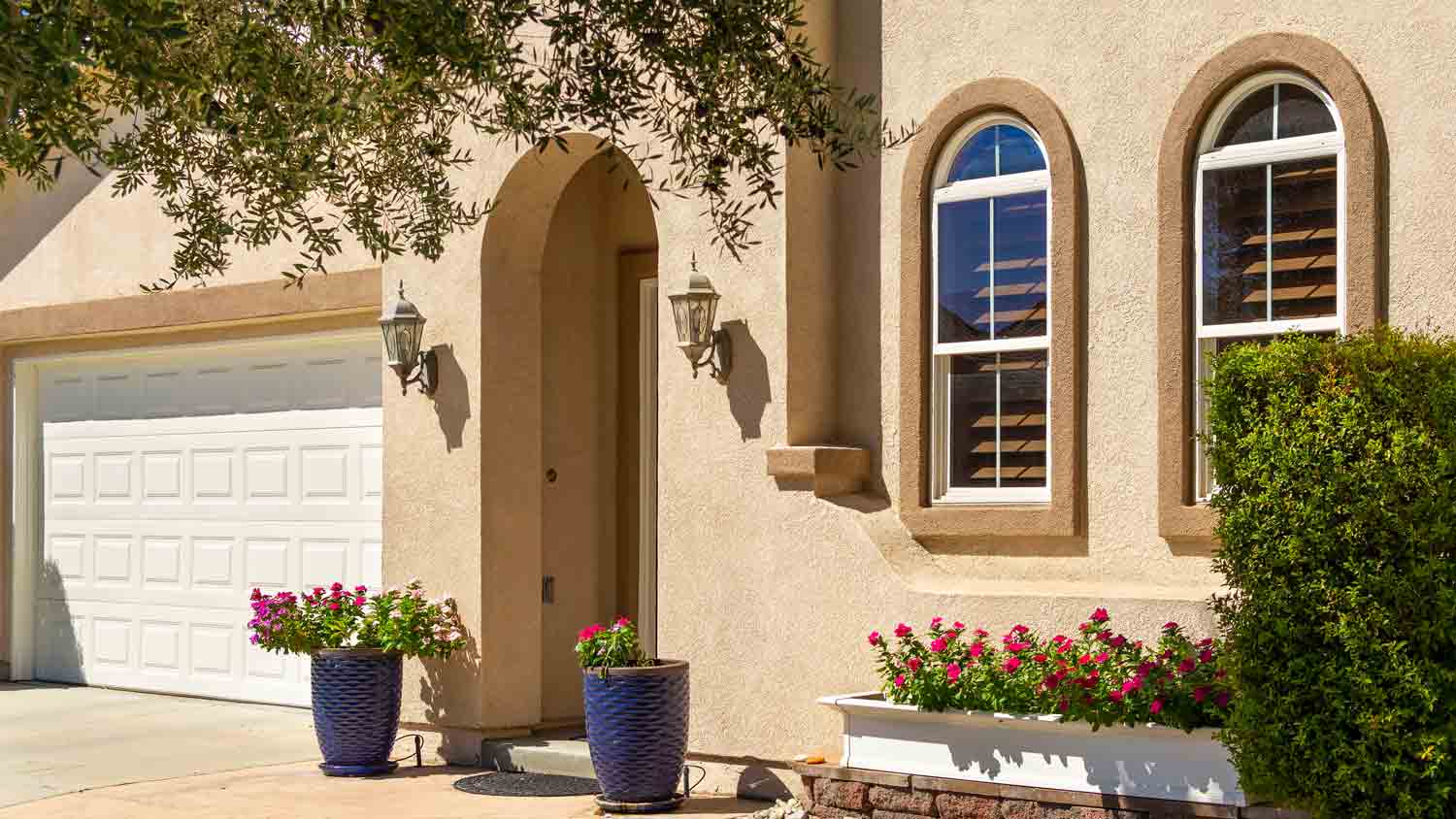
Repaired stucco requires regular inspections, cleaning to prevent mold or mildew build-up, and timely minor repairs to address hairline cracks. Applying protective sealants can also enhance longevity and maintain its appearance.
If your windows are losing efficiency from wearing out or experiencing leaks on rainy days, it may be time to consider replacing them. Window replacement costs run between $180 and $410 per window but may be on the higher end for homes with stucco siding since stucco will likely require more time and special tools for replacement.
It’s not advisable to use CLR on stucco. CLR is a powerful acidic cleaner designed for removing tough mineral stains. Stucco is a porous material commonly made of cement, lime, and sand. The acidic nature of CLR can potentially damage or etch the stucco surface, leading to discoloration or deterioration.
It is best to use cleaning solutions specifically formulated for stucco or mild household cleaners mixed with water to clean stucco siding. Always test any cleaning product in a small, inconspicuous area before applying it to the entire stucco surface.
Yes, most services include matching the replacement pieces to the existing flooring. Confirm with your contractor.
German schmear is a durable brick masonry coating. It should last at least a decade or two without flaking or fading, even with minimal maintenance. This makes it an economical option compared to the cost of painting your house exterior, which usually needs to be repainted every five to 10 years to keep it looking its best—thus costing more over the same time period.
The Miller, SD homeowners’ guide to stucco services
From average costs to expert advice, get all the answers you need to get your job done.
Discover the cost to stucco a house in 2026, including average prices, key factors, and tips to help you budget and plan your stucco project with confidence.
Installing new stucco gives your home a facelift and boosts home value. But can you stucco over stucco? You can, but there are some things to consider.
Choose the right pro for stucco installation to get the best professional-quality results. Learn who does stucco installation and the benefits of hiring a pro.
Wondering if stucco increases home value? The short answer is, yes, but the ROI you’ll see depends on a few factors, like location and installation costs.