We're family ran local company dedicated to providing our clients with the very best in concrete installation and repair for driveways, sidewalks, patios, steps, and a variety of other projects. With over 17 years of industry experience, we take and enormous amount of pride in the attention to detail put into each of the projects we're involved with. We're known for our quality work and the integrity of our business. We look forward to building long-term relationships with our clients, and guarantee your satisfaction.
We take great pride in our experience, expertise, quality and customer service that we provide to meet the consumers needs. It is our mission to provide excellent workmanship and complete customer satisfaction from start to completion of a project. In order to understand the needs and expectations of our customers, we take great care to work and communicate with every customer in a professional manner. Our reputation is based on service, safety and quality, regardless of how large or small the job.
David Ferguson's construction business is dedicated to quality and outstanding customer service. Our job is to provide you with quality service at a great price. Please don't wait call us today.
Enhanced Basements foundation repair offers reliable and affordable foundation repair solutions. Our dedicated team is committed to providing high-quality services to address various foundation issues. We take pride in our work and strive to ensure the safety and stability of your property.
We have the experience and we are committed to providing quality workmanship and superior customer service on all our applications. We at C & S Concrete strive to maintain our reputation as a high quality, very service oriented company with our main focus being customer satisfaction.
We pride our company on reliability, great communication, integrity, and quality work. We are experts in our trade and will do our best to keep you as educated as we can on your task or project. We look forward to earning your business!
Gravel is the cheapest way to extend a driveway. Gravel is an affordable, practical option that’s easy to install and perfect for DIY projects, helping you save on labor costs. It can be quickly spread and leveled to create extra driveway space without heavy preparation. While gravel doesn’t offer the same durability or finished look as concrete or asphalt, its low cost makes it ideal for budget-conscious homeowners who want a functional solution without overspending.
When comparing installation costs, asphalt is often less expensive upfront than concrete. Asphalt prices typically range from $7 to $15 per square foot, while concrete can range from $3 to $18 per square foot. However, long-term costs should also be considered. Concrete driveways generally last longer (up to twice as long) and require less maintenance, which can make them more affordable over their lifespan. While asphalt has a lower installation cost and is easier to repair, it requires more frequent maintenance, such as sealing, which can add up over time. Therefore, while concrete is more expensive initially, its durability may offset the cost in the long run.
Yes, it is possible to pave over an existing driveway, but whether it's the right choice depends on several factors. If the underlying structure of your current driveway is still strong, concrete or asphalt resurfacing can be a cost-effective way to prolong its life. However, if your driveway has significant issues like potholes, deep cracks, or other inconsistencies, it is best to remove the old driveway and start from scratch. Key factors to consider include the current driveway's condition, the compatibility of the new material, the added thickness and height, and the necessary surface preparation.
An ideal driveway gradient is between 2% and 5%. Anything lower than 1% or higher than 15% can cause problems for your car or property. A driveway with less than a 1% slope increases your likelihood of flooding and water damage, while a driveway with a 15% grade or higher can be too steep for safe traveling.
Your city or county will have guidelines about the minimum and maximum width and length of private roads. The average private road is 12 feet wide, and length, of course, depends on your property. Requirements also depend on the amount of traffic and types of vehicles your road experiences. Check with local ordinances before planning a road on your property.
The Miller, SD homeowners’ guide to asphalt driveway services
From average costs to expert advice, get all the answers you need to get your job done.
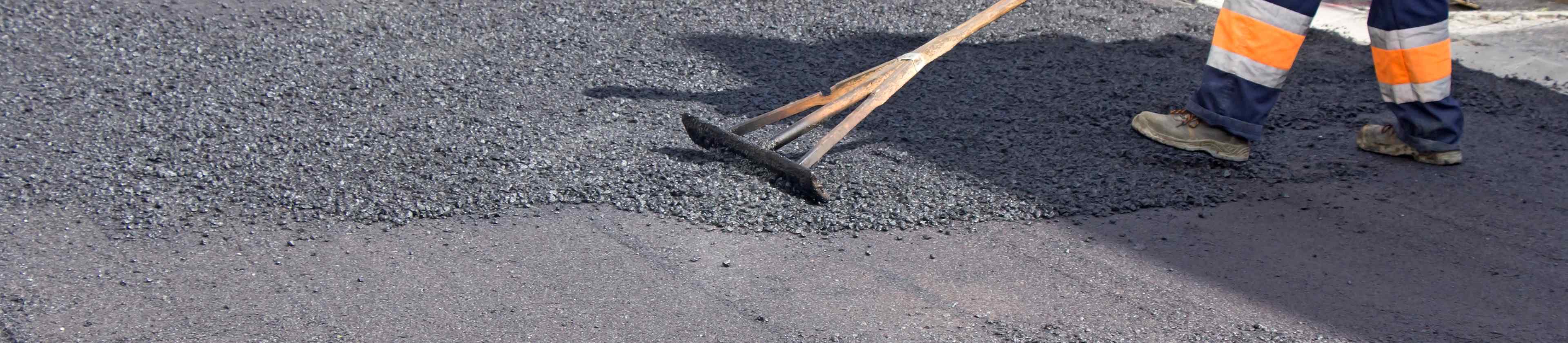
Adding a new asphalt driveway to your home can boost its overall appearance and give homeowners a nice ROI down the line. But how long do asphalt driveways last, and what can you do to maximize their lifespans? Read this guide to find out.