
Top-rated paving pros.

Get matched with top paving pros in Fairfax, OK

Enter your zip and get matched with up to 5 pros

Need a pro for your paving service project in Fairfax, OK?

Select your specific project to find the pro for you.

Find Paving pros in Fairfax

Avatar for A to Z Asphalt Construction
A to Z Asphalt Construction
4.7(
41
)
Asphalt Paving - InstallAsphalt Paving - Install- For BusinessAsphalt Paving - Repair or Patch+1 more

Serving Fairfax, OK and surrounding areas

In business since 2000

Free estimates

Credit card accepted

"Great local company with exceptional service, quality and cost. First class work at a price we were happy with. Service was top notch with excellent communication throughout the process. Highly recommended Asphalt Construction!!"
Response time2 days
Response rate91%
Recommended by65%of homeowners
Avatar for ABC  Landscaping
ABC Landscaping
5.0(
7
)
Interlocking Pavers for Patios, Walks & Steps - Install

Serving Fairfax, OK and surrounding areas

In business since 2006

Free estimates

Emergency services offered

"I’ve used Antonio several times for lawn irrigation repair and maintenance. He does what he says he will do when he said he would do it and stands behind his work. He is an honorable man and I WILL use him again."
Additional Photos
Additional Photos
Additional Photos
Additional Photos
Additional Photos

+17

Recommended by100%of homeowners
Showing 1-10 of 38
Paving Services questions, answered by experts

You can pour concrete over asphalt if it’s in good condition, thick, stable, and well-compacted. Concrete is more durable than asphalt and can extend the lifetime of your driveway without having to pay frequent asphalt driveway repair costs or replace it completely. 

But this is best reserved as a temporary solution based on budget restraints, as asphalt requires more frequent repairs and assessments than concrete. Once that concrete top is poured, it’ll be harder to accurately understand what’s happening beneath that layer, which could lead to more issues.

Asphalt and tarmac are not the same thing. Traditional tarmac, short for tarmacadam, uses tar as a binder to hold crushed stone together. Asphalt uses bitumen—a byproduct of crude oil—to bind aggregate. Though tarmac was once a go-to for roads, asphalt has become the modern standard. And these days, most surfaces referred to as “tarmac” are actually asphalt. So, while the names may overlap, the key distinction lies in the binder—tar for tarmac and bitumen for asphalt.

Your city or county will have guidelines about the minimum and maximum width and length of private roads. The average private road is 12 feet wide, and length, of course, depends on your property. Requirements also depend on the amount of traffic and types of vehicles your road experiences. Check with local ordinances before planning a road on your property.

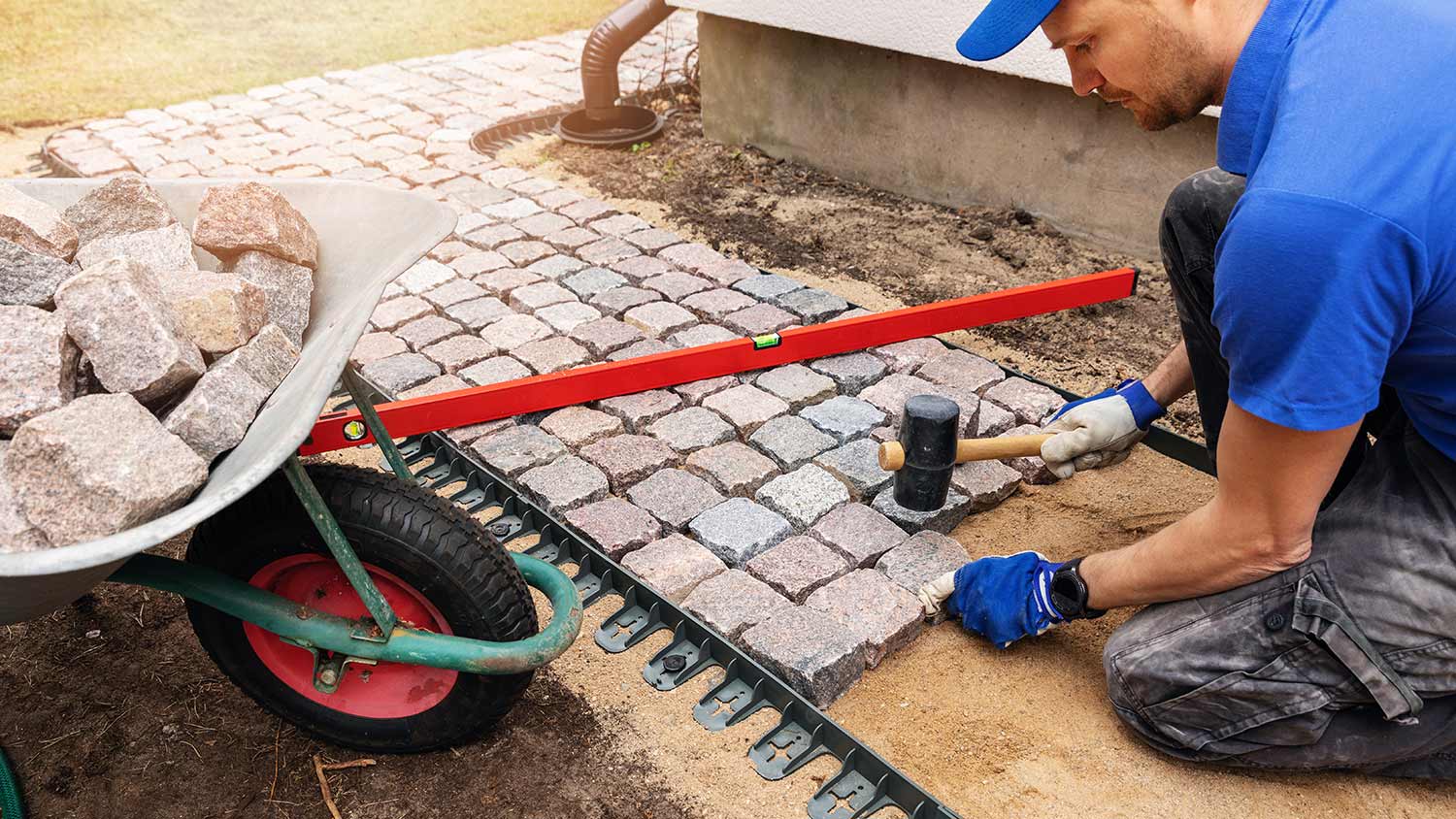
To adhere pavers to concrete, you can use either mortar or a concrete-specific adhesive. For border pavers, a polyurethane-based adhesive is a good choice as it expands and contracts with temperature changes, keeping them firmly in place. For the non-border pavers, polymeric sand is used between the joints to prevent shifting. In most cases, it is also recommended to lay a permeable sand layer below the pavers to ensure proper stability and drainage. Before starting, always take the proper preparatory steps for a professional result.

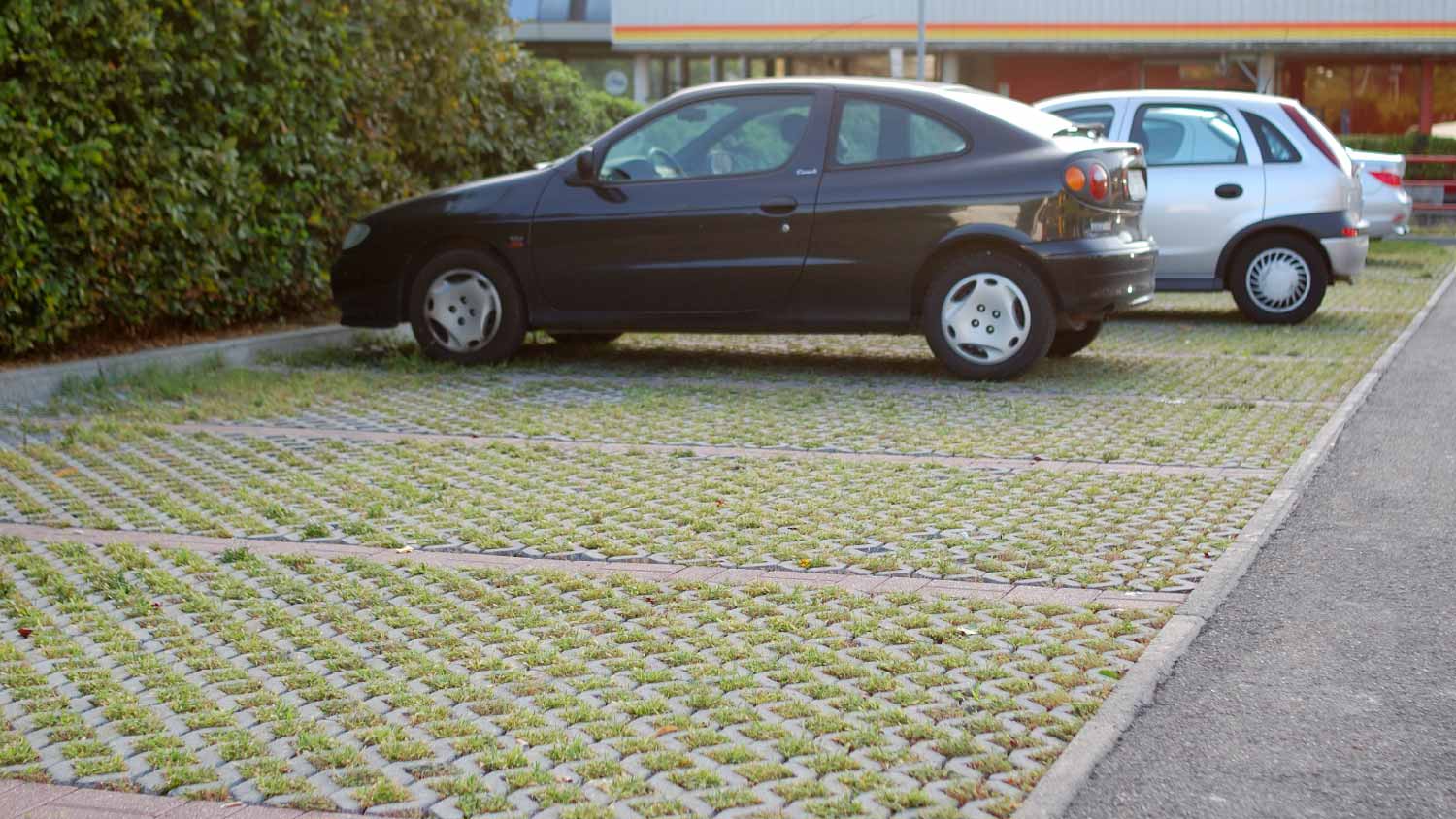
Grass pavers are suitable for heavy foot or vehicle traffic, but they’re not as resistant as concrete or asphalt pavers.

The Fairfax, OK homeowners’ guide to paving services

From average costs to expert advice, get all the answers you need to get your job done.