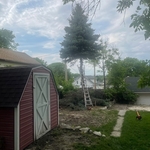
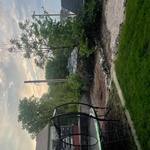
"Great value job was done professionally and on time. Guys working were respectful and professional. Sis exactly what was asked and even added some on. Would recommend would use again."
We are committed to excellence in every aspect of our business. We uphold a standard of integrity bound by fairness, honesty, and personal responsibility. Our distinction is the quality of service we bring to our customers. Accurate knowledge of our trade combined with ability is what makes us true professionals. Above all, we are watchful of our customers' interests, and make their concerns the basis of our business.
"Ok, well the select from drop down menus don't really apply. I had two men out here for three days removing trees and bushes grown into and around my high-tensile electric fence. They did an excellent job with the removal. They also had to replace the top strand of wire as my husband didn't realize the wire was down and he wrapped a goodly portion around the blades of the shredder. They then checked the entire fence line, made what repairs were needed. Hooked up a new fencer, move the old fencer to a differnt location. They did an excellect job and were easy to work with. I highly recommend this company for your next job. Susan B. St. Paul, NE (actually out in the middle of nowhere)"
We pride our company on reliability, great communication, integrity and quality work. We are experts in our concrete and landscaping and will do our best to keep you as educated as we can on your particular task or project. We look forward to working with you.
A tree can split because of high winds, a change in temperature, or from an infestation or tree disease. All of these factors can overlap, making a single cause difficult to pinpoint. While winter storms are some of the most common causes for a tree to split, it can also happen because of termites or rot.
Some trees will bounce back just fine, and others will struggle and possibly die. Evergreens, for instance, have a very difficult time recovering after droughts and usually die after periods of extreme dryness. Usually, you’ll have to just wait and see—if the drought occurs in wintertime, it’s possible that your tree will recover during the gentler springtime.
Burning a tree stump can be effective, but it comes with safety considerations and isn’t always best for every situation. It's essential to check local regulations and assess the safety risks involved. Stumps that are near wooden structures or other non-moveable flammable objects aren’t good candidates for burning due to the risk of the fire spreading. Alternatives like grinding or a DIY stump rotting project might be safer and quicker for getting the job done.
A tree growing close to a house can pose several risks, but removal isn't always the only or best solution. Potential problems include roots growing into the foundation and causing structural cracks, branches damaging the roof or promoting moss growth, and debris clogging gutters, which can lead to water damage. Trees can also provide access for pests and encourage mold. However, a small, healthy tree may not be a problem, and for larger, established trees, strategic trimming can be a cheaper and more beneficial alternative to removal. It is generally recommended to take action for trees within 10 to 20 feet of your home, especially if they are unhealthy or encroaching. Your best bet is to consult a professional arborist who can assess the specific situation and provide expert advice.
The exact answer to this question depends on which region of the country you’re talking about, but according to various tree counts, some of the most common types of trees in the United States include red maple, Douglas fir, quaking aspen, loblolly pine, and sweetgum.
The Sargent, NE homeowners’ guide to tree services
From average costs to expert advice, get all the answers you need to get your job done.
Tree inspections can ensure your trees stay healthy and safe, preventing costly damage. Learn how much tree inspections cost and what can affect the price.
How much does an arborist cost? This guide explains the cost of different services, ongoing expenses, and other factors to consider when hiring an arborist.
Follow these tips to learn how to find a good tree removal service. Doing a little research can help you save time and money when you need to say goodbye to your trees.
You suspect that the leaning oak tree in the back needs to come down, but can you just handle it yourself? Here are the pros and cons of calling a tree service.