





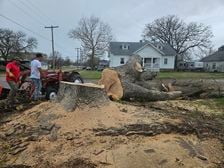




Top-rated tree service pros.

Get matched with top tree service pros in Gibbon, NE

Enter your zip and get matched with up to 5 pros

Need a pro for your tree service project in Gibbon, NE?

Select your specific project to find the pro for you.

TRUSTED BY GIBBON, NE HOMEOWNERS

  • Average homeowner rating star icon4.8
    Average homeowner rating
  • Verified reviews icon16
    Verified tree services reviews

Find Tree service pros in Gibbon

Greenbean Industries
4.6(
22
)
Tree RemovalTree Removal - For BusinessTree Trimming+1 more

Serving Gibbon, NE and surrounding areas

In business since 2007

Free estimates

Credit card accepted

"Aaron was so polite and prompt and cleaned up more than he needed to. The tree stump was the flattest finish Iâ ve ever seen He knew exactly how to section the limbs for easy removal and all the branches fell where they didnâ t hit anything. I was very impressed with his work. I would hire him again and I will tell all my neighbors to use him as well."
Response time5 hrs
Recommended by100%of homeowners
Avatar for C&D Tree Service -    Facebook
C&D Tree Service - Facebook
4.8(
3
)
Tree RemovalTree Trimming

Serving Gibbon, NE and surrounding areas

In business since 2015

Free estimates

Emergency services offered

"From the prompt call back, the initial meet which was right on schedule, the clear communication and expertise shared, to the quick turn around and getting the job done right, my wife and I couldn't be more pleased with the service provided by Dustin and his amazing crew. Friendly, fair and professional. Our new home has a much more beautiful yard now!They cut 2 dead trees, pulled several bushes and prettied up the rest! I'll be calling back when the trees bloom so we can make sure we got rid of all the dead stuff! Thanks again Dustin!"
Response time40 mins
Response rate95%
Recommended by100%of homeowners
Showing 1-10 of 17
Tree Service questions, answered by experts

Yes, you can prune a palm tree with a chainsaw, but a chainsaw is overkill for a job like this. You risk damaging the tree if you make a bad cut. More commonly, you’ll need pruning shears or a serrated knife to trim a palm tree, or you can use a specialized pruning saw instead of a chainsaw.

While trees can grow in the curb strip between the sidewalk and the street, this placement often poses the problem of interfering with overhead power lines. It’s best to consult your local utility provider and tree planting service before transplanting a tree that might grow into power lines. Also, you should never work within 20 feet of a live power line to avoid the risk of electric shock. Tree branches should never touch nearby power lines, so it’s essential to ensure your tree isn’t in danger of growing too close to them.

It depends. Smaller, younger trees take longer to mature, but they're more resilient, their roots don't get as damaged during transplanting, and they recover faster. Plus, they're much more affordable to plant, and it's possible to DIY the planting. 

On the other hand, mature trees produce fruit faster and provide more shade and privacy immediately. Ideally, a small or medium tree is the better choice if you can wait a few years for it to mature. But if you need immediate maturity, a larger tree is the only option.

Unfortunately, palm tree stumps are one of the most difficult types to remove due to how their roots grow. Unlike other trees, palm tree roots grow horizontally and vertically. Palm tree roots grow as deep as three feet into the ground, although soil and growing conditions could mean they go as far as 50 inches into the earth. 

If you want to be able to repurpose the grass in the area where you removed a stump later, you’ll have to dig quite deep—and perhaps wide—to trim away all the roots.

Not all leaning trees are dangerous, but they can be a hazard as gravity may eventually cause them to fall. A key factor is whether the lean is new or has been present for a long time. Trees that have grown with a lean for years are not typically an immediate danger, but a sudden lean is a cause for concern as it often indicates weakening roots. If a tree is leaning more than 15% from vertical, you should consider having it straightened or transplanted. To be safe, it's always best to hire a professional arborist to inspect any leaning tree to assess the risk and avoid potential accidents.

The Gibbon, NE homeowners’ guide to tree services

From average costs to expert advice, get all the answers you need to get your job done.