




Top-rated paving pros.

Get matched with top paving pros in Grant, NE

Enter your zip and get matched with up to 5 pros

Need a pro for your paving service project in Grant, NE?

Select your specific project to find the pro for you.

Find Paving pros in Grant

Paving Services questions, answered by experts

If your new pavers look dull or unclean, it is likely due to efflorescence, a chalky, white powder that forms when lime in the pavers gets wet. This condition often resolves on its own, as rain will naturally wash it away within about a year. For faster results, you can use a pressure washer to clean the pavers. Alternatively, consider using cleaning products specifically designed to remove efflorescence or applying sulfuric acid crystals.

Your driveway contractor will probably recommend that you avoid driving on your new millings driveway for up to a week. Keeping pressure off the freshy applied millings will help the driveway to bind together. While the sun is helpful for binding millings, hotter weather can actually make the curing process take longer.

Gravel is the cheapest way to extend a driveway. Gravel is an affordable, practical option that’s easy to install and perfect for DIY projects, helping you save on labor costs. It can be quickly spread and leveled to create extra driveway space without heavy preparation. While gravel doesn’t offer the same durability or finished look as concrete or asphalt, its low cost makes it ideal for budget-conscious homeowners who want a functional solution without overspending.

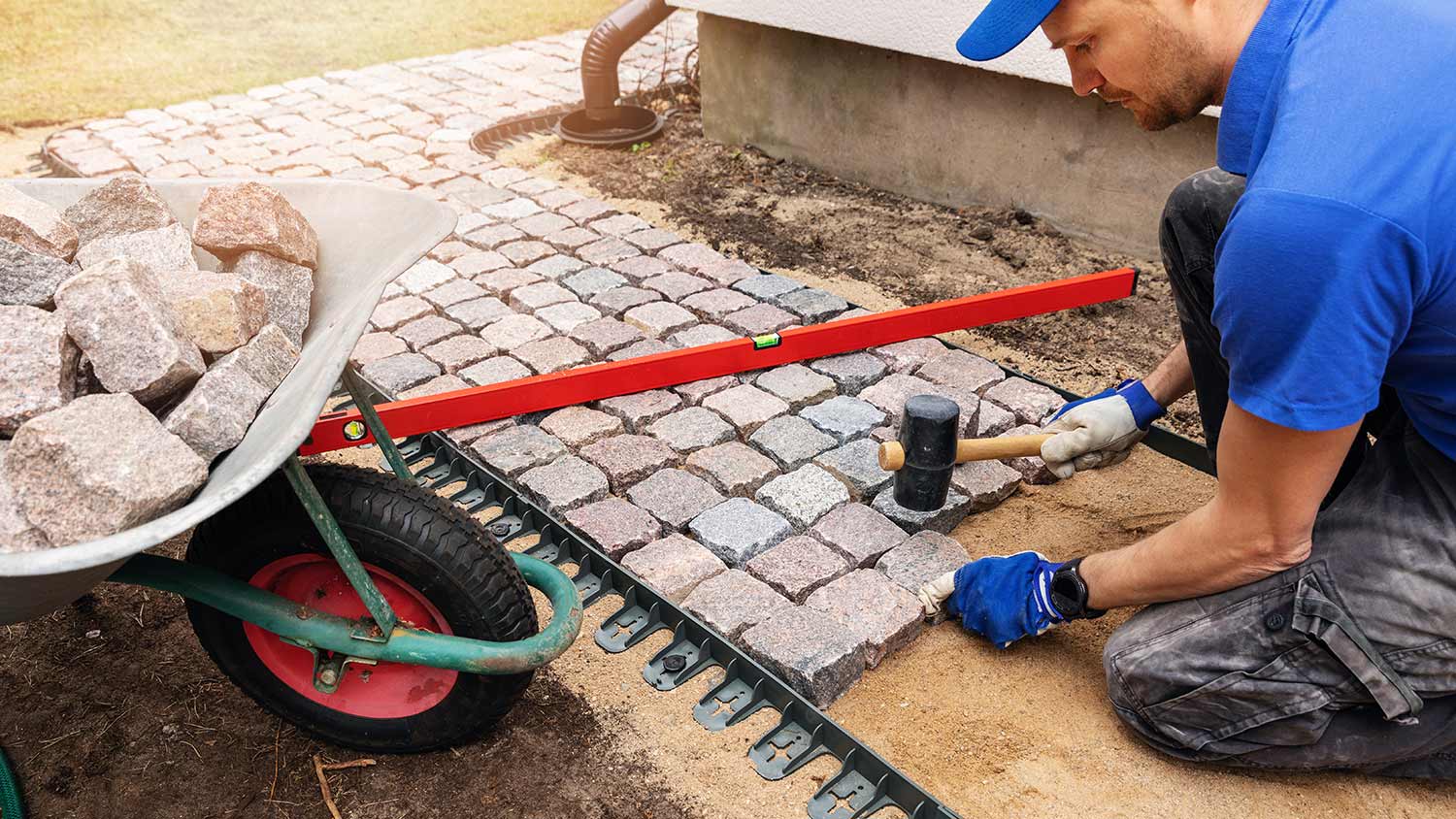
The most common causes of sunken pavers are poor base preparation and insufficient compaction. The problem could also be how your pavers were installed. If the soil beneath your patio or walkway wasn't compacted, it will pull pavers down as it settles. Additionally, using bare soil instead of making a paver bed with compacted gravel and sand can cause sinking over time. To fix sunken pavers, consider recompacting the base and addressing any drainage or erosion issues in the area.

The dimensions of a driveway apron vary based on local building codes, the width of your driveway, and the distance between the driveway and the road. On average, aprons range from 12 to 24 feet wide and 8 to 18 feet long. Typically, the end of the apron connected to the driveway matches its width—such as 10 to 12 feet for a single-car driveway—while the end at the street flares out to allow cars to turn in and out more easily. In some areas, you may not be responsible for the portion of the apron that extends beyond the sidewalk, but this depends on local laws.

The Grant, NE homeowners’ guide to paving services

From average costs to expert advice, get all the answers you need to get your job done.