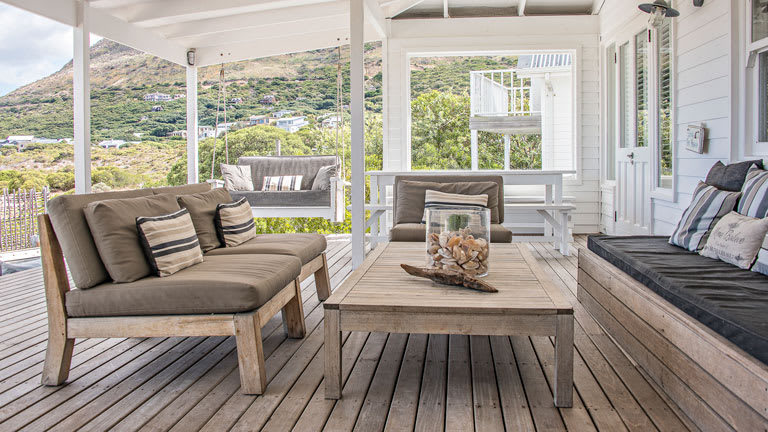



Top-rated deck cleaning pros.

Get matched with top deck cleaning pros in Axtell, NE

Enter your zip and get matched with up to 5 pros

Need a pro for your deck cleaning project in Axtell, NE?

Select your specific project to find the pro for you.

Find Deck cleaning pros in Axtell

D & J Farley Construction
5.0(
6
)
Deck, Fence, Patio or Porch - Clean and SealDeck, Fence, Patio or Porch - Clean and Seal - For Business

Serving Axtell, NE and surrounding areas

In business since 2002

Free estimates

Credit card accepted

"Professional, shows up on time, nice, experienced,respectable, and our deck doesn't bounce anymore Will definitely keep his number for future jobs!!!! Highly recommend for others to call him if needing construction work done from the bottom of a build to the top!!!!!!"
Response time3 days
Recommended by100%of homeowners
Showing 1-10 of 33
Deck Cleaning questions, answered by experts

Your deck may look or feel fuzzy after pressure washing because the high-pressure spray tears some wood fibers as it removes the outer layer of dead and discolored wood. This fuzzy effect is a normal part of the pressure-washing process and will go away on its own in a few weeks. You can opt to spot-sand your deck if you’d like to remove it more quickly.

The best direction for a gate to swing depends on its location and purpose, but swinging inward is the general rule. An inward swing is often considered safer, prevents the gate from opening into public spaces like a sidewalk, and may be required by local building codes.

There are exceptions and specific considerations. If your property is on a slope, an inward swing might not be possible. For a deck gate, it's safest to have it swing away from any steps. In a backyard, the direction can be a matter of preference, though an inward swing can be helpful when carrying heavy items like a wheelbarrow into a garden.

Regardless of direction, ensure the gate can open fully without hitting any objects or blocking spaces. While an inward swing is standard, a gate that can swing both in and out offers the most flexibility if your setup allows for it.

Covering your deck with a breathable tarp can protect it from snow, ice, and cold winter temperatures. This is a good winterizing solution if you don’t plan to use your deck at all during the colder months. However, it might be best to skip the tarp if you’ll still be walking on your deck or using it in a limited capacity.

Yes, you can build a deck over your outdoor HVAC unit, but you need to leave at least 5 feet of vertical clearance above the unit. If you don’t want your deck to be that high off the ground, you could build a floating deck in another part of your yard—again, as long as you leave at least 4 feet of horizontal space between the deck and your AC unit.

The best base materials for a ground-level or floating deck are typically gravel and crushed stone (also known as landscaping rocks). These options are inexpensive, provide excellent drainage, prevent weeds, and help minimize moisture buildup, which reduces shifting and rotting. For added stability and to evenly distribute the weight, you can use concrete deck blocks or pavers. While more expensive, concrete blocks and pavers offer a sturdier base than gravel or crushed stone alone.

The Axtell, NE homeowners’ guide to deck cleaning services

From average costs to expert advice, get all the answers you need to get your job done.