




Top-rated generator install pros.

Get matched with top generator install pros in Marshville, NC

Enter your zip and get matched with up to 5 pros

Need a pro for your generator install project in Marshville, NC?

Select your specific project to find the pro for you.

Find Generator install pros in Marshville

Avatar for WyattWorks
WyattWorks
4.5(
60
)
Fixed Generator - InstallFixed Generator - RepairPortable Generator - Install+1 more

Serving Marshville, NC and surrounding areas

Approved (Corporate)

In business since 1979

Emergency services offered

Warranties offered

"Scott was on time and very professional. He examined the current installation of the toilets and provided me with options to address the problem and install new toilets. I enjoyed meeting him and appreciated his expert opinions. I am still getting estimates and will certainly keep this company at the top of my list. Scott is very easy to communicate with and will brighten your day with his smile."
Additional Photos
Additional Photos
Additional Photos
Additional Photos
Additional Photos

+1

Response time12 hrs
9 neighbors recently requested a quote
Recommended by90%of homeowners
Avatar for SouthernAire Heating and Air Conditioning, LLC
SouthernAire Heating and Air Conditioning, LLC
New to Angi
Fixed Generator - InstallFixed Generator - Repair

Serving Marshville, NC and surrounding areas

Approved

In business since 2000

Free estimates

Emergency services offered

We take great pride in our experience, expertise, quality, and customer service that we provide to meet the consumer's needs.\nIt is our mission to provide excellent workmanship and complete customer satisfaction, from the start to the completion of a project.\nIn order to understand the needs and expectations of our customers, we take great care to work and communicate with every customer \nin a professional manner. Our reputation is based on service, safety, and quality, regardless of how large or small the job.

1 neighbors recently requested a quote
...
Showing 1-10 of 51
Generator Install questions, answered by experts

No, you should never plug a generator directly into a wall outlet in your house. This practice is extremely dangerous, often illegal, and can cause "back-feeding," where power from the generator flows back into utility lines, creating a life-threatening hazard for utility workers. It can also damage your home's electrical system, including appliances like pumps and HVAC fans. If the main power is restored while the generator is connected, it can destroy the generator and cause an electrical fire. To safely connect a generator, you must use a professionally installed transfer switch or an interlocking kit, which prevents back-feeding by disconnecting your home from the utility grid before the generator provides power.

Homeowners can often access federal tax credits, such as the Investment Tax Credit (ITC), which covers a percentage of installation costs. Many states and utilities offer additional rebates, grants, or performance-based incentives. These programs can significantly lower your upfront investment. Check the Database of State Incentives for Renewables and Efficiency (DSIRE) or contact your local energy office for current offers.
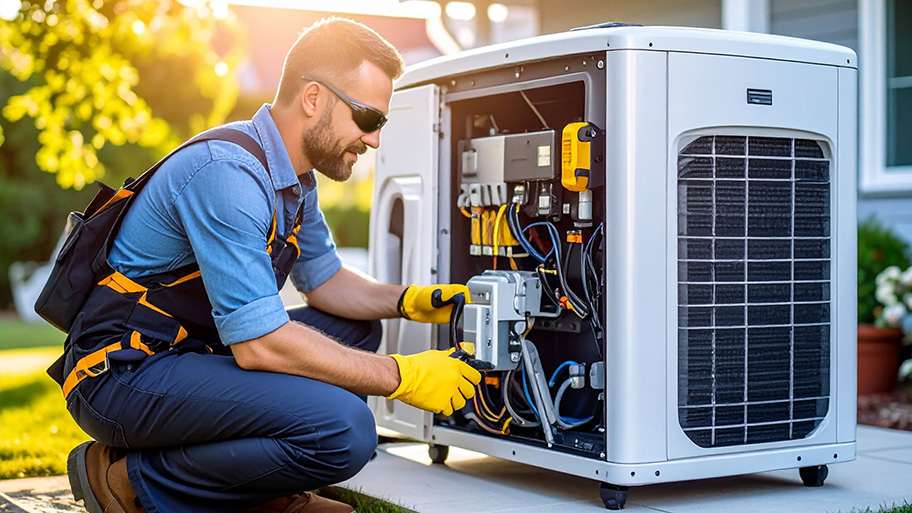
Yes. You can connect your home back-up battery to a generator with its designated charger. Be sure that the output of the generator matches the input requirements for the battery for best results.

Sizing a generator is a careful process that requires calculating the electrical load of your entire house. You have to take into account every device you want to use and their wattage requirements, plus the wattage needed to start them, and look for a generator that can safely run all that at around 80% capacity.

In more practical terms, a small home can run on a 10,000-watt generator (and if you only want to power a few key appliances, much less than that). A mid-sized home may need something between 15,000 and 22,000 watts. Larger homes require 25,000 watts or more. 

While the rating will tell you how many watts the refrigerator needs at the peak of its cycle, it requires additional wattage to start. At the bare minimum, you’ll need a 1,500-watt generator to get the fridge up and running after a blackout. A 2,000-watt generator should be sufficient for most home refrigerators.

The Marshville, NC homeowners’ guide to generator installs

From average costs to expert advice, get all the answers you need to get your job done.