


Top-rated drywall pros.

Best drywall pros near Hurdle Mills, NC

Enter your zip and get matched with up to 5 pros

Need a pro for your drywall service project in Hurdle Mills, NC?

Select your specific project to find the pro for you.

TRUSTED BY HURDLE MILLS, NC HOMEOWNERS

  • Average homeowner rating star icon4.7
    Average homeowner rating
  • Verified reviews icon145
    Verified drywall services reviews

Top-Rated Drywall pros in Hurdle Mills - Updated Nov 2026

Avatar for RnB Painting LLC
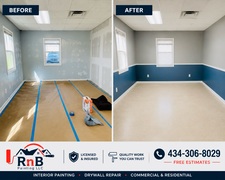
RnB Painting LLC
5.0(
1
)
Drywall - Repair

Serving Hurdle Mills, NC and surrounding areas

Approved

In business since 2020

Free estimates

Offers commercial services

At RnB Painting LLC, we take pride in delivering high-quality workmanship, honest communication, and dependable service. We specialize in interior and exterior painting, drywall installation and repair, flooring, trim work, framing, and general remodeling. Our team is fully insured and committed to completing every project with attention to detail and customer satisfaction. Whether you need a small repair or a full renovation, we work hard to provide professional results at a fair price. We look forward to earning your business.

1 neighbors recently requested a quote
Avatar for Refined Renovations
Refined Renovations
New to Angi
Drywall - InstallDrywall - Repair

Serving Hurdle Mills, NC and surrounding areas

Approved

In business since 2025

Free estimates

Credit card accepted

Welcome to Refined Renovations! We are committed to exceeding your expectations. As experts, we will handle your needs with the high quality expertise that your home or business deserves. We offer competitive prices and customer satisfaction is our number one priority. Call us today!

Kitchen Remodel
Bathroom Remodel/Repairs
light installation

+8

4 neighbors recently requested a quote
...
Showing 1-10 of 153
Drywall FAQs, answered by experts

You should stagger drywall sheets to help prevent cracking. The joints between drywall sheets are the weak spots, so if you install drywall with seams aligned, you’ll create weak lines that run across the length of the wall and extend from floor to ceiling. But when you stagger drywall, the solid sections of panels will support the joints. This can prevent seams from cracking or separating due to fluctuating temperature and humidity, vibrations from movement inside the home, and gravity.

All plaster walls will crack over time due to normal house settling and expansion and contraction from temperature and moisture changes. Small, thin hairline cracks are generally not serious and are mostly a cosmetic issue. However, larger or more significant cracks can indicate structural problems.

Here's how to tell the difference:

  • Cosmetic Cracks: Cracks that are 0.5 cm (0.2 inches) or thinner are typically cosmetic.

  • Structural Cracks: Cracks wider than 0.5 cm, excessive or deep cracks, multiple cracks in the same area, or cracks that span around corners can signify a structural or foundation issue. Cracks along the joints where walls meet the ceiling also warrant attention.

For cracks wider than 0.5 cm, structural repair is needed. If a crack is 2.5 cm (1 inch) or wider, or if you notice any signs of a structural problem, it is best to contact a plaster repair professional to assess the damage.

You can usually tell if you have plaster or drywall by touch (plaster is harder, colder, and smoother than drywall) or by tapping on it (drywall sounds hollow, plaster does not). If you still cannot tell, peek under an outlet cover and check the cut edges. The rough edges show the composition of the wall. You will see either drywall (two paper sheets sandwiching gypsum material) or only plaster material (no paper sheets).

Plastering and skimming are two different techniques for finishing walls. Plastering involves applying a thick layer of a plaster mixture—typically containing gypsum, lime, cement, sand, and water—to create a new surface. This process often requires multiple coats and is used for repairing significant damage or creating decorative textures. Skimming, on the other hand, is a technique that involves applying a thin layer of drywall compound or joint compound over an existing surface to smooth it out, covering minor imperfections, small cracks, or uneven textures for a polished look. Plastering is generally more costly and labor-intensive than skimming. Although some people use the terms interchangeably, they refer to different processes and materials.

Small patches can be DIY, but professionals handle large-scale repairs with seamless results.

The Hurdle Mills, NC homeowners’ guide to drywall services

From average costs to expert advice, get all the answers you need to get your job done.