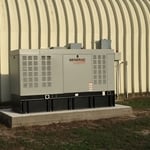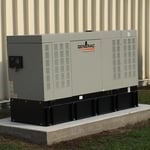




Top-rated generator install pros.

Get matched with top generator install pros in Fort Bragg, NC

Enter your zip and get matched with up to 5 pros

Need a pro for your generator install project in Fort Bragg, NC?

Select your specific project to find the pro for you.

Find Generator install pros in Fort Bragg

Avatar for TMT Electric, LLC
TMT Electric, LLC
4.9(
57
)
Portable Generator - Install

Serving Fort Bragg, NC and surrounding areas

Approved

In business since 2013

Free estimates

Customers say: Quick response

"Very friendly, knowledgeable and professional. Installed upgrade wiring for my hot tub. I am very pleased with the work. I highly recommend them. In fact gonna hire them for additional work."
Response time4 hrs
Response rate94%
1 neighbors recently requested a quote
Chris Edge Electric, Inc.
5.0(
7
)
Fixed Generator - InstallGenerator - Install - For BusinessPortable Generator - Install

Serving Fort Bragg, NC and surrounding areas

Approved

In business since 2008

Free estimates

Customers say: Quick response

"Everything that Chris said he would do, he did. He was very professional and knowledgeable of the equipment installed. If and when I have electrical problems, Chris will be the person called."
Generac 50kw
Generac 50kw 3 phase
Generac 48kw
Response time7 hrs
2 neighbors recently requested a quote
Recommended by100%of homeowners

Avatar for Legacy Electrical
Legacy Electrical
5.0(
10
)
Fixed Generator - RepairPortable Generator - RepairFixed Generator - Install+1 more

Serving Fort Bragg, NC and surrounding areas

Approved

In business since 2022

Free estimates

Emergency services offered

Legacy Electrical is committed to excellence in every aspect of our business. We uphold a standard of integrity bound by fairness, honesty, and personal responsibility. Our distinction is the quality of service we bring to our customers. Accurate knowledge of our trade combined with ability is what makes us true professionals. Above all, we are watchful of our customers' interests, and make their concerns the basis of our business.

Response time3 hrs
4 neighbors recently requested a quote
Recommended by100%of homeowners

Avatar for Cape Fear Electrical Services, Inc.
Cape Fear Electrical Services, Inc.
4.2(
55
)
Fixed Generator - Install

Serving Fort Bragg, NC and surrounding areas

Approved

In business since 1973

Free estimates

Emergency services offered

"These guys were AWESOME. I received 4 quotes Cape Fear came in the lowest with exactly what I wanted, Shane was the salesmen we talked more about the days events then the actual project. When he left he felt like an old friend. He Emailed me my quote and came in $2000,00 less then the other guys with a Trane high efficiency (96% 2 stage furnace and new A/C Unit) the other quotes I got was for a single stage 80% plus ac for more money. The Installer Joe and his crew were great. he took time to answer my questions and ran a new return line from the floor and put it in the ceiling, I definitely got my moneys worth. DO NOT HESITATE TO HIRE THEM!!!!!"
Adcox Job
Response time1 day
69 neighbors recently requested a quote
Recommended by87%of homeowners

...
Showing 1-10 of 56
Generator Install questions, answered by experts

DIY is possible for basic setups. Professional installation ensures safe and proper electrical connections.

Sizing a generator is a careful process that requires calculating the electrical load of your entire house. You have to take into account every device you want to use and their wattage requirements, plus the wattage needed to start them, and look for a generator that can safely run all that at around 80% capacity.

In more practical terms, a small home can run on a 10,000-watt generator (and if you only want to power a few key appliances, much less than that). A mid-sized home may need something between 15,000 and 22,000 watts. Larger homes require 25,000 watts or more. 

To determine the right size generator for your house, you should calculate the total wattage of the appliances and devices you want to power during an outage. List all essential items, note their start-up wattages, and add them together.

Here are some typical wattage requirements for common appliances:

  • Refrigerator: 600 watts

  • Large dehumidifier: 700 watts

  • Large window air conditioner: 1,400 watts

  • Water heater: 3,000 to 4,500 watts

  • Electric furnace: 5,000 to 25,000 watts

A 7,500-watt generator might be sufficient for essentials like a refrigerator, freezer, well pump, and lighting circuits. However, for high-demand items like a water heater or furnace, a whole-home generator is a better choice. A portable generator may be enough if you only need to power a few critical items.

While home square footage can offer a rough estimate, it is not always a reliable indicator. For reference, here are some typical generator sizes based on square footage:

  • 1,000 sq ft: 6–9 kW

  • 1,500 sq ft: 7–10 kW

  • 2,000 sq ft: 10–14 kW

  • 2,500 sq ft: 12–16 kW

  • 3,000 sq ft: 16–20 kW+

For the most accurate sizing, consult a professional who can calculate your home's peak and average power consumption and recommend the optimal generator.

You can determine what size generator you need for a transfer switch by matching the switch to the largest outlet on your generator. Larger generators can power up to 10 circuits, while most 5,000-watt generators can provide power to six circuits. So, if your generator’s largest outlet is 30 amps, you’ll need a 30-amp transfer switch.

No, you should never plug a generator directly into a wall outlet in your house. This practice is extremely dangerous, often illegal, and can cause "back-feeding," where power from the generator flows back into utility lines, creating a life-threatening hazard for utility workers. It can also damage your home's electrical system, including appliances like pumps and HVAC fans. If the main power is restored while the generator is connected, it can destroy the generator and cause an electrical fire. To safely connect a generator, you must use a professionally installed transfer switch or an interlocking kit, which prevents back-feeding by disconnecting your home from the utility grid before the generator provides power.

The Fort Bragg, NC homeowners’ guide to generator installs

From average costs to expert advice, get all the answers you need to get your job done.