







Top-rated generator install pros.

Get matched with top generator install pros in Aberdeen, NC

Enter your zip and get matched with up to 5 pros

Need a pro for your generator install project in Aberdeen, NC?

Select your specific project to find the pro for you.

Find Generator install pros in Aberdeen

Avatar for Legacy Electrical
Legacy Electrical
5.0(
10
)
Fixed Generator - RepairPortable Generator - RepairFixed Generator - Install+1 more

Serving Aberdeen, NC and surrounding areas

Approved

In business since 2022

Free estimates

Emergency services offered

Legacy Electrical is committed to excellence in every aspect of our business. We uphold a standard of integrity bound by fairness, honesty, and personal responsibility. Our distinction is the quality of service we bring to our customers. Accurate knowledge of our trade combined with ability is what makes us true professionals. Above all, we are watchful of our customers' interests, and make their concerns the basis of our business.

Response time3 hrs
5 neighbors recently requested a quote
Recommended by100%of homeowners
Avatar for After Hours Electrical, LLC
After Hours Electrical, LLC
5.0(
5
)
Fixed Generator - RepairPortable Generator - Repair

Serving Aberdeen, NC and surrounding areas

In business since 2022

Offers commercial services

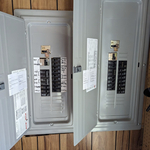
"Corey xalled me within 10 minutes of posting on Angi. He came out in a few hrs and solved my problem. He also checked my breaker box for a short and wanted to no if he could help me further. Very personable and thorough."
Past Photos
Past Photos
Past Photos
Past Photos
Past Photos

+5

Response time4 hrs
Response rate100%
Recommended by100%of homeowners
Showing 1-10 of 37
Generator Install questions, answered by experts

To determine the right size generator for your house, you should calculate the total wattage of the appliances and devices you want to power during an outage. List all essential items, note their start-up wattages, and add them together.

Here are some typical wattage requirements for common appliances:

  • Refrigerator: 600 watts

  • Large dehumidifier: 700 watts

  • Large window air conditioner: 1,400 watts

  • Water heater: 3,000 to 4,500 watts

  • Electric furnace: 5,000 to 25,000 watts

A 7,500-watt generator might be sufficient for essentials like a refrigerator, freezer, well pump, and lighting circuits. However, for high-demand items like a water heater or furnace, a whole-home generator is a better choice. A portable generator may be enough if you only need to power a few critical items.

While home square footage can offer a rough estimate, it is not always a reliable indicator. For reference, here are some typical generator sizes based on square footage:

  • 1,000 sq ft: 6–9 kW

  • 1,500 sq ft: 7–10 kW

  • 2,000 sq ft: 10–14 kW

  • 2,500 sq ft: 12–16 kW

  • 3,000 sq ft: 16–20 kW+

For the most accurate sizing, consult a professional who can calculate your home's peak and average power consumption and recommend the optimal generator.

Natural gas and electricity rates vary significantly based on location, and pricing can change over time, too. It’s possible that in locations where natural gas is particularly inexpensive, it will cost less than grid-based electricity will. However, you should also factor in the generator’s initial costs and maintenance needs, as well as its noise level and if it can comfortably power all your home appliances.

You can expect a diesel generator to last for up to 30,000 hours of use, which works out to 20 to 25 years with the proper maintenance, of course. That depends on how much you use it, so a diesel generator used for emergencies a couple of times a year will last a lot longer than a generator that takes over for a faulty electrical grid every month for a day or two. 

Most homeowners won't be able to claim a home generator as a tax write-off. However, a whole-house generator may be tax-deductible in certain situations depending on its purpose. For instance, if it's needed to power essential medical equipment, it may qualify as a medical expense deduction. Also, in some cases, businesses can deduct a generator as a business expense if it supports operations. Always consult a tax professional to determine eligibility based on your specific circumstances and the applicable IRS regulations.

A home that is 2,500 square feet will likely need a 20kW to 25kW generator. Consult your local generator installer to confirm the generator size needed to power your home before purchasing a new one. Be sure to consider how much power your necessary devices need to run.

The Aberdeen, NC homeowners’ guide to generator installs

From average costs to expert advice, get all the answers you need to get your job done.