

Top-rated tree service pros.

Get matched with top tree service pros in Fort Bragg, NC

Enter your zip and get matched with up to 5 pros

Need a pro for your tree service project in Fort Bragg, NC?

Select your specific project to find the pro for you.

TRUSTED BY FORT BRAGG, NC HOMEOWNERS

  • Average homeowner rating star icon4.5
    Average homeowner rating
  • Verified reviews icon669
    Verified tree services reviews

Find Tree service pros in Fort Bragg

Avatar for Joseph's Tree Removal & Yard Care LLC
Joseph's Tree Removal & Yard Care LLC
4.2(
50
)
Tree RemovalTree Removal - For BusinessTree Stump - Remove+5 more

Serving Fort Bragg, NC and surrounding areas

Approved

In business since 2005

Emergency services offered

Warranties offered

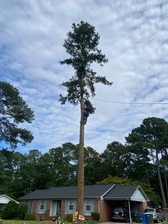
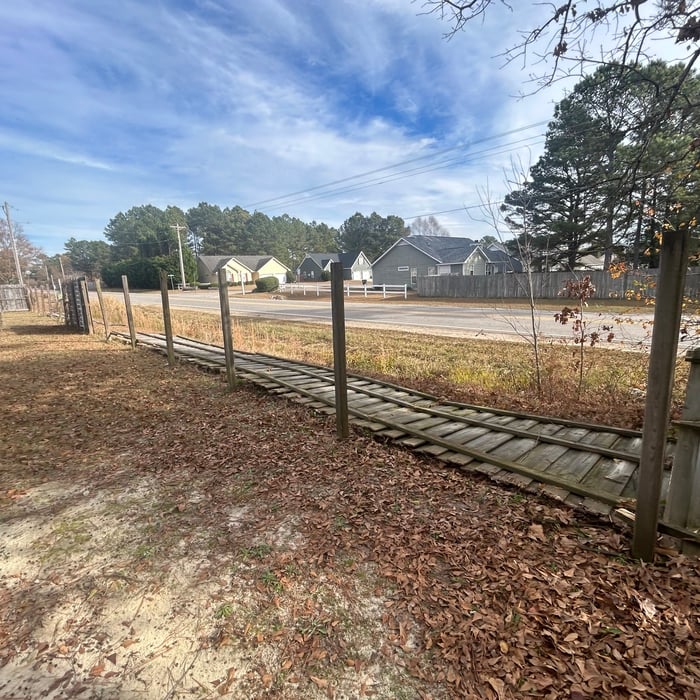
"We looked at four companies and choose Joseph because his quote was the most reasonable and he seems to be the most honest and knowledgable. We were not disappointed. His crew arrived on time and expertly removed four large trees and ground all the stumps, including all exposed roots. To do the job, the crew had to uproot part of our fence. Once done, they put it back in better condition. The crew was courteous and polite and did an outstanding job. We could not be happier. We highly recommend this company."
Additional Photos
Additional Photos
Additional Photos
Additional Photos
Additional Photos

+7

2 neighbors recently requested a quote
Recommended by100%of homeowners
...
Showing 1-10 of 190
Tree Service questions, answered by experts

Bradford pear trees bloom in early spring with small white flowers. They typically flower for at least two weeks. In bloom, these trees often emit a foul-smelling odor that’s often compared to rotting fish. Bradford pear trees will sometimes bloom in the fall due to drought or other stress-inducing conditions. 

Unless it’s dead or dangerous, think twice about cutting down a tree in your yard. They’re good for health, well-being, wildlife, and the environment. Plus, local authorities often have regulations prohibiting the removal of trees, especially protected species or individual trees with historical value.

Yes, cutting a tree's roots can cause it to fall, particularly if major support roots are severed. In extreme cases, trimming roots can affect the tree's structure and stability. Many crucial roots are located just below the soil's surface. If you make severe cuts to roots more than 2 inches in diameter, you risk impacting the tree's water flow and its ability to withstand severe winds or storms. Even cutting roots less than half an inch in diameter under or outside the tree's canopy can cut off its water supply, causing it to decline, die, and eventually topple.

Generally, homeowners do not need permission to cut down a tree on their own private property, but there are several exceptions where a permit may be required. You might need a permit if the tree is particularly large, old, or a protected species, such as a heritage tree. Trees located near public property or power lines can also be subject to special rules. Additionally, many local governments and homeowners associations (HOAs) have regulations controlling which trees can be removed to manage an area's appearance or prevent the spread of invasive species. To avoid hefty fines, it is crucial to check with your local government and HOA to determine if a permit is needed before you begin.

There are several methods to hollow out a tree stump, and the best one depends on your tools, experience, and priorities. Common methods include using a chisel and hammer, a chainsaw, or burning.

  • Chisel and Hammer: This is often considered the easiest approach for those with limited tools or experience, though it is the most time-consuming.

  • Chainsaw: Using a chainsaw is the fastest method, but it comes with significant safety risks, especially for inexperienced users.

  • Burning: This can be an effective method, but it is not recommended unless you can first drill holes into the stump. Without holes, the stump will be difficult to light and may not burn completely through.

A power drill with at least a ⅜-inch diameter bit can make the job quicker and easier, regardless of the primary method. While you can use a chisel or chainsaw without a drill, it will require more time and effort. Always wear protective goggles and thick gloves, as splinters are an inevitable risk.

The Fort Bragg, NC homeowners’ guide to tree services

From average costs to expert advice, get all the answers you need to get your job done.