







"Had a light fixture installed in my dining room. The electricians did a great job with some imperfections with the fixture I bought and installed exactly how I wanted it."
Legacy Electrical is committed to excellence in every aspect of our business. We uphold a standard of integrity bound by fairness, honesty, and personal responsibility. Our distinction is the quality of service we bring to our customers. Accurate knowledge of our trade combined with ability is what makes us true professionals. Above all, we are watchful of our customers' interests, and make their concerns the basis of our business.
"Freddy came and did the annual maintenance on my generator. He was prompt. Will definitely hire again. Set him up as annual maintenance on my generator."
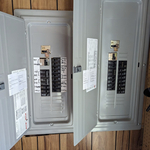
"Corey xalled me within 10 minutes of posting on Angi. He came out in a few hrs and solved my problem. He also checked my breaker box for a short and wanted to no if he could help me further. Very personable and thorough."
Yes, installing a generator usually increases your property value because buyers are getting the added peace of mind knowing they’ll be able to maintain power through blackouts. In most cases, you should see close to a 100% return on investment (ROI). Keep in mind that home generators usually need a permanent foundation, and installing a concrete slab will likely raise your property taxes slightly.
In many cases, yes. There are models called dual-fuel generators and fuel switches, but only between certain types of fuel. For example, with the right setup you can convert a generator from natural gas to propane. Some allow switching between diesel and gasoline. There are even tri-fuel generators available in some cases, which adds a large layer of security if you are worried about fuel availability in times of crisis. Always check your generator capabilities and manual instructions before trying to switch fuels. Some generators can use another fuel but may need a fuel conversion kit to prep them first.
Natural gas generators are designed to run for extended periods of time, such as power outages during a natural disaster. Since there’s no limit to the supply of natural gas, they don’t need to stop for refills. However, generators do need maintenance, including pauses to check and add oil. Constantly running them will also cause a lot more wear and tear, leading to a shorter lifespan.
If you have a transfer switch properly installed, the generator and main electrical power cannot feed the system at the same time. However, you should still shut off the power at your main circuit breaker panel before activating the generator. If you do that, you’ll simply need to shut off the generator and reset your circuit breaker once the local power comes back on.
Most homeowners won't be able to claim a home generator as a tax write-off. However, a whole-house generator may be tax-deductible in certain situations depending on its purpose. For instance, if it's needed to power essential medical equipment, it may qualify as a medical expense deduction. Also, in some cases, businesses can deduct a generator as a business expense if it supports operations. Always consult a tax professional to determine eligibility based on your specific circumstances and the applicable IRS regulations.

The West End, NC homeowners’ guide to generator installs
From average costs to expert advice, get all the answers you need to get your job done.
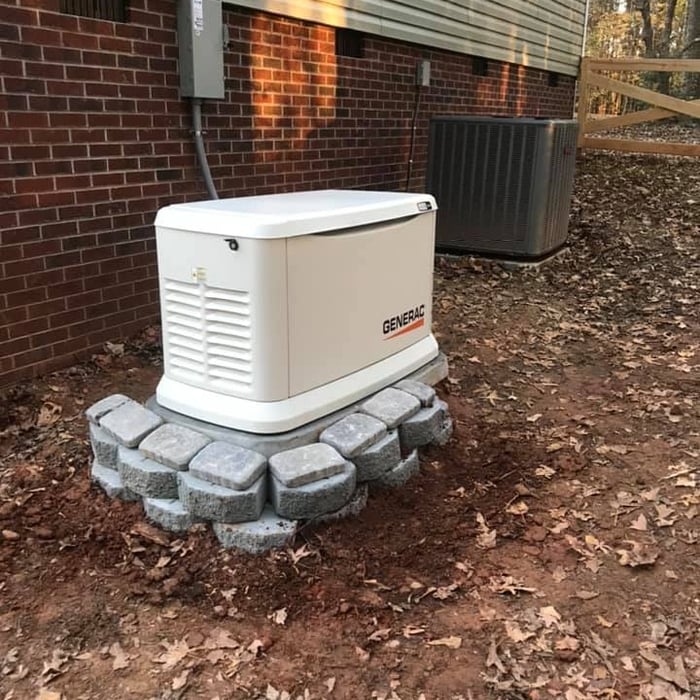
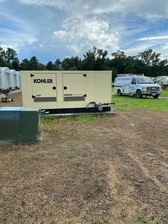
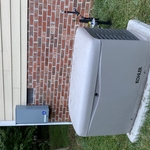
Natural gas generators are whole-home standby generators that are connected to your home’s natural gas line. The average cost for a natural gas generator is $12,000.
Generators should give you peace of mind, but you’ll only get that if your installer knows what they’re doing. Learn how to hire a pro and what red flags to look for.
Thinking about a generator installation? Learn about backup power options, costs to expect, and how to hire the right local pro to keep your home running.