

Top-rated excavation pros.

Get matched with top excavation pros in Pittsburg, MO

Enter your zip and get matched with up to 5 pros

Need a pro for your excavation project in Pittsburg, MO?

Select your specific project to find the pro for you.

Find Excavation pros in Pittsburg

Avatar for Petty’s Skid steer
Petty’s Skid steer
New to Angi

Serving Pittsburg, MO and surrounding areas

Approved

In business since 2022

Free estimates

Small jobs welcome

We are a locally owned and operated company that values honesty and integrity and treats your home as if it were our own. Our services are customized to the individual project, paying close attention to the details of each project that we're involved with. We pride ourselves on the quality of our work as well as our commitment to outstanding results. We look forward to building lasting relationships and guaranteeing your satisfaction!

Response time7 hrs
18 neighbors recently requested a quote
Avatar for Down & Dirty Land Clearing LLC
Down & Dirty Land Clearing LLC
5.0(
11
)

Serving Pittsburg, MO and surrounding areas

In business since 2019

Free estimates

Credit card accepted

"For the past two years, Tim and Down & Dirty Land Clearing have done my site work, excavating, and trail making. Excellent workmanship and a clear commitment to safety every step of the way. Tim genuinely cares about doing the job right. I will continue my relationship with Down & Dirty and can comfortably recommend them."
Resort building
Resort building
Resort building
Resort building
Resort building

+5

12 neighbors recently requested a quote
...
Showing 1-10 of 53
Excavating questions, answered by experts

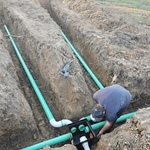
A joint utility trench, or joint trench, is a long, buried ditch on a property that contains two or more utility lines rather than running the lines in multiple trenches. Some utilities, like gas and electric or electric and communication lines, are better suited to joint trenching, while others, like water and sewer, are not allowed to be in the same trench.

You can bury underground electrical wire six inches deep—but only if you use a rigid metal electrical conduit. For rigid, non-metallic conduits, bury the wire at least 12 inches deep. If using an underground feeder cable rated for direct burial, you'll need to place it at least 18 inches deep, as it has no conduit for extra protection.

Completion time ranges from days to weeks, contingent on project size, environmental conditions, and regulatory approvals.

The best type of soil to build on is a mixture of sand and clay, known as loam soil. Loam soil has the best combination of these soil types to build a foundation on. The clay particles help with water retention, so it won’t erode like sandy soil might, and the sandy particles help with drainage, so you won’t see unsafe soil expansion or have an increased risk of leaks from water sitting against your foundation.

Septic drain lines (or leach lines) are typically buried between 18 and 36 inches underground, and should be at least 6 inches below the surface. These pipes are perforated and surrounded by filtering materials like sand or gravel. Burying the lines at this depth helps minimize odors and allows bacteria and other biological processes in the soil to effectively treat the wastewater. Burying lines too close to the surface can cause issues unless the soil is very compact and stable.

The Pittsburg, MO homeowners’ guide to excavation services

From average costs to expert advice, get all the answers you need to get your job done.