

Top-rated tree service pros.

Get matched with top tree service pros in Montgomery, MO

Enter your zip and get matched with up to 5 pros

Need a pro for your tree service project in Montgomery, MO?

Select your specific project to find the pro for you.

TRUSTED BY MONTGOMERY, MO HOMEOWNERS

  • Average homeowner rating star icon4.9
    Average homeowner rating
  • Verified reviews icon21
    Verified tree services reviews

Find Tree service pros in Montgomery

Avatar for Big Oaks Tree Service LLC
Big Oaks Tree Service LLC
4.8(
27
)

Serving Montgomery, MO and surrounding areas

In business since 2020

Free estimates

Emergency services offered

"Gave me one price to cut down two large trees and to trim another one up. The second day I was told the job would be bigger for the second tree so the price went up. Then they cut one branch off the third and left a mess around the tree. A different guy came out to collect payment when they were close to finished, I got him to knock 200 off the bill and it still came out too high for me. If I had known they would not finish work on the third tree I would have asked for more of the price before I paid. If the second guy was able to give me 200 off the price, it means that I was overcharged, to begin with."
Response time7 hrs
Recommended by88%of homeowners
Avatar for Arbor Care
Arbor Care
5.0(
4
)

Serving Montgomery, MO and surrounding areas

In business since 2013

Free estimates

Emergency services offered

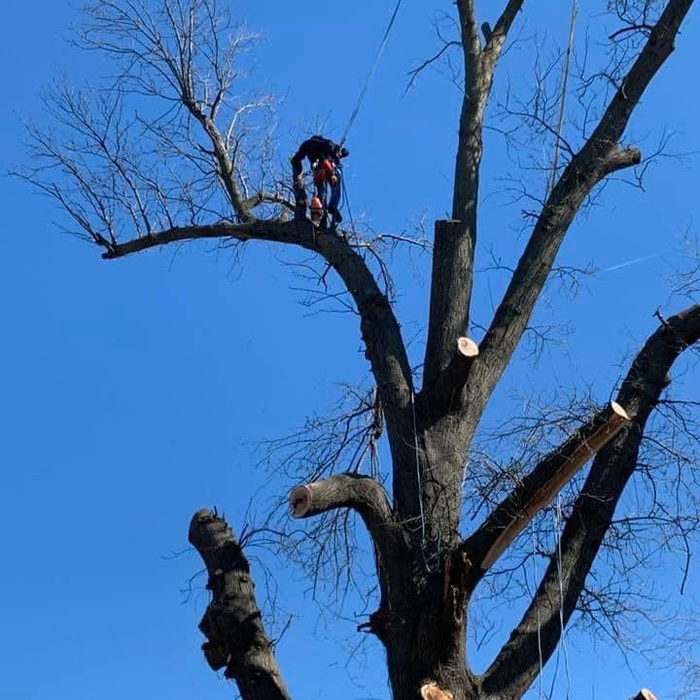
"Job well done. Everyone was pleasant and made sure they met my expectations. I was so satisfied with their work, I recommended them to others, and had them back for another tree removal and grind. Great to do business with! I highly recommend."
Additional Photos
Additional Photos
Additional Photos
Additional Photos
Additional Photos

+3

Recommended by100%of homeowners
Showing 1-10 of 49
Tree Service questions, answered by experts

It is possible to cut down a tree on your property yourself, but it is generally not recommended unless specific conditions are met. You should only consider this project if the tree is small (e.g., under 4-5 inches in diameter and short enough that you don't need a ladder to reach the branches), and you are experienced in handling a chainsaw. The tree must also be located far from any power lines, fences, homes, or other structures. Even for small trees, the work can be dangerous, and it's always advisable to have a spotter to ensure the tree falls correctly and no branches fall on you.

For any tree that is large, requires a ladder to access, or is near electrical lines or structures, you should always hire a professional. Attempting to remove a large tree yourself is extremely dangerous, poses a risk of serious injury, and could result in significant damage to your property.

Before any tree removal, it's also important to check your local and state regulations to ensure the tree is not historic or otherwise protected by your city.

In most cases, you should not use a pruning seal on trees after trimming. Applying a sealant can interfere with the tree's natural healing process, and it does not guarantee protection from pathogens. Instead of sealing the cut, the best practice is to support the tree's natural recovery by providing it with plenty of water and a dormant-style fertilizer. However, there are exceptions. Pruning seals may be recommended for very vulnerable species, like elm trees, in areas where dangerous diseases such as Dutch elm disease are prevalent. In these specific situations, the protection offered by a sealant can outweigh its downsides. For advice tailored to your situation, especially after cutting large branches, it is best to consult a local tree trimming professional.

If a tree isn’t pruned, it can inhibit proper growth and fruit production, cause damage to both the tree and your property, and create entry points for pests and diseases. Pruning a tree enhances its stability, appearance, shape, and growth. Pruning trees regularly can also save you money long-term by avoiding overgrown or dangerous dying trees.

It is possible to cut down a tree on your property yourself, but it is generally not recommended unless specific conditions are met. You should only consider this project if the tree is small (e.g., under 4-5 inches in diameter and short enough that you don't need a ladder to reach the branches), and you are experienced in handling a chainsaw. The tree must also be located far from any power lines, fences, homes, or other structures. Even for small trees, the work can be dangerous, and it's always advisable to have a spotter to ensure the tree falls correctly and no branches fall on you.

For any tree that is large, requires a ladder to access, or is near electrical lines or structures, you should always hire a professional. Attempting to remove a large tree yourself is extremely dangerous, poses a risk of serious injury, and could result in significant damage to your property.

Before any tree removal, it's also important to check your local and state regulations to ensure the tree is not historic or otherwise protected by your city.

Dead trees are dangerous for several reasons. They are structurally compromised and prone to branch or trunk failure, which can pose a significant safety risk to people, vehicles, and nearby structures. Dead trees can also harbor pests like termites, which may spread to other trees or your home. If a tree died from a disease, it could spread the illness to healthy trees. Additionally, the dry wood is highly flammable, increasing fire risk.

The Montgomery, MO homeowners’ guide to tree services

From average costs to expert advice, get all the answers you need to get your job done.