



Top-rated arborists.

Get matched with top arborists in Smyrna, DE

Enter your zip and get matched with up to 5 pros

Need a pro for your arboricultural service project in Smyrna, DE?

Select your specific project to find the pro for you.

TRUSTED BY SMYRNA, DE HOMEOWNERS

  • Average homeowner rating star icon4.4
    Average homeowner rating
  • Verified reviews icon498
    Verified arboricultural services reviews

Find Arborists in Smyrna

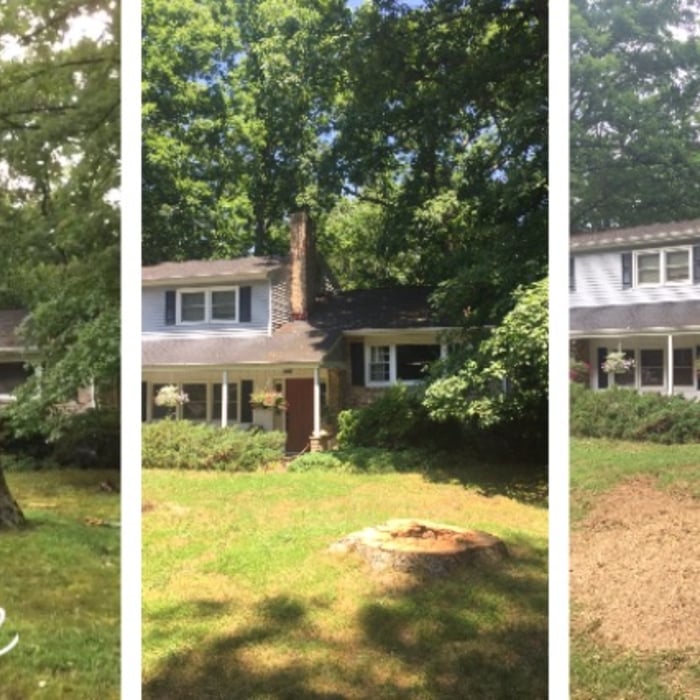
Stump Removal Services
4.6(
17
)

Serving Smyrna, DE and surrounding areas

Approved

In business since 2016

Free estimates

Offers commercial services

We do all kinds of tree work including ; tree trimming, tree cutting, tree and stump removal and yard cleanup. In the fall/winter seasons we also offer firewood. \nFamily owned and operated. \n\n\nOur firewood prices are :\n\n$175 cord of mixed wood.\n$220 cord of oak wood.\n$25 delivery charge, out of state $35.\n$40 stacking service (optional) out of state $60.\n\n**Every day delivery **\n\nPhone numbers :\n(302) 540-7628\n(302) 540-9734\n\n**Sunday services by appointment only **

4 neighbors recently requested a quote
Recommended by93%of homeowners
Avatar for V&P Tree Services
V&P Tree Services
4.8(
9
)

Serving Smyrna, DE and surrounding areas

Approved

In business since 2010

Free estimates

Emergency services offered

"Gave a fair price estimate then started and completed the job the next day. Very professional to work with. Excellent job with complete cleanup. Would recommend and use again."
Response time9 hrs
Response rate89%
1 neighbors recently requested a quote
...
Showing 1-10 of 86
Arborists questions, answered by experts

The best time to transplant a tree is when it is dormant. For many trees, this means either in the fall after the leaves have dropped (around October or November) or in early spring before new growth begins (around March). The ideal timing can depend on the type of tree. Deciduous trees do well when moved in early spring or fall, while evergreens are best transplanted in early spring or late summer. For example, pine trees are best moved in early fall, but maples prefer late fall. Avoid transplanting in winter, as the frozen or hard, cold soil poses a significant risk to the roots and prevents the tree from acclimating properly.

Pruning trees is important for several reasons. It improves tree health and strength by removing dead, diseased, or unwanted branches, which in turn encourages new growth and can help treat disease. For fruit trees, proper pruning can lead to a larger and better-quality harvest. Pruning also enhances safety by removing weak limbs that could break and fall, potentially causing injury or property damage, especially during storms. Beyond these functional benefits, pruning can also improve a tree's appearance. To ensure pruning is done correctly for the tree's long-term health, consider hiring a professional.

Pruning can impact cold hardiness—but it’s less about the exact temperature and more about temperature variation. Generally, you don’t want to prune trees when there’s a risk of temperatures suddenly dropping from 50 to 60 degrees Fahrenheit to 0 degrees Fahrenheit or below. A tree is most sensitive until 48 hours after it’s pruned.

The recovery time for pruning depends on how much you prune, the species of tree, and how well you care for it afterward. All trees grow new wood and often sprout additional branches after pruning. Ideally, trees should recover from normal pruning after one or two years. Heavy pruning or slow-growing trees may take several years to fully recover.

Trees that flower in the spring—like dogwood, cherry, magnolia, and pear—should not be pruned during the winter. These spring-flowering plants grow buds on old growth, so you’ll actually remove what would’ve been gorgeous flowering foliage. Instead, wait to prune until right after they bloom, when the flowers fade.

The Smyrna, DE homeowners’ guide to arboricultural services

From average costs to expert advice, get all the answers you need to get your job done.