




Top-rated excavation pros.

Get matched with top excavation pros in Silt, CO

Enter your zip and get matched with up to 5 pros

Need a pro for your excavation project in Silt, CO?

Select your specific project to find the pro for you.

Find Excavation pros in Silt

Avatar for Ayala's Tree Trimming & Landscaping
Ayala's Tree Trimming & Landscaping
4.7(
54
)
Landscape - Minor Grading or Resloping

Serving Silt, CO and surrounding areas

Approved

Super Service Award Winner

In business since 2008

Free estimates

Credit card accepted

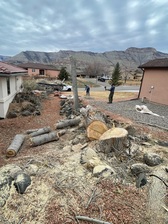
"Isaac & his crew were very professional. Arrived right on time and removed a 50 foot cottonwood in just over an hour. They made sure the yard was cleaned up, even beyond my expectations. I would certainly recommend them to anyone needing landscape work and or tree removal. I am also having them come back later this fall to remove the stump and clean up roots that have surfaced in the yard. Thanks Isaac for a great job done!! :)"
Response time5 hrs
Response rate95%
11 neighbors recently requested a quote
Avatar for Landeros Farm and Land Maintenance
Landeros Farm and Land Maintenance
4.9(
10
)
Landscape - Minor Grading or Resloping

Serving Silt, CO and surrounding areas

Approved

In business since 2023

Free estimates

Emergency services offered

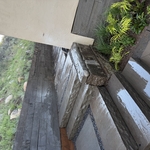
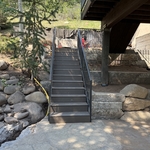
"Alberto and Aspen made this experience quick and pleasant. The job was done same day and they even worked within our budget. I will definitely be using their services again and would highly recommend!"
Landeros Farm and Land
Response time6 hrs
13 neighbors recently requested a quote
Recommended by71%of homeowners
...
Showing 1-10 of 57
Excavating questions, answered by experts

No, you typically cannot use metal detectors to find your sewer line. Most sewer lines are made of non-metallic materials such as PVC, clay, or cast iron, which are not detectable by standard metal detectors. Metal detectors are designed to locate metallic objects, so they won't be effective for identifying the path of a non-metallic sewer line. To locate your sewer line accurately, it's best to use other methods.

The average cost for pool excavation is $2,500. This cost can range from $450 to $4,500, depending on the pool shape and size, time of year, and any need to move buried utilities. 

When excavating for your pool, you might have to move existing utilities. You can expect to pay an additional $15 to $25 per linear foot to move gas lines. To move a septic system, it’ll cost an additional $2,000 to $20,000. A pool that is 10 feet by 12 feet averages $450 to excavate, and a 20-foot-by-40-foot pool averages $3,020.

There are several methods to hollow out a tree stump, and the best one depends on your tools, experience, and priorities. Common methods include using a chisel and hammer, a chainsaw, or burning.

  • Chisel and Hammer: This is often considered the easiest approach for those with limited tools or experience, though it is the most time-consuming.

  • Chainsaw: Using a chainsaw is the fastest method, but it comes with significant safety risks, especially for inexperienced users.

  • Burning: This can be an effective method, but it is not recommended unless you can first drill holes into the stump. Without holes, the stump will be difficult to light and may not burn completely through.

A power drill with at least a ⅜-inch diameter bit can make the job quicker and easier, regardless of the primary method. While you can use a chisel or chainsaw without a drill, it will require more time and effort. Always wear protective goggles and thick gloves, as splinters are an inevitable risk.

Drilled wells have a pipe sticking up that’s covered in a plastic or metal casing. On the other hand, a dug well will look like a big hole in the ground and is more similar to what you’d see in a fantasy or Western movie. If you want to be sure, contact the city for documentation on your property’s construction and excavation history. 

Professional installers often include a deep layer of crushed gravel under permeable pavers to allow more runoff to soak through into the soil below. Many installations will include multiple layers of gravel, with coarser aggregate at the base and finer aggregate that sits on top of that bottom layer. Above the gravel, you’ll often find coarse sand that helps reduce paver shifting over time. Some permeable paver designs include a water collection system set into the gravel layer to route runoff to a safe area for disposal.

The Silt, CO homeowners’ guide to excavation services

From average costs to expert advice, get all the answers you need to get your job done.