




Top-rated excavation pros.

Get matched with top excavation pros in Parachute, CO

Enter your zip and get matched with up to 5 pros

Need a pro for your excavation project in Parachute, CO?

Select your specific project to find the pro for you.

Find Excavation pros in Parachute

Avatar for Ayala's Tree Trimming & Landscaping
Ayala's Tree Trimming & Landscaping
4.7(
54
)
Landscape - Minor Grading or Resloping

Serving Parachute, CO and surrounding areas

Approved

Super Service Award Winner

In business since 2008

Free estimates

Credit card accepted

"Isaac was very quick to respond to my inquiry, provided a fair price, was very timely in the removal process and left my property in excellent shape. I highly recommend his company and his services."
Response time5 hrs
Response rate95%
9 neighbors recently requested a quote
Avatar for Double T Excavation and Services LLC
Double T Excavation and Services LLC
5.0(
8
)
Excavation - Major Grading or ReslopingExcavation - Major Grading or Resloping - For Business

Serving Parachute, CO and surrounding areas

Approved

In business since 2023

Free estimates

Emergency services offered

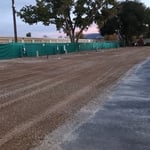
"The project was top notch. Not only did they consistently show up on time, but they finished the project early and were willing to reschedule the final walkthrough multiple times to accommodate our schedule. Final project turned out great!"
Monument RV Park
Monument RV Park
Monument RV Park
Monument RV Park
Monument RV Park

+83

Response time1 day
Recommended by100%of homeowners
Avatar for R&K Services
R&K Services
5.0(
11
)
Landscape - Minor Grading or ReslopingBuilding Site - Preparation and ClearingBuilding Site - Preparation and Clearing - For Business

Serving Parachute, CO and surrounding areas

Approved

In business since 2023

Free estimates

Warranties offered

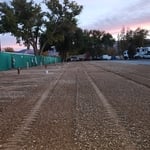
"Steve and Tent did a wonderful job. The job turned into a bigger project than originally planned and Steve took it all in stride. He resloped the front of the property after installing 9 huge blocks for a retention wall, then reshaped the driveway and parking deck. It's exactly what I wanted! Thanks Steve for having the same sight I did!"
Dry scape solutions
Dry scape solutions
Dry scape solutions
Dry scape solutions
Dry scape solutions

+18

Response time8 hrs
15 neighbors recently requested a quote
Recommended by60%of homeowners
...
Showing 1-10 of 67
Excavating questions, answered by experts

As a general rule, the protected area should be about 1½ times as wide as the canopy of the tree’s leaves. This digging measurement can vary by tree species and the age of the tree. Of course, that can be a lot of fencing for larger trees, which is why our first step is about making difficult decisions on which trees to save.

The physical constraints of hand-drilling a well limit the depth you can achieve. Manually digging with picks and shovels may only lead to shallow wells of up to 60 feet in depth. To reach greater depths, you need more specialized equipment. The diameter of your well and the tools you’re using will determine how far down you can dig.

Septic drain lines (or leach lines) are typically buried between 18 and 36 inches underground, and should be at least 6 inches below the surface. These pipes are perforated and surrounded by filtering materials like sand or gravel. Burying the lines at this depth helps minimize odors and allows bacteria and other biological processes in the soil to effectively treat the wastewater. Burying lines too close to the surface can cause issues unless the soil is very compact and stable.

Sewer lines can be buried anywhere from 18 inches to 8 feet deep, with a common average depth between 18 and 30 inches. The exact depth depends on local factors like climate and soil type. In colder regions, pipes must be buried deeper (below the frost line) to prevent freezing, sometimes as deep as 8 feet. The digging depth can also impact the cost of sewer line replacement. To find the specific depth for your property, you can check the building plans for your system, which should be on file with your city or local sanitation department since permits are required for installation.


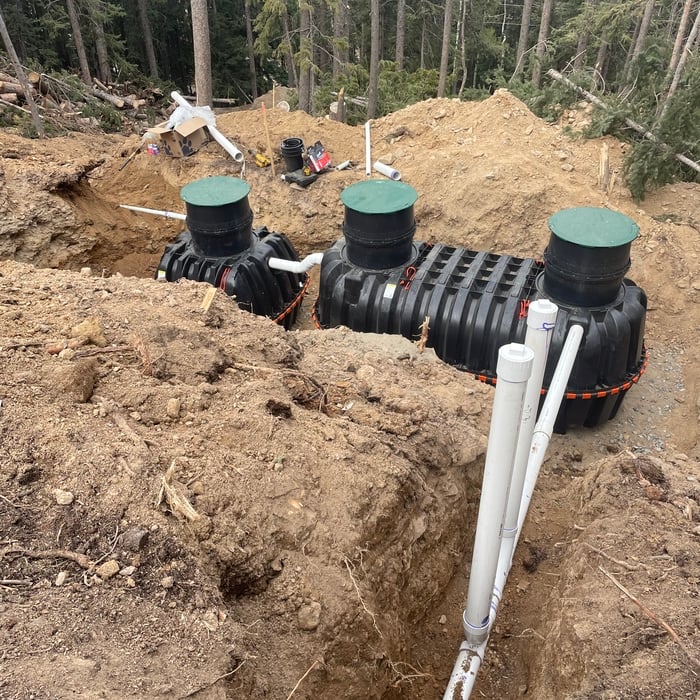
There is no standard depth for burying a septic tank; they are typically buried anywhere from 4 inches to 4 feet underground. The final depth depends on several factors, including the depth of your main sewer line, the height of the bedrock, soil type, local regulations, and the property's landscape. If you plan to grow grass or plants over the tank, a depth of at least 4 to 6 inches is recommended. Deeper tanks can be more difficult to locate, but a septic professional can help find it for you.

The Parachute, CO homeowners’ guide to excavation services

From average costs to expert advice, get all the answers you need to get your job done.