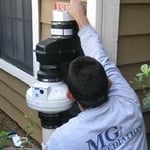








Top-rated radon detection and reduction specialists.

Get matched with top radon detection and reduction specialists in Stanford, CA

Enter your zip and get matched with up to 5 pros

Need a pro for your radon detection and reduction project in Stanford, CA?

Select your specific project to find the pro for you.

Find Radon detection and reduction specialists in Stanford

Avatar for Fire & Water Damage Recovery
Fire & Water Damage Recovery
4.7(
69
)

Serving Stanford, CA and surrounding areas

In business since 1997

Free estimates

Emergency services offered

"The experience with Justin at Fire & Water Damage Recovery was excellent. They were referred by the plumbing company that serviced my sump pump. We still got 3 estimate, Justin's estimate was in the middle but I felt good with Justin based on our phone conversation and the referral so we went with this company. Justin did tell me that he might have estimated on the high side because he does not like to surprise the homeowners. What a surprise when I go the final invoice. The final invoice came in much lower and was very close or lower than the lowest estimate I got. Justin and his team also took pictures of how the place was before and after for me to see. They even took pictures of the pathway that they took to get to the crawl space to assure me that they kept the place clean when they got in and out. I was very satisified with Justin and his company."
Additional Photos
Additional Photos
Additional Photos
Additional Photos
Additional Photos

+27

Recommended by88%of homeowners
Radon Detection and Reduction questions, answered by experts

Radon detection is crucial as prolonged exposure to radon gas, a leading cause of lung cancer, poses significant health risks in residential environments.

The lifespan of a radon mitigation system depends on the type of system and its maintenance. With proper care, a system can last for many decades. Passive systems tend to last longer as they have fewer components that require replacement. Active systems, which have more moving parts like fans, generally have a shorter lifespan. For instance, water filtration devices and active pressurization systems require more frequent maintenance. While the system as a whole is durable, the radon fan in an active system typically has a lifespan of 5 to 10 years and will need to be replaced. As long as the fan is working, the mitigation system should function correctly.

Radon is the number one non-smoking cause of lung cancer in the United States, but it can cause some other concerning side effects in the meantime. If you have a raspy voice, chest pains, trouble breathing, difficulty swallowing, or any of the above, don’t hesitate to perform radon testing and install a mitigation system as soon as possible.

No level of radon is technically safe, but since it is naturally present everywhere, it is impossible to avoid entirely. The average radon level in homes across the United States is 1.3 picocuries per liter (pCi/L). The Environmental Protection Agency (EPA) recommends taking action to reduce radon levels if your home's test results are between 2 and 4 pCi/L or higher.

If your home has a sump pit, you can integrate it with a radon mitigation system. You can accomplish this by sealing the pump cover with an airtight lid that accommodates radon vent pipes and sump pump hoses. This allows the vent pipe to redirect the radon gas outside of your home.

The Stanford, CA homeowners’ guide to radon detection and reduction services

From average costs to expert advice, get all the answers you need to get your job done.

What do you need done? We’ll find top pros.
  • 🌱 "Mow a small front yard"
  • 🛠 "Fix a leaking pipe under the sink"
  • 🏠 "Repair shingles on an asphalt roof"